Oral thrush can be uncomfortable, frustrating, and sometimes painful but the right mouthwash can help you get quick relief and prevent the infection from returning. Choosing a mouthwash isn’t as simple as grabbing one off the shelf. Different formulas target different symptoms, and the right choice depends on the severity of your infection, your age, and your overall oral health.
This guide explains everything you need to know about oral thrush, the best types of mouthwash, and how to choose the one that works fastest for your condition.
Table of Contents
What Is Oral Thrush
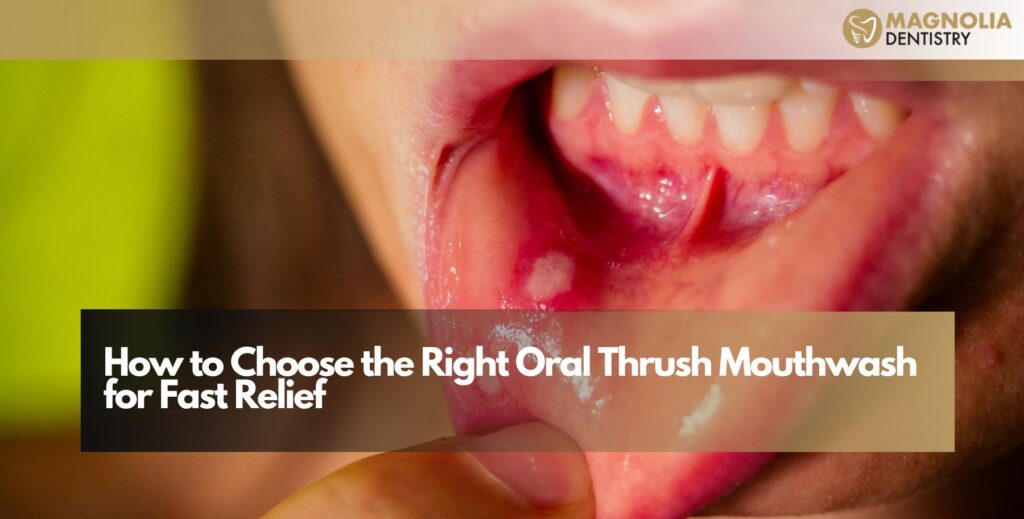
Oral thrush is a fungal infection caused by overgrowth of Candida albicans. While this yeast naturally lives in your mouth, it becomes a problem when it multiplies uncontrollably.
Symptoms of Oral Thrush
- White or creamy patches on the tongue, cheeks, or gums
- Soreness or burning sensation
- Cotton-like feeling in the mouth
- Cracked corners of the lips
- Difficulty swallowing in severe cases
Thrush affects babies, adults, and seniors, especially those with weakened immune systems.
What Are the Common Causes of Oral Thrush
Oral thrush develops when the balance of bacteria and yeast in the mouth is disrupted.
Major Causes Include:
- Antibiotic use
- Dry mouth
- Diabetes
- Immunosuppressant medications
- Dentures that do not fit properly
- Smoking
- Poor oral hygiene
Understanding the cause helps you choose the right mouthwash and prevent future infections.
Why Mouthwash Is Effective for Thrush Care
Mouthwashes are effective because they work directly in the area where the infection exists.
How Mouthwash Helps
- Reduces fungal growth
- Soothes irritated tissues
- Helps remove residue and patches
- Freshens breath caused by infection
- Supports faster healing
While mouthwash alone may not cure severe thrush, the right formula offers fast comfort and supports other treatments prescribed by your dentist.
What Are the Types of Mouthwashes for Oral Thrush
Not all mouthwashes work the same way. Each type targets different symptoms or stages of infection.
Antifungal Mouthwashes
These contain medication that directly kills Candida.
Used for: Moderate to severe thrush
Often prescribed by dentists.
Antiseptic Mouthwashes
These kill bacteria and some yeast.
Used for: Mild thrush, prevention, and oral hygiene support.
Herbal or Natural Mouthwashes
Made with tea tree oil, aloe vera, or coconut oil.
Used for: Mild symptoms, soothing burning and irritation.
Alcohol-Free Mouthwashes
Alcohol can dry out your mouth and worsen thrush.
Used for: Children, seniors, and adults with dry mouth.
Chlorhexidine Mouthwash
A strong antimicrobial rinse used under dental supervision.
Used for: Persistent or recurring thrush and gum inflammation.
How to Choose the Right Oral Thrush Mouthwash
Choosing the right mouthwash depends on your symptoms, health history, and age.
Consider the Severity of Your Thrush
- Mild cases: antiseptic or herbal mouthwash
- Moderate cases: antifungal mouthwash
- Recurrent cases: dentist-prescribed rinse
If symptoms worsen or do not improve within a few days, seek professional care.
Look for Alcohol-Free Formulas
Alcohol irritates tissues and worsens dryness—conditions that help yeast multiply.
Check for Active Ingredients
Common effective ingredients include:
- Nystatin (antifungal)
- Chlorhexidine
- Tea tree oil
- Sodium bicarbonate (helps balance pH)
Choose Mouthwash Based on Age
Some formulas are too strong for babies or young children. Always check labels or ask your dentist.
Avoid Products That Disrupt Oral pH
Whitening and strong mint mouthwashes may cause more irritation.
Consider Any Ongoing Health Conditions
For example, patients with diabetes or dry mouth may need a specially formulated rinse.
In many cases, your dentist will guide you toward the best option. If you’re near the area, local providers offering dental care Burbank can recommend safe and effective thrush treatments based on your symptoms.
Maintaining Oral Hygiene to Prevent Recurrence
Mouthwash works best when paired with strong oral hygiene.
Daily Habits That Help
- Brush twice a day with a soft-bristled toothbrush
- Replace your toothbrush after thrush treatment
- Floss daily
- Rinse after using inhalers
- Limit sugar intake
For Denture Wearers
- Clean dentures after every meal
- Remove them before bed
- Disinfect regularly with a denture-cleaning solution
Keeping your mouth clean prevents yeast from multiplying again.
What’s the Quickest Way to Get Rid of Oral Thrush
Fast relief requires addressing the infection from multiple angles.
Fastest Remedies Include:
- Using an antifungal mouthwash or oral medication
- Rinsing with warm salt water
- Applying a baking soda rinse to balance mouth pH
- Avoiding sugar, yeast, and acidic foods
- Keeping your mouth clean and moist
If symptoms are severe, a dentist may prescribe antifungal medication for immediate control.
How to Treat Oral Thrush in Kids
Thrush is common in babies and young children, especially those using pacifiers or bottles.
Safe Treatment Options
- Mild antifungal drops
- Saltwater rinse (for kids old enough to rinse and spit)
- Cleaning pacifiers, bottles, and toys
- Breastfeeding mothers may need antifungal cream to avoid passing yeast back to the child.
Avoid strong mouthwashes children require gentle, age-appropriate care.
How Long Does It Take for Oral Thrush to Go Away
The healing timeline varies depending on the severity.
Typical Recovery Times
- Mild thrush: 3–5 days
- Moderate cases: 7–14 days
- Severe or recurring thrush: 2–3 weeks with prescription treatment
Improvement should begin within the first 48 hours.
What Is the Most Effective Thrush Treatment
For most patients, the most effective treatment combines:
- Antifungal mouthwash or oral medication
- Proper hygiene
- Denture cleaning (if applicable)
- Dietary adjustments
- Treating underlying conditions
A dentist or physician can determine whether thrush is caused by medications, illness, or lifestyle factors.
Learn more about selecting the most effective oral thrush mouthwash to combat fungal infections and restore oral health.
How to Immediately Stop Thrush
Immediate relief focuses on reducing irritation and discomfort quickly.
Quickest Ways to Soothe Symptoms
- Rinse with warm salt water
- Use a baking soda solution to reduce acidity
- Sip cold water for burning sensation
- Avoid foods that irritate the mouth
- Use mild, alcohol-free antifungal rinses
Immediate relief helps with symptoms, but full treatment is needed to eliminate the infection completely.
Conclusion
Choosing the right oral thrush mouthwash makes a major difference in how quickly you recover. Understanding what caused your infection, how severe it is, and which mouthwash ingredients work best helps you make the right choice. Pairing your mouthwash with strong oral hygiene, a healthy diet, and professional dental guidance ensures fast relief and reduces the risk of thrush returning.
If your symptoms persist or you’re unsure which treatment is best, consult a dentist for personalized care and safe, effective recommendations.