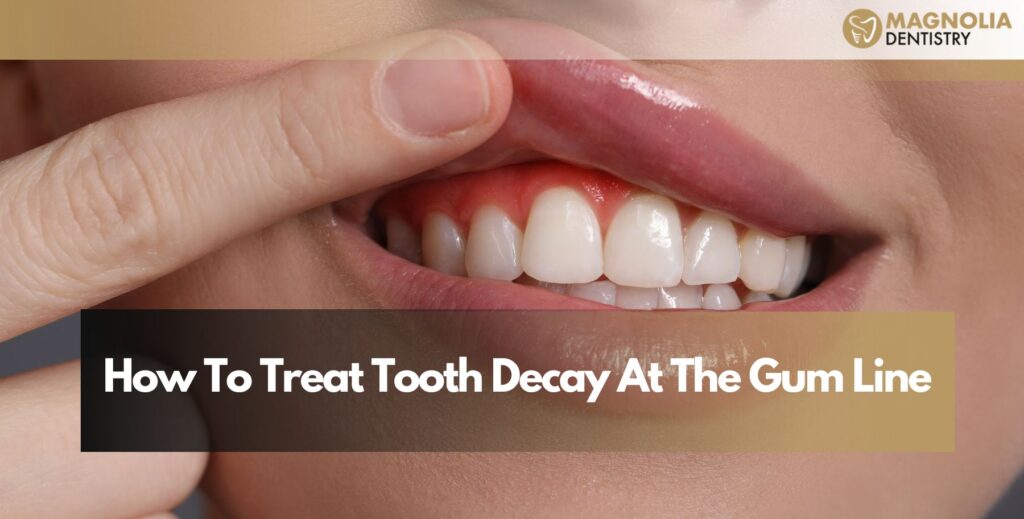
Quick Identification Guide: Brown or dark spots at the gum line are most commonly caused by (1) tooth decay (cervical cavities), (2) tartar/calculus buildup, (3) extrinsic staining from coffee, tea, or tobacco, or (4) gum line erosion. Brown that is soft, rough, or growing darker = likely decay and needs dental treatment. Brown that is hard and flat = likely tartar. See a dentist if you are unsure, gum line decay progresses rapidly due to the absence of protective enamel.
Tooth decay at the gum line, also known as cervical decay or root caries, presents unique challenges that differ from cavities on the biting surfaces of teeth. This type of decay occurs where the tooth meets the gum tissue, often affecting the root surface when gum recession exposes areas that normally remain covered.
Gum line decay is particularly concerning because the root surface lacks the protective enamel covering that shields the crown portion of teeth, making it more vulnerable to bacterial attack and cavity formation. Many people notice brown, black, or dark spots at the gum line and wonder what it means. Understanding how to identify, treat, and prevent this specific type of decay is essential for maintaining long-term oral health and avoiding complications like tooth loss, infection, or extensive restorative procedures. According to the American Dental Association, root caries (gum line cavities) are among the most preventable and treatable dental conditions when caught early.
Table of Contents
What Does Tooth Decay at the Gum Line Look Like?
One of the most common reasons people search for information about gum line decay is noticing a change in color at the base of their teeth. Here is what different appearances mean:
| Appearance | Most Likely Cause | Is It Serious? | What to Do |
| Brown spot or line at gum line | Early gum line decay (cervical cavity) | Yes — needs prompt dental evaluation | Schedule dental exam within 1-2 weeks |
| Black spot or dark line at gum line | Advanced decay or tartar buildup | Yes — advanced decay spreads quickly | Urgent dental appointment needed |
| Hard brown crust at gum line | Calculus (tartar) — mineralized plaque | Moderate — causes gum disease if untreated | Professional dental cleaning required |
| Brown staining along gum line (flat, uniform) | Extrinsic staining from coffee, tea, tobacco | Cosmetic — not decay itself | Cleaning and whitening options available |
| White or chalky spot at gum line | Early enamel erosion or very early decay | Low to moderate — can often be reversed | Fluoride treatment and monitoring |
| Brown/black AND the tooth feels rough or sensitive | Active decay with nerve involvement | High — requires immediate attention | Same-day or next-day dental care |
Why Is My Tooth Brown at the Gum Line?
Brown at the gum line is one of the most frequently noticed dental changes, and it has several possible causes. Identifying the correct cause guides the appropriate treatment and prevents confusion between harmless staining and active decay.
Gum Line Decay (Cervical Cavities)
The most clinically concerning cause of brown at the gum line is active decay. Unlike cavities on the crown of the tooth that develop through hard enamel, gum line cavities form on cementum, the softer material covering the root surface. Cementum is far more porous than enamel, meaning decay progresses more rapidly once started. The brown color comes from bacterial acids demineralizing tooth structure, leaving a soft, discolored area that expands if not treated.
Tartar and Calculus Buildup
Tartar (calculus) is hardened plaque that commonly accumulates right at the gum line. It often appears as a hard, brownish or yellowish deposit that cannot be removed by brushing. Tartar itself is not decay, but it irritates gum tissue and creates sheltered areas where decay-causing bacteria thrive. Only professional dental cleaning removes tartar. Learn more about effective plaque removal methods to prevent tartar buildup between appointments.
Staining from Foods, Drinks, or Tobacco
Coffee, tea, red wine, and tobacco products cause extrinsic staining that concentrates at the gum line, where plaque and calculus accumulate most readily. This staining is flat, relatively uniform, and does not cause sensitivity or roughness. While not structurally damaging on its own, staining often masks underlying decay, which is why any dark area at the gum line should be professionally evaluated.
Gum Recession Exposing Darker Root Surfaces
The root surface of a tooth is naturally darker than the enamel-covered crown. When gums recede, the exposed root appears brown or yellowish compared to the lighter tooth crown above. This is not decay itself, but exposed roots are extremely vulnerable to developing cavities. Knowing the early signs of gum disease can help you address recession before significant root exposure occurs.
Understanding Gum Line Decay
What Causes Decay at the Gum Line
Gum line decay develops when bacteria in your mouth produce acids that erode tooth structure at or below the gum line. The root surfaces exposed by gum recession are covered with cementum, a softer material than enamel that is more susceptible to decay. Poor oral hygiene allowing plaque accumulation at the gum line creates an environment where decay-causing bacteria thrive.
- Frequent sugary or acidic foods and beverages feed bacteria and directly erode root surfaces
- Dry mouth reduces saliva’s protective effects, allowing acids to remain on teeth longer
- Gum recession from periodontal disease or aggressive brushing exposes vulnerable root surfaces
- Aging and medication side effects commonly contribute to both gum recession and dry mouth
How Gum Line Decay Differs from Other Cavities
Cavities at the gum line present distinct characteristics compared to decay on tooth crowns. They develop on softer root surfaces lacking enamel’s protection, meaning they progress faster than decay through hard enamel. Gum line decay often appears as dark brown or black discoloration along the gum line rather than the obvious holes associated with crown cavities. This decay frequently causes significant sensitivity to hot, cold, and sweet stimuli because it occurs near the tooth’s nerve. The location also makes gum line cavities more challenging to detect during self-examination.
Risk Factors That Increase Susceptibility
- Gum recession from periodontal disease, aggressive brushing, or natural aging
- Dry mouth conditions from medications, medical conditions, or aging
- Poor oral hygiene with inadequate brushing and flossing at the gum line
- Frequent snacking or sipping sugary beverages throughout the day
- Smoking and tobacco use, increases periodontal disease and reduces saliva
- Older adults: higher risk due to cumulative recession, medication effects, and reduced dexterity
Early Warning Signs and Symptoms
Recognizing early symptoms allows intervention before decay becomes severe:
- Increased sensitivity to hot, cold, or sweet foods along the gum line
- Visible dark spots, brown lines, or staining at the tooth-gum junction
- Rough or irregular texture when running your tongue along the gum line
- Food consistently catching at the same spot near the gum line
- Pain when brushing near the gum line or general tenderness in the area
- A soft, sticky feel to a dark spot when probed by a dental instrument
Any of these symptoms requires prompt dental examination, as early intervention prevents progression requiring more extensive treatment. Learn about the signs of dental infection that can develop from untreated gum line decay.
Why Early Detection Matters
- Early-stage decay can sometimes be remineralized, reversed without drilling or filling
- Small cavities require less tooth structure removal, preserving more natural tooth
- Early treatment prevents decay from reaching the nerve, avoiding root canal therapy
- Catching decay early significantly reduces treatment cost
- Regular dental checkups are your best defense against advanced gum line decay
Cavity Below the Gum Line: Can It Be Filled?
One of the most common patient questions is whether a cavity that extends below the gum line can be filled, or whether it automatically requires more complex treatment.
Yes, in most cases, cavities below or at the gum line can be filled. However, the process is more technically challenging than filling a cavity on the crown surface. The key factors are how far the cavity extends below the gum and how much healthy tooth structure remains.
- Cavity at the gum line with minimal subgingival extension: Standard composite or glass ionomer filling, possibly with gum tissue carefully retracted during treatment
- Cavity significantly below the gum line: The dentist may need to perform crown lengthening (minor gum surgery) to expose enough tooth structure for a filling or crown
- Cavity extending to or below the bone level: May require extraction, as insufficient healthy tooth remains above the bone to support a restoration
During your evaluation, your dentist will take X-rays to determine exactly how far the decay extends and recommend the most appropriate restoration. Do not assume an inaccessible cavity cannot be treated, most gum line and subgingival cavities are treatable when identified before they become too extensive.
Professional Treatment Options
When gum line decay develops beyond the reversible stage, professional dental treatment becomes necessary to remove diseased tissue and restore tooth structure.
Traditional Dental Fillings
For small to moderate gum line cavities, traditional fillings effectively restore tooth structure and prevent further decay. The dentist numbs the area with local anesthetic ensuring comfortable treatment. Decay is carefully removed using specialized instruments, with particular attention to preserving healthy tooth structure. The cavity is cleaned and prepared, then filled with either composite resin (tooth-colored) or glass ionomer cement (fluoride-releasing). Gum line fillings require precise technique due to the location near gum tissue and potential moisture contamination affecting bonding.
Glass Ionomer Cement Applications
Glass ionomer cement offers specific advantages for gum line cavities. This material bonds chemically to tooth structure without requiring a completely dry environment, making it ideal for areas near gum tissue where moisture control is challenging. Glass ionomer releases fluoride over time, providing ongoing protection against recurrent decay around the filling margins. Some dentists use a ‘sandwich technique’ combining glass ionomer as a base layer with composite covering it, leveraging each material’s advantages.
Crown Placement for Extensive Decay
When gum line decay has destroyed significant tooth structure, fillings may not provide adequate strength, necessitating crown placement. The dentist removes all decay, shapes the remaining tooth, takes impressions or digital scans for fabrication, and places a temporary crown while the permanent one is made. Crowns completely cover and protect teeth, distributing chewing forces evenly and preventing fracture of weakened structures.
Root Canal Therapy for Advanced Cases
When gum line decay progresses deeply, reaching the tooth’s nerve (pulp), root canal treatment becomes necessary before restorative work. This procedure removes infected or inflamed nerve tissue, cleans and disinfects the root canals, then seals them with biocompatible material. The tooth is then restored with a filling or crown. Root canal therapy saves teeth that would otherwise require extraction. Modern techniques and anesthesia make root canals comfortable procedures. For related information, see our guide on signs of infection after dental treatment.
Tooth Extraction and Replacement Options
When gum line decay is too extensive for restoration, extraction becomes necessary. Following extraction, replacement options include dental implants (permanent, natural-functioning), fixed bridges, or removable partial dentures. Immediate treatment planning for replacement prevents adjacent teeth from shifting into the gap.
At-Home Management and Prevention
Proper Brushing Technique for the Gum Line
Use a soft-bristled toothbrush angled at 45 degrees toward the gum line, allowing bristles to reach slightly beneath the gum edge. Employ gentle circular or vibrating motions rather than aggressive back-and-forth scrubbing that can damage gums and tooth structure. Consider an electric toothbrush with a pressure sensor to prevent excessive force. Replace your toothbrush every three months. Brush at least twice daily, ensuring you clean along the entire gum line of every tooth.
Flossing and Interdental Cleaning
Flossing removes plaque and food particles from between teeth and along the gum line where toothbrushes cannot reach. Gently slide floss between teeth, curving it into a C-shape against one tooth and sliding it beneath the gum line. Be thorough but gentle. If traditional floss is challenging, try floss picks, interdental brushes, or water flossers. Daily flossing significantly reduces gum line decay risk.
Fluoride Treatments and Remineralization
- Use fluoride toothpaste containing at least 1000ppm for adults, brushing twice daily
- Consider prescription-strength fluoride toothpaste (5000ppm) if at high risk
- Apply fluoride toothpaste directly to vulnerable gum line areas before bed, leaving it on without rinsing
- Use fluoride mouthwash once daily as directed
- Ask your dentist about professional fluoride varnish applied to vulnerable areas during checkups
Dietary Modifications to Reduce Decay Risk
- Limit sugary foods and beverages, avoid frequent snacking that constantly feeds bacteria
- Reduce acidic foods and drinks including soda, citrus, and vinegar that erode root surfaces
- Drink water throughout the day to rinse food particles and stimulate saliva
- Choose tooth-friendly snacks like cheese, nuts, and vegetables
- Consume sugary or acidic items during meals rather than between meals
Addressing Dry Mouth
Since dry mouth significantly increases gum line decay risk, managing this condition is essential. Stay well-hydrated, use sugar-free xylitol gum to stimulate saliva, consider a humidifier if you breathe through your mouth at night, and discuss medication alternatives with your physician if medications are causing dry mouth.
Long-Term Management and Monitoring
Regular Dental Checkups and Professional Cleanings
Schedule dental checkups every six months, or more frequently if recommended based on your decay risk. During these visits, your dentist examines all tooth surfaces including the gum line for signs of new or recurrent decay. Professional cleanings remove hardened tartar that home care cannot eliminate. X-rays reveal decay developing beneath the gum line not visible during visual examination.
Monitoring Treated Areas for Recurrent Decay
Teeth previously treated for gum line decay require ongoing attention. Decay often recurs at filling margins. Monitor treated areas for sensitivity, discoloration, or rough edges. Report any changes to your dentist between regular appointments. Some patients benefit from more frequent professional monitoring.
Managing Gum Recession
Since gum recession exposes root surfaces to decay, preventing and managing recession is critical. Use proper brushing technique with soft bristles. If you grind your teeth, wear a nightguard. Treat gum disease promptly, as untreated periodontal disease leads to progressive recession. For significant recession, discuss gum grafting with your dentist to cover exposed roots and reduce decay vulnerability.
Preventive Products and Technologies
- Prescription-strength fluoride toothpaste for enhanced protection of vulnerable gum line areas
- Antimicrobial mouthwashes containing chlorhexidine or cetylpyridinium chloride
- Remineralizing products containing calcium and phosphate compounds
- Xylitol-containing products, gum, mints, and toothpaste, that reduce decay-causing bacteria
Conclusion
Treating tooth decay at the gum line requires a comprehensive approach combining professional intervention, diligent home care, and preventive strategies. Early detection through regular dental examinations allows minimally invasive treatments like fluoride therapy or small fillings, while advanced decay may require crowns, root canals, or extraction with replacement.
Understanding that root surfaces lack enamel’s protection and are inherently more vulnerable to decay emphasizes the importance of preventing gum recession and maintaining meticulous oral hygiene specifically targeting the gum line. Effective home care, proper brushing, daily flossing, fluoride use, dietary modification, and dry mouth management, all reduce decay risk significantly.
The consequences of untreated gum line decay are serious: tooth loss, infection, compromised chewing function, and aesthetic damage. Prevention and early treatment are always preferable to managing advanced disease. For expert evaluation and treatment of gum line decay, consult with an experienced Dentist in Burbank, CA who can provide skilled treatment, develop personalized prevention strategies, and partner with you in maintaining your oral health for the long term.
Frequently Asked Questions About Gum Line Tooth Decay
Why is my tooth brown at the gum line?
Brown at the gum line can indicate several things: active tooth decay (cervical cavity), hardened tartar/calculus buildup, staining from coffee/tea/tobacco, or the naturally darker root surface exposed by gum recession. Brown that is soft, rough, or accompanied by sensitivity is most likely decay and needs dental evaluation within 1-2 weeks. Brown that is hard, uniform, and does not cause sensitivity may be tartar, removable only by professional cleaning.
Why are my teeth turning brown at the gum line?
Gradual browning at the gum line that develops over weeks or months typically indicates one of three things: progressive tartar accumulation (most common), advancing gum line decay, or extrinsic staining from colored foods and beverages. If the brown is new, getting darker, or has any associated sensitivity or roughness, have it professionally evaluated promptly. Early gum line decay is highly treatable but advances quickly without intervention.
Can you fill a cavity at the gum line?
Yes, in most cases. Cavities at or near the gum line are routinely treated with fillings, most commonly using glass ionomer cement (which tolerates moisture well and releases fluoride) or composite resin. Cavities that extend significantly below the gum line may require gum tissue retraction or minor crown lengthening surgery to access properly before filling. Your dentist will assess the extent of the cavity with X-rays to determine the best restoration approach.
Can you fill a cavity below the gum line?
Yes, many subgingival (below the gum line) cavities are fillable. The approach depends on how far below the gum the decay extends. Shallow subgingival decay is filled using standard techniques with careful gum retraction. Deeper decay may require crown lengthening surgery to expose sufficient tooth structure. Only very extensive decay reaching bone level may require extraction. Never assume a below-gum cavity cannot be treated without professional evaluation.
Is gum line decay the same as a cavity?
Yes. Gum line decay is a specific type of cavity called a cervical cavity or root caries. It develops on the cementum-covered root surface (at or below the gum line) rather than on the enamel-covered crown. Because cementum is much softer than enamel, these cavities progress faster and require prompt treatment. They are treated the same as other cavities, through removal of decayed tissue and restoration with filling material.
What does gum line cavity treatment involve?
Treatment for gum line cavities follows the same process as other fillings: local anesthetic is applied for comfort, decayed tissue is removed with dental instruments, the area is cleaned and prepared, and filling material is placed and shaped. Glass ionomer cement is frequently preferred for gum line cavities because it tolerates moisture better than composite resin and releases protective fluoride. The entire process is typically completed in a single appointment for small to moderate cavities.
Can gum line decay be reversed?
Very early gum line decay, limited to surface demineralization (white spot lesions) without cavity formation, can sometimes be reversed through fluoride treatment and improved oral hygiene. This non-invasive remineralization approach works only on initial decay where the cementum has not yet broken down into a soft cavity. Once a true hole forms, the damaged structure cannot be reversed and requires professional restoration.
Why do my teeth decay at the gum line more than elsewhere?
The gum line is where plaque concentrates most heavily, creating ideal conditions for decay. The root surface below the gum line is covered in cementum rather than enamel — cementum is much softer and dissolves more readily when exposed to bacterial acids. Additionally, brushing often misses the gum line area, and food particles accumulate in the natural groove where tooth meets gum.
How can I tell the difference between gum line decay and gum disease?
Gum line decay affects the tooth surface itself, you may notice a brown/black spot, rough texture, or cavity on the tooth adjacent to the gum. Gum disease (periodontitis) primarily affects the gum tissue, symptoms include red, swollen, or bleeding gums, gum recession, and loose teeth. Both can coexist, and gum disease often contributes to gum line decay by exposing root surfaces.
What happens if gum line decay is left untreated?
Untreated gum line decay progresses rapidly due to the softness of root cementum. It spreads around the entire circumference of the tooth root, can reach the dental nerve within months, causes painful infection or abscess, and ultimately leads to tooth loss. Because there is no enamel barrier to slow progression, gum line decay is more urgent to treat than crown cavities of equivalent size.
How often should I see the dentist if I have gum line decay?
If you have active gum line decay, your dentist may recommend 3-4 month intervals rather than the standard 6 months for routine monitoring and professional cleaning. This allows earlier detection of recurrent decay around treated fillings and more frequent removal of tartar that accumulates at the gum line. After your cavity situation is stabilized, you may return to 6-month intervals if your oral health improves.
Can electric toothbrushes help prevent gum line cavities?
Yes. Electric toothbrushes, particularly oscillating-rotating models, are clinically shown to remove more plaque at and below the gum line than manual brushing. Models with pressure sensors prevent aggressive brushing that causes gum recession. For patients prone to gum line cavities, an electric toothbrush is one of the most effective home care upgrades available.
Does dry mouth increase the risk of gum line cavities?
Significantly. Saliva is your mouth’s natural defense against decay, it neutralizes acids, washes bacteria from tooth surfaces, and provides minerals for remineralization. When saliva flow is reduced (from medications, autoimmune conditions, or dehydration), bacteria and acids remain on teeth much longer. Gum line areas are particularly vulnerable because plaque accumulates there even with good home care.