Many people considering Invisalign treatment wonder whether they can straighten just their upper teeth instead of undergoing full treatment on both arches. This question often arises when patients feel their lower teeth look acceptable but want to improve their upper smile, or when budget constraints make full treatment challenging. While single-arch Invisalign treatment is technically possible and sometimes appropriate, the decision isn’t as straightforward as simply choosing to treat only what bothers you aesthetically. Understanding when single-arch treatment works, when it’s problematic, and what factors orthodontists consider when evaluating this option helps you make informed decisions about your orthodontic care and ensures you achieve results that are not only aesthetically pleasing but also functionally sound and stable long-term.
Table of Contents
Understanding Single-Arch Treatment
Before determining whether treating only your top teeth is appropriate, it’s essential to understand what single-arch orthodontic treatment entails and how it differs from comprehensive treatment of both upper and lower teeth.
What Single-Arch Invisalign Involves
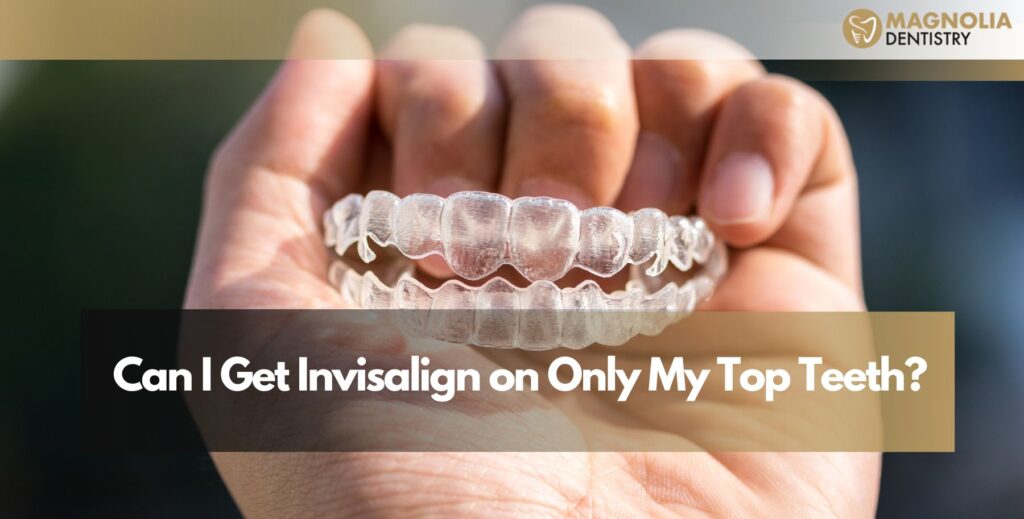
Single-arch Invisalign treatment, sometimes called Invisalign Express or partial treatment, involves wearing clear aligners only on your upper teeth while leaving your lower teeth untreated. The aligners gradually shift your upper teeth into better alignment, addressing crowding, spacing, or minor rotations that concern you aesthetically. Treatment typically takes less time than full Invisalign because fewer teeth are moving and the treatment plan addresses more limited goals. The cost is generally lower than comprehensive treatment, though not necessarily half the price, as many treatment expenses like impressions, treatment planning, and professional fees remain constant regardless of whether one or both arches are treated.
How It Differs From Full Treatment
Comprehensive Invisalign treatment addresses both upper and lower teeth simultaneously, considering how they fit together when you bite and ensuring harmonious movement of all teeth. Full treatment allows your orthodontist to optimize your bite relationship, correct over-jets and over-bites, ensure even tooth contacts across your entire smile, and create stable, long-lasting results by addressing your complete dental structure. Single-arch treatment focuses narrowly on the aesthetic appearance of one arch without the ability to make compensating adjustments to the opposing arch. This limitation means single-arch treatment cannot address bite problems and may even create or worsen bite issues if not carefully planned.
Initial Assessment Requirements
Even if you only want your top teeth straightened, a comprehensive orthodontic evaluation is necessary to determine if single-arch treatment is appropriate. Your orthodontist will examine both arches thoroughly, evaluate how your upper and lower teeth fit together, assess your jaw relationship and bite pattern, review X-rays showing tooth roots and bone structure, and consider your facial proportions and smile aesthetics. This complete assessment reveals whether treating only one arch will achieve your goals without creating problems, or whether your bite relationship requires comprehensive treatment for safe, stable results.
When Single-Arch Treatment Is Appropriate
Certain situations make treating only your upper teeth a viable and reasonable option that can achieve your aesthetic goals without compromising function or creating long-term problems.
Minor Cosmetic Corrections
Single-arch Invisalign works best for purely cosmetic issues that don’t involve bite problems. If your upper teeth have minor crowding, small gaps between teeth, or slight rotations that bother you aesthetically but your bite is already excellent and your lower teeth are well-aligned, treating only the upper arch may be perfectly acceptable. Front teeth that tipped slightly after orthodontic treatment years ago and need minor repositioning often qualify for single-arch treatment. Teeth that shifted after wisdom tooth removal causing minor crowding or spacing in one arch can sometimes be addressed individually if the bite relationship remains good.
Excellent Pre-Existing Bite
The most important criterion for single-arch treatment is an already-optimal bite relationship between your upper and lower teeth. If your teeth fit together properly when you close your mouth, with correct over-jet (horizontal overlap), proper over-bite (vertical overlap), and good contact between upper and lower teeth when chewing, then addressing minor upper tooth irregularities without changing this good bite may be feasible. Your orthodontist will verify that straightening your upper teeth won’t create new bite interferences or affect how your teeth come together, ensuring treatment improves aesthetics without compromising function.
Post-Orthodontic Relapse Cases
Patients who previously had braces or Invisalign and experienced minor relapse sometimes qualify for single-arch treatment if the relapse is limited to one arch and the bite remains acceptable. If you wore braces as a teenager but didn’t wear your retainers consistently, resulting in minor crowding or spacing of your upper front teeth while your lower teeth remained straight, treating just the relapsed arch can restore your smile. However, this only works if the original treatment achieved good bite alignment that remains stable, and the relapse is truly limited to cosmetic positioning rather than affecting your bite relationship.
When Treating Both Arches Is Necessary
Many situations that initially seem like candidates for single-arch treatment actually require comprehensive treatment of both arches to achieve safe, stable, functional results.
Existing Bite Problems
Any significant bite issue over-bite, under-bite, cross-bite, open bite, or teeth that don’t contact properly when chewing requires treatment of both arches to correct properly. You cannot fix an over-bite by only moving upper teeth; you need to coordinate movement of both upper and lower teeth to achieve proper positioning. Cross-bites where upper teeth sit inside lower teeth rather than outside require coordinated movement of both arches. If your back teeth don’t contact evenly when you chew, straightening only your upper front teeth for appearance while ignoring functional problems leaves you with an incomplete, potentially problematic result.
Risk of Creating New Problems
Treating only one arch when comprehensive treatment is needed can actually create bite problems where none existed or worsen existing issues. Moving your upper teeth without corresponding lower tooth adjustments can cause new interferences where teeth hit incorrectly, create uneven chewing forces that stress teeth and jaw joints, result in gaps opening or teeth tipping in the untreated arch as a response to changes in the treated arch, and lead to unstable results that relapse quickly because the bite doesn’t support the new tooth positions. Orthodontists have a professional responsibility to refuse treatment plans that could harm patients, even if patients request them, meaning your orthodontist may decline single-arch treatment if they believe it would create problems.
Comprehensive Treatment Benefits
Full treatment of both arches offers significant advantages beyond just straightening teeth. It optimizes your bite for proper function and even wear, reduces stress on jaw joints by ensuring teeth fit together correctly, creates more stable results less prone to relapse, addresses underlying skeletal or jaw relationship issues, and produces the most aesthetically pleasing results by harmonizing your entire smile. While treating both arches costs more and takes longer than single-arch treatment, the superior outcomes and long-term stability often justify the additional investment. Many patients who initially wanted only one arch treated discover during consultation that comprehensive treatment better serves their needs and goals.
The Orthodontist’s Perspective
Understanding how orthodontists evaluate requests for single-arch treatment provides insight into why they may recommend full treatment even when you’d prefer a more limited approach.
Professional and Ethical Considerations
Orthodontists are trained to consider not just cosmetic appearance but also function, stability, and long-term oral health. They’re bound by ethical principles to provide treatment that benefits patients without causing harm, refuse treatment plans likely to create problems even if patients request them, and educate patients about risks and limitations of partial treatments. When an orthodontist recommends treating both arches instead of just your upper teeth, this recommendation comes from professional judgment about what will achieve the best outcome, not from trying to increase treatment costs. Most orthodontists would happily provide less expensive, shorter single-arch treatment if it would serve patients well, but cannot ethically provide treatment they believe will fail or cause harm.
Treatment Planning Complexity
Planning single-arch treatment requires especially careful analysis because moving teeth in one arch without corresponding changes in the other creates unpredictable effects. Your orthodontist must ensure that straightening upper teeth won’t cause them to hit lower teeth differently, verify that space closure or opening won’t affect your bite relationship, confirm that tooth movements won’t create instability requiring opposing arch changes, and predict how untreated teeth will respond to changes in the treated arch. This complexity means single-arch treatment isn’t necessarily simpler or easier to plan than full treatment—it’s actually more constrained because the orthodontist cannot make compensating adjustments in the untreated arch to accommodate tooth movements or solve problems that arise.
Long-Term Stability Concerns
Orthodontists consider whether treatment results will remain stable years after completion, not just how teeth look immediately after treatment ends. Single-arch results are inherently less stable than comprehensive treatment because the bite relationship often doesn’t fully support the new tooth positions, opposing teeth continue their natural tendency to crowd or shift without treatment, and lack of coordination between arches creates forces that can cause relapse. If your orthodontist believes single-arch treatment will look good initially but relapse within a few years, they may recommend comprehensive treatment for results that last, even though this requires greater investment upfront.
Cost Considerations and Alternatives
Financial concerns often motivate requests for single-arch treatment, making it important to understand pricing, insurance coverage, and alternative options that might address budget constraints while achieving better results.
Single-Arch Treatment Pricing
Single-arch Invisalign typically costs between two thousand to four thousand dollars, compared to five thousand to eight thousand dollars for full treatment, though pricing varies significantly by location and orthodontist. The cost isn’t simply half of full treatment because many expenses initial consultation, diagnostic records, treatment planning, retainers, and monitoring appointments remain constant regardless of how many teeth are treated. Some orthodontists offer single-arch treatment at approximately sixty to seventy percent of their full treatment fee, reflecting the reduced laboratory costs for fewer aligners while accounting for similar professional time and overhead expenses.
Insurance and Payment Options
Dental insurance with orthodontic benefits typically provides the same benefit amount whether you treat one or both arches, meaning you might pay similar out-of-pocket costs for either option once insurance is applied. Most insurance plans cover a fixed dollar amount like one thousand to two thousand dollars toward orthodontic treatment regardless of treatment extent. Flexible payment plans offered by most orthodontic practices allow spreading costs over your treatment duration, making comprehensive treatment more affordable than paying entirely upfront. Some practices offer in-house financing or work with healthcare credit companies providing low or no-interest payment plans that make full treatment financially accessible.
Alternative Limited Treatment Options
If budget constraints make full Invisalign treatment challenging but your orthodontist recommends treating both arches, consider alternative approaches. Traditional braces often cost less than Invisalign and can achieve excellent results, though without the aesthetic advantages of clear aligners. Hybrid treatment using braces on lower teeth where they’re less visible and Invisalign on upper teeth can reduce costs while maintaining aesthetics where it matters most. Some orthodontists offer express or limited treatment plans that address both arches but focus on front teeth primarily, providing better results than single-arch treatment at moderate cost. Discussing budget concerns openly with your orthodontist allows them to suggest creative solutions that achieve necessary treatment goals within your financial constraints.
Making Your Decision
Ultimately, deciding whether to pursue single-arch treatment, comprehensive treatment, or delay treatment requires weighing multiple factors beyond just initial preferences.
Getting Professional Opinions
Consult with at least two orthodontists to get independent professional opinions about whether single-arch treatment is appropriate for your situation. If both orthodontists recommend full treatment, this consensus strongly suggests comprehensive treatment is necessary for optimal results. If opinions differ, ask each orthodontist to explain specifically why they believe their recommendation serves your best interests, what problems might result from the alternative approach, and what evidence or experience supports their position. Seeking multiple opinions isn’t about finding someone to tell you what you want to hear, but rather gathering professional perspectives to make the most informed decision possible.
Weighing Aesthetic vs. Functional Goals
Consider what you hope to achieve through orthodontic treatment. If your sole concern is the appearance of your upper front teeth when you smile, and function isn’t an issue, single-arch treatment may suffice if your orthodontist approves. However, if you have concerns about chewing, jaw pain, uneven tooth wear, or other functional issues, comprehensive treatment that addresses these problems along with aesthetics provides better value despite higher cost. Many patients initially focus purely on appearance but realize during consultation that addressing bite problems will improve their quality of life significantly, making comprehensive treatment worth the additional investment.
Considering Long-Term Value
Evaluate orthodontic treatment as a long-term investment in your oral health, function, and confidence rather than just an immediate expense. Comprehensive treatment that costs more initially but provides stable, long-lasting results often represents better value than less expensive single-arch treatment that relapses within a few years, requiring retreatment or leaving you disappointed with outcomes. Calculate lifetime costs including potential future corrections if limited treatment proves inadequate. Consider non-financial value including improved oral health, better function, and enhanced confidence from achieving optimal results rather than just minimal acceptable improvement.
Conclusion
While single-arch Invisalign treatment on only your top teeth is technically possible and appropriate for some patients with minor cosmetic concerns and already-excellent bites, comprehensive treatment of both arches is necessary in many situations to achieve functional, stable, long-lasting results. The decision depends heavily on your specific orthodontic situation, particularly whether you have bite problems that require coordination of both arches, the severity and nature of your tooth misalignment, and your orthodontist’s professional judgment about what will serve your best interests long-term. Financial considerations, while important and understandable, should not override clinical judgment about treatment safety and effectiveness, though discussing budget constraints with your orthodontist often reveals alternative approaches that accommodate financial limitations while achieving necessary treatment goals. Rather than deciding independently that you want only one arch treated, approach orthodontic consultation with an open mind, share your concerns and preferences honestly, and allow your orthodontist to educate you about what treatment your situation requires and why. For expert evaluation of your orthodontic needs, honest guidance about whether single-arch or comprehensive treatment best serves your situation, and skilled Invisalign care that achieves beautiful, functional results tailored to your goals and circumstances, consult with an experienced Dentist in Burbank, CA who can provide thorough examination, explain all your treatment options with their respective advantages and limitations, and deliver high-quality orthodontic care that transforms your smile while ensuring optimal oral health and function for years to come.