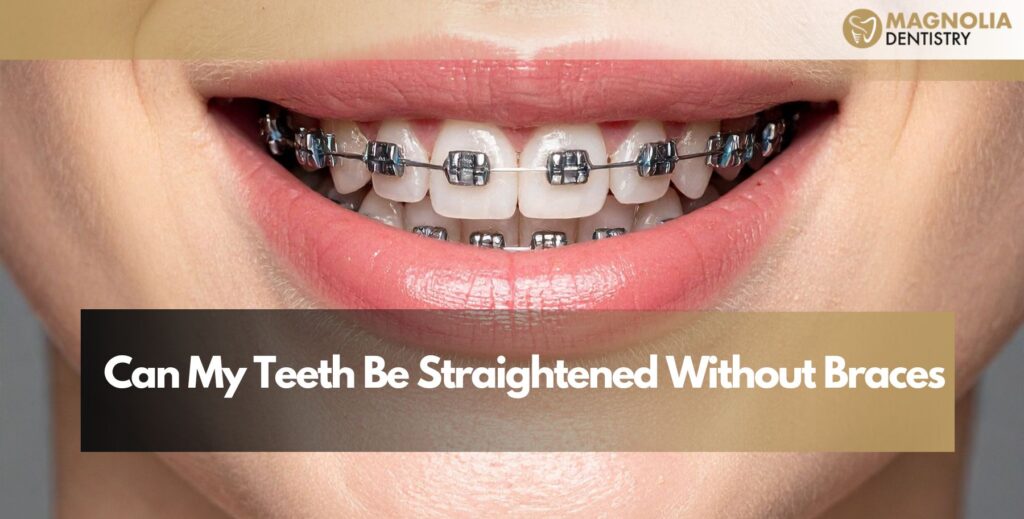
Many people dream of having a straighter smile but hesitate when they think of metal brackets and wires. The good news is that modern dentistry offers several effective alternatives to traditional braces. Whether you’re an adult looking for discreet options or a teen exploring faster treatments, today’s orthodontic technology can help you achieve straight teeth without the discomfort or appearance of braces.
As dental professionals at Magnolia Dentistry, Dentist in Burbank, CA, we meet many patients who ask this same question: “Can my teeth be straightened without braces?” The short answer is yes, and depending on your dental needs, there may be several options available.
This guide explores all your choices, how they work, and what you can expect throughout the process.
Table of Contents
Understanding Why Teeth Become Crooked
Before exploring your options, it’s essential to know why teeth shift out of alignment.
Common Causes of Misalignment
Several factors contribute to crooked teeth:
- Genetics inherited jaw size or crowding tendencies
- Thumb-sucking or pacifier use in early childhood
- Jaw injuries or trauma
- Untreated tooth loss allows nearby teeth to drift
- Poor oral habits, such as mouth breathing or tongue thrusting
When teeth are out of place, it’s not just about looks. Misalignment can affect your bite, cause jaw strain, and increase the risk of tooth wear and gum problems. Straightening your teeth without traditional braces can correct these issues while improving your confidence.
What Are the Alternatives to Traditional Braces
Modern orthodontics has advanced far beyond metal brackets and wires. Patients now have several effective, discreet, and comfortable ways to straighten their teeth.
Clear Aligners (Invisalign and Similar Systems)
Clear aligners are the most popular alternative to braces. They use a series of custom-made, removable trays that gradually move your teeth into alignment.
How Clear Aligners Work
- Your dentist takes a 3D digital scan of your teeth.
- Custom aligners are made to fit your mouth precisely.
- Every 1–2 weeks, you switch to a new set of aligners that gently shift your teeth.
- The trays should be worn for 20–22 hours daily, only removed for eating or brushing.
Benefits of Clear Aligners
- Virtually invisible
- Removable for meals and brushing
- Comfortable, smooth edges (no wires or irritation)
- Easier oral hygiene maintenance
This treatment is ideal for adults or teens who want an unnoticeable solution. It’s also effective for mild to moderate crowding, spacing, or bite issues.
Lingual Braces (Braces Behind the Teeth)
If you want the strength of traditional braces but without the visible hardware, lingual braces are an excellent option.
How They Work
Lingual braces use metal brackets and wires placed behind your teeth on the tongue-facing side instead of the front. They function like traditional braces but remain completely hidden from view.
Advantages
- Invisible from the front
- Effective for complex alignment issues
- Great for people who want fixed braces but aesthetic discretion
Considerations
Lingual braces may feel odd on your tongue for the first few weeks and can slightly affect speech initially. They also require a skilled orthodontist for precise placement and adjustments.
Ceramic Braces (Tooth-Colored Braces)
Ceramic braces use clear or tooth-colored brackets that blend with your natural teeth. They’re less noticeable than metal braces while providing similar strength and control.
Benefits
- Discreet appearance
- Great for moderate to severe misalignment
- Works faster than aligners for some cases
Drawbacks
Ceramic braces can be more fragile and require extra care to prevent staining. Though they’re not “brace-free,” they remain one of the most aesthetic fixed options.
Retainers for Minor Adjustments
For patients with very mild misalignment or those who previously had braces but experienced slight relapse, retainers can sometimes correct alignment issues.
How They Work
Removable retainers gently guide teeth back into their proper position over time. They’re best for subtle movements and not severe cases.
Types of Retainers
- Hawley retainers (wire and acrylic combination)
- Clear plastic retainers (similar to aligners but less forceful)
How Do These Options Compare to Traditional Braces
Each option offers unique advantages depending on your dental condition, budget, and lifestyle preferences.
| Treatment | Visibility | Comfort | Maintenance | Ideal For |
| Clear Aligners | Nearly Invisible | Very Comfortable | Easy | Mild–Moderate Cases |
| Lingual Braces | Hidden Behind Teeth | Moderate | Moderate | Complex Misalignment |
| Ceramic Braces | Slightly Visible | Comfortable | Easy | Moderate–Severe Cases |
| Retainers | Removable | Very Comfortable | Easy | Minor Adjustments |
Modern options make it possible to achieve stunning results without the metallic look once associated with orthodontics.
Who Is a Good Candidate for Teeth Straightening Without Braces
Not everyone requires traditional braces. Your dentist or orthodontist will evaluate your bite, spacing, and jaw alignment before recommending treatment.
Ideal Candidates Include:
- Patients with mild to moderate crowding or gaps
- Adults seeking discreet treatment options
- Teens with good oral hygiene and discipline
- Individuals who previously wore braces and need touch-up correction
Patients with severe bite problems or complex rotations may still need traditional braces for precise control.
The Role of Digital Dentistry in Modern Orthodontics
Thanks to 3D imaging and advanced treatment planning software, dentists can design highly customised aligners and appliances for each patient.
Digital Scanning and Virtual Treatment Planning
Your dentist uses a digital scanner to create a 3D model of your mouth — no messy impressions required. Virtual simulations then show how your teeth will move at each stage of treatment.
Precision and Predictability
Digital orthodontics ensures better accuracy, shorter treatment times, and more predictable results than ever before.
What to Expect During the Treatment Process
During treatment, you’ll have regular checkups, minor adjustments, and visible progress every few weeks as your teeth gradually move into perfect alignment.
Step 1: Consultation
Your dentist performs an oral exam, takes X-rays, and discusses your goals. You’ll review possible options and receive a customized plan.
Step 2: Fitting or Scanning
For aligners, a digital scan captures the shape of your teeth. For lingual or ceramic braces, impressions or moulds are taken.
Step 3: Treatment Phase
You’ll wear aligners or braces as instructed and attend follow-up visits every few weeks for progress monitoring.
Step 4: Retention Phase
Once your teeth reach their ideal position, you’ll use retainers to maintain alignment and prevent shifting.
How Long Does It Take to Straighten Teeth Without Braces
The length of treatment depends on the severity of your case and the chosen method.
Average Timelines
- Clear Aligners: 6–18 months
- Lingual Braces: 12–24 months
- Ceramic Braces: 12–20 months
- Retainers: 3–6 months (minor adjustments only)
In mild cases, results may appear within a few months. Consistency wearing aligners as directed or attending adjustments is key to success.
How Much Does It Cost to Straighten Teeth Without Braces
Costs vary based on the complexity of your case and your geographic location, but here’s a general overview for U.S. patients:
Treatment Type Average Cost Range (USD)
Clear Aligners $3,000 – $6,000
Lingual Braces $7,000 – $10,000
Ceramic Braces $4,000 – $8,000
Retainers (Minor Adjustments) $300 – $1,000
Your dental insurance may cover part of the cost if orthodontic treatment is deemed medically necessary. Many dental offices also offer flexible payment plans.
For younger patients, Braces for Teens or clear aligner options often come with family discounts or school-year promotions.
How to Care for Your Teeth During Orthodontic Treatment
Keeping your teeth clean is crucial throughout treatment.
Daily Care Tips
- Brush after every meal using a soft toothbrush.
- Floss daily or use a water flosser.
- Rinse with fluoride mouthwash.
- Remove aligners before eating or drinking anything other than water.
Good oral hygiene ensures your teeth and gums stay healthy, making your final smile brighter and stronger.
Common Myths About Straightening Teeth Without Braces
Many believe only braces can straighten teeth, but modern treatments like aligners and lingual braces deliver equally effective results with greater comfort and discretion.
Myth 1: Aligners Don’t Work as Well as Braces
False. Clear aligners can fix many alignment issues effectively when used correctly and consistently.
Myth 2: Teeth Straightening Is Only Cosmetic
Straightening teeth improves function, reduces jaw stress, and lowers the risk of decay caused by overlapping teeth.
Myth 3: Adults Can’t Straighten Teeth
Adults can absolutely benefit from orthodontic treatment; clear aligners and ceramic braces are especially designed for them.
Maintaining Results After Treatment
After achieving your dream smile, retention is crucial.
Wearing Retainers
Your dentist will recommend retainers to keep your teeth in their new positions. Initially, you’ll wear them daily, then only at night.
Routine Checkups
Regular dental visits allow your dentist to monitor stability and catch any minor shifts early.
Lifestyle and Oral Habits
Avoid grinding or clenching your teeth, as these habits can cause unwanted movement.
Conclusion
Straightening your teeth without braces is not only possible but easier and more comfortable than ever. With modern options like clear aligners, lingual braces, and ceramic braces, you can enjoy a beautifully aligned smile without compromising your appearance or lifestyle.
The right treatment depends on your specific case, so consulting with a professional is essential. Schedule a consultation with Magnolia Dentistry to explore which orthodontic solution best fits your needs. A confident, healthy smile is well within reach.
FAQs
Is there any way to straighten teeth without braces?
Yes. Clear aligners, lingual braces, and ceramic braces are popular alternatives that provide excellent results without traditional metal braces.
What is the cheapest way to get your teeth straight?
For minor adjustments, removable retainers or mail-order aligners may be more affordable, though dentist-supervised options ensure safer, long-term results.
How much is it to straighten teeth without braces?
Costs typically range between $3,000 and $6,000 for aligners, depending on complexity and treatment duration.
Can I Straighten Teeth Without Braces?
Absolutely. Many patients achieve perfectly aligned smiles with modern, discreet options. Consult your dentist to find the best fit for your goals and budget.