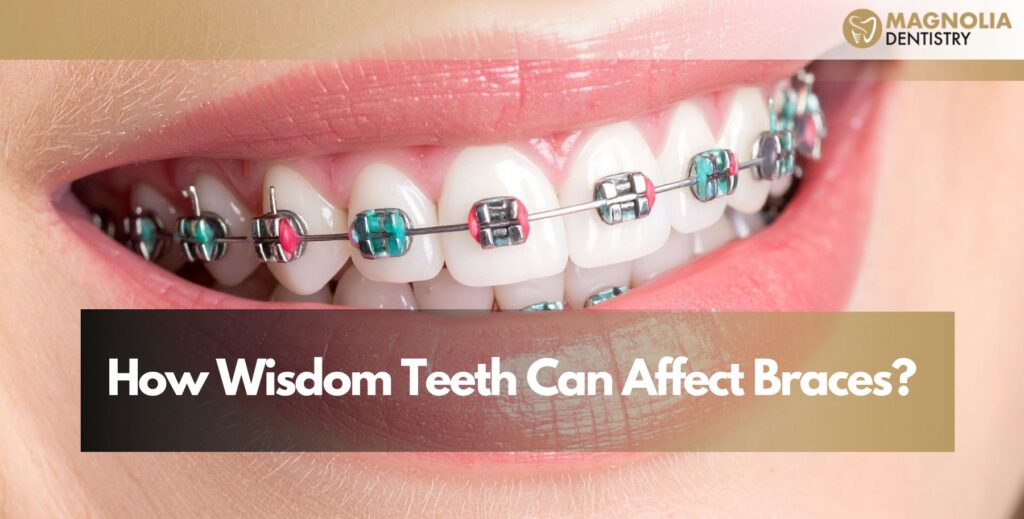
Wisdom teeth, also known as third molars, are the last set of teeth to develop, usually appearing between ages 17 and 25. Braces, on the other hand, work by slowly shifting teeth to create proper alignment, a stable bite, and an improved smile. Many patients wonder whether wisdom teeth can interfere with orthodontic treatment or cause teeth to shift after braces are removed. Understanding how these teeth behave is essential for maintaining long-term orthodontic results.
Quick Answer: Yes, you can get braces while your wisdom teeth are coming in, wisdom teeth do not automatically prevent orthodontic treatment. Whether removal is recommended depends on the position, angle, and available space of your wisdom teeth. If they are impacted, growing at an angle, or causing pressure, extraction is often recommended before or during treatment. If they are straight and have adequate space, they may not need removal. Full guide below.
In this detailed guide, we explain how wisdom teeth influence your braces journey, whether they can move or damage orthodontic work, when removal is recommended, and how to protect your results long term.
Table of Contents
Do Wisdom Teeth Affect Braces or Teeth Alignment?
Most patients assume that wisdom teeth create pressure and push other teeth forward, leading to crowding. While this belief has been common for decades, modern dental research provides a more nuanced picture.
Understanding the Current Evidence
Multiple systematic reviews have examined the relationship between wisdom teeth and crowding. Research published in orthodontic literature, including reviews cited by the American Association of Orthodontists, indicates that wisdom teeth are not the primary cause of post-treatment crowding. Natural jaw changes, continued growth, and failure to wear retainers consistently contribute more to shifting than wisdom teeth alone.
However, impacted wisdom teeth, those growing at abnormal angles or trapped under the bone — can exert localized pressure on the posterior jaw. This pressure may not directly move front teeth but can contribute to discomfort, subtle back molar shifts, and complications that affect overall bite stability.
Why Orthodontists Still Monitor Them Closely
During braces treatment, orthodontists use panoramic X-rays to track the position of wisdom teeth. Even if they haven’t erupted yet, their angle or growth direction predicts whether they might interfere with alignment or cause future issues after braces are complete.
Can I Get Braces If My Wisdom Teeth Are Growing In?
This is one of the most commonly searched questions on this topic, and the answer is yes — in most cases you can get braces while your wisdom teeth are actively growing in.
You can proceed with braces when:
- Wisdom teeth are developing normally in a straight position with adequate space
- The wisdom teeth have not yet caused crowding, pain, or gum inflammation
- Your orthodontist confirms through X-rays that wisdom teeth pose no immediate risk to treatment
Extraction may be recommended first when:
- X-rays show wisdom teeth are severely angled or fully impacted with no room to erupt
- The wisdom teeth are already causing gum inflammation, pain, or pressure on the second molars
- Cysts or infection are present around the developing wisdom teeth
- Your orthodontist and oral surgeon agree that removal would simplify treatment and improve long-term outcomes
If you’re having wisdom teeth removed as part of your orthodontic plan, see our comprehensive guide on wisdom teeth removal recovery time for what to expect during healing.
Can Wisdom Teeth Ruin Orthodontic Work?
This is the fear most patients bring to the consultation, the concern that wisdom teeth could undo years of braces. Here is the honest answer:
Wisdom teeth are rarely the cause of orthodontic failure or dramatic relapse. Studies consistently show that teeth have a natural tendency to shift throughout life regardless of whether wisdom teeth are present, and regardless of orthodontic treatment. This is called physiologic drift and occurs due to natural jaw maturation, bite pressure, and ligament tension.
What wisdom teeth CAN realistically do to orthodontic work:
- Create localized pressure in the molar region that makes retainers feel tight or uncomfortable
- Cause gum inflammation or infection in the back of the mouth that indirectly destabilizes the posterior bite
- If severely impacted and erupting at a horizontal angle, exert some force on the second molar, which may have a minor ripple effect on alignment
What wisdom teeth generally CANNOT do:
- Directly push all your front teeth out of alignment, the force required to shift front teeth cannot be generated by a tooth this far back
- Undo professionally achieved orthodontic results if you consistently wear your retainer
- Cause dramatic relapse that completely reverses braces treatment
The most protective action after braces is lifelong retainer wear, not wisdom tooth removal. Learn more about long-term side effects of tooth extraction to understand the full picture if extraction is recommended.
Can Braces Move Wisdom Teeth? Can They Cause Wisdom Teeth to Erupt?
Two specific questions that frequently appear in patient searches:
Can braces move wisdom teeth forward? Generally no. Braces are designed to move teeth in the dental arch, primarily the teeth from the front molars forward. Third molars at the back of the jaw are typically not included in orthodontic treatment planning for tooth movement. In rare specialized cases, an orthodontist may use an impacted wisdom tooth as an anchor point, but this is uncommon and requires specific conditions.
Can braces cause wisdom teeth to erupt? Indirectly, yes, in some cases. When braces create additional space in the dental arch by aligning crowded teeth, this extra space may allow a partially erupted wisdom tooth to fully come in. This is usually not a negative outcome, but it does mean wisdom tooth eruption during braces treatment is something to monitor. Your orthodontist will track this on X-rays at regular intervals.
Should Wisdom Teeth Be Removed Before Getting Braces?
Extraction before braces is not always necessary. The decision depends entirely on the position, health, and likely impact of your specific wisdom teeth.
When removal before braces is helpful: If X-rays show severe angulation, lack of space, or cyst formation, removing wisdom teeth early prevents complications during orthodontic treatment. This also eliminates sources of inflammation that can affect healing and tooth movement during braces.
When you can keep your wisdom teeth during treatment: If wisdom teeth are developing normally, erupting straight, and have adequate space in the jaw, they can often remain without affecting orthodontic outcomes. Regular monitoring with X-rays continues throughout treatment.
Individual evaluations are essential: Each patient’s jaw shape, tooth size, and eruption pattern is unique. Orthodontists and oral surgeons work together to evaluate whether early removal is necessary or whether monitoring is the safer, less invasive approach.
Can You Get Braces With Impacted Wisdom Teeth?
Yes, in most cases braces can proceed even when wisdom teeth are impacted, particularly if the impaction is not causing active symptoms. However, the orthodontic team will assess the severity of impaction.
Mild horizontal impaction with no symptoms: Braces can typically begin. The impacted teeth are monitored throughout treatment.
Severe impaction causing pain, gum disease, or pressure: Most orthodontists will recommend extraction before beginning or continuing braces, as active infection or inflammation complicates tooth movement and healing.
Cysts present around impacted wisdom teeth: Extraction is almost always recommended before orthodontic treatment begins, as cysts can cause bone loss that affects treatment outcomes.
If impacted wisdom teeth are extracted during your braces journey, see our guide on the side effects of tooth extraction to understand the recovery process.
How Wisdom Teeth Affect Long-Term Bite Stability and Retention
Even if wisdom teeth don’t directly push teeth forward, they can still influence the stability of your bite and alignment over time.
Subtle posterior pressure: When wisdom teeth push against the gums or bone, patients often feel tightness in the molar region. This pressure may not move teeth dramatically, but it can affect how the molars fit together, which indirectly influences the overall bite.
Retainers may feel tight: Once braces are removed, retainers keep teeth in their proper position. If wisdom teeth are pushing from beneath the gums, patients may notice increased tightness when wearing retainers, a signal for orthodontic evaluation.
Why retainers matter more than extraction: Whether you keep or remove your wisdom teeth, consistent long-term retainer use is the most critical factor in maintaining orthodontic results. Natural drift occurs in everyone, with or without wisdom teeth. Retainers counteract this drift regardless of the cause. For guidance on maintaining your teeth after orthodontic or dental treatment, regular checkups are essential.
Recognizing Symptoms That Wisdom Teeth Are Interfering With Braces
Recognizing symptoms early helps protect your orthodontic investment and prevents larger oral health issues later.
Noticeable tightness or pressure near the molars: Many patients describe tightness when wisdom teeth begin to erupt. This may be mistaken for teeth shifting after braces, even when the true cause is emerging third molars.
Swelling in the gums or jaw area: Inflamed gums near the back of the mouth can indicate that wisdom teeth are erupting or becoming impacted. Swelling often intensifies when orthodontic pressure is present.
Pain when chewing or biting: Wisdom tooth movement may irritate nearby nerves or tissues. Chewing discomfort near the back of the mouth is a sign that the molars may be pressing against surrounding structures.
Retainers fitting differently: If a retainer that previously fit perfectly suddenly feels tight, painful, or doesn’t seat fully, wisdom teeth pressure may be a contributing factor and warrants evaluation.
Refer to our full guide on wisdom tooth recovery for a complete picture of what wisdom tooth symptoms typically look and feel like.
When Removal Is Recommended and What Happens After
Removing problematic wisdom teeth during or after braces: Extraction prevents the ongoing pressure they place on molars, reduces gum inflammation risk, and helps retainers fit more comfortably. Most orthodontists recommend removal when wisdom teeth are causing pain, swelling, or infection, or when panoramic imaging shows they are growing in a direction likely to cause problems.
Recovery and returning to braces or retainers: Most patients experience mild discomfort, swelling, or jaw stiffness after extraction, typically improving significantly within a few days. In most cases, braces adjustments or retainer wear can resume within a short period after extraction. Orthodontists coordinate with oral surgeons to ensure a smooth transition.
Protecting your bite during recovery: Patients must follow post-extraction instructions carefully to avoid dry socket or infection. Wearing retainers during recovery should only resume when cleared by your orthodontist, premature retainer use on healing tissues can cause discomfort and delay recovery.
Common Myths About Wisdom Teeth and Braces
Myth: Wisdom teeth always cause crowding Current evidence from systematic reviews does not support wisdom teeth as the primary cause of crowding. Natural jaw changes and retainer non-compliance are the main contributors to post-orthodontic shifting.
Myth: Removal is always necessary before braces Extraction is recommended only when diagnostic imaging shows potential complications. Many patients complete braces successfully with their wisdom teeth intact.
Myth: Braces can align impacted wisdom teeth into position In almost all cases, braces cannot straighten or align deeply impacted wisdom teeth. Impacted teeth require either surgical exposure and assisted eruption (a specialized technique) or extraction.
Myth: Braces will prevent wisdom tooth problems Braces correct alignment but cannot prevent impaction, infection, or cysts. Only professional evaluation with current X-rays determines the right course of action for your wisdom teeth.
Conclusion
Wisdom teeth can influence orthodontic health in several ways, through pressure, discomfort, gum irritation, or changes in bite stability. While they do not always cause crowding or alignment issues, their position and growth pattern determine whether they pose a risk to braces or retainers. Evidence suggests that natural jaw changes and retainer inconsistency cause more post-treatment shifting than wisdom teeth alone, but impacted wisdom teeth with active symptoms should still be addressed promptly.
Prompt monitoring, accurate diagnosis, and early intervention protect your orthodontic investment and long-term oral health. For expert evaluation and personalized care, schedule an appointment with a trusted Dentist in Burbank, CA who can assess your wisdom teeth and coordinate your care with your orthodontist.
Frequently Asked Questions About Wisdom Teeth and Braces
Can I get braces with my wisdom teeth coming in?
Yes. In most cases, braces can begin even while wisdom teeth are actively developing. Your orthodontist will take panoramic X-rays to assess the position, angle, and available space for your wisdom teeth. If they are developing normally and not causing symptoms, braces treatment can proceed. If they are severely angled, impacted, or causing gum inflammation, extraction may be recommended before beginning treatment.
Do wisdom teeth always need to be removed before getting braces?
No. Removal is recommended only when wisdom teeth are impacted, causing active symptoms, growing in a problematic direction, or likely to interfere with orthodontic progress. Many patients complete braces treatment successfully with their wisdom teeth intact.
Can wisdom teeth ruin orthodontic work?
Not typically. Wisdom teeth are rarely the cause of major orthodontic relapse. Studies show natural jaw maturation and retainer non-compliance are the primary causes of post-treatment shifting. However, impacted wisdom teeth causing inflammation, pressure, or infection can indirectly affect bite stability. Consistent retainer wear is the most important protection for orthodontic results, more so than wisdom tooth removal.
Can braces move wisdom teeth forward?
Generally no. Braces are designed to move the teeth in the front dental arch. Third molars are not typically included in orthodontic tooth movement. In rare, specialized cases, a dentist may use an impacted wisdom tooth as an anchor point, but this is uncommon. What braces CAN do indirectly is create space that allows a partially erupted wisdom tooth to emerge more fully.
Can wisdom teeth shift teeth after braces?
They may contribute to subtle posterior pressure, but natural jaw changes and failure to wear retainers consistently are the primary causes of post-braces shifting. Wearing your retainer long-term, ideally for life at night, is the most effective way to prevent relapse regardless of what your wisdom teeth do.
Can you get braces with impacted wisdom teeth?
Yes, in most cases. Mildly impacted wisdom teeth with no active symptoms can typically be monitored during braces treatment. Severely impacted teeth causing pain, gum infection, or cysts are usually extracted before orthodontic treatment begins to prevent complications.
How do I know if my wisdom teeth are affecting my braces?
Signs include: gum swelling or soreness near the back of the mouth, unusual tightness or discomfort when wearing retainers, pain when biting or chewing in the molar area, or increased sensitivity that wasn’t present before. If these symptoms develop during or after braces treatment, contact your orthodontist or dentist for evaluation.
Do wisdom teeth cause crowding? What does the evidence say?
Research is mixed but trending toward wisdom teeth NOT being the primary cause of crowding. Multiple systematic reviews indicate that crowding in the lower front teeth occurs at similar rates in people who have had wisdom teeth removed and those who have not. The main contributors to post-orthodontic crowding are natural jaw changes over time, ligament forces, and inconsistent retainer wear.
How long after wisdom tooth removal can I return to braces adjustments?
Most patients can resume braces adjustments within 1-2 weeks after wisdom tooth extraction, once initial healing has stabilized. Retainer wear typically resumes when cleared by your orthodontist, usually after 5-7 days for uncomplicated extractions. Your dental team will coordinate the timeline based on your specific healing progress.