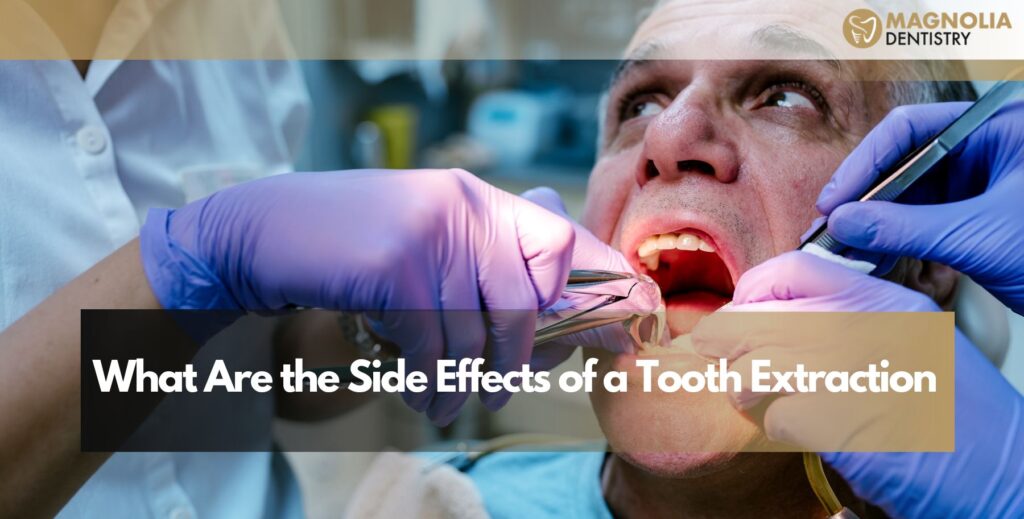
Tooth extraction is one of the most common dental procedures whether it’s for a severely decayed tooth, impacted wisdom tooth, or orthodontic correction. While the procedure is generally safe and routine, it’s natural for patients to wonder about possible side effects, recovery time, and how to ensure smooth healing.
As a dental professional, I can assure you that most post-extraction side effects are temporary and manageable with proper care. This guide explains short-term and long-term side effects of tooth extraction, what to expect during recovery, and essential aftercare tips that promote healing and prevent complications.
Table of Contents
What Happens During a Tooth Extraction?
Before discussing side effects, it’s important to understand the extraction process itself.
Step-by-Step Overview
- Evaluation and X-rays: Your dentist examines your mouth and takes X-rays to determine the tooth’s position and root structure.
- Anesthesia: Local anesthesia numbs the area. For complex cases like impacted wisdom teeth, sedation or general anesthesia may be used.
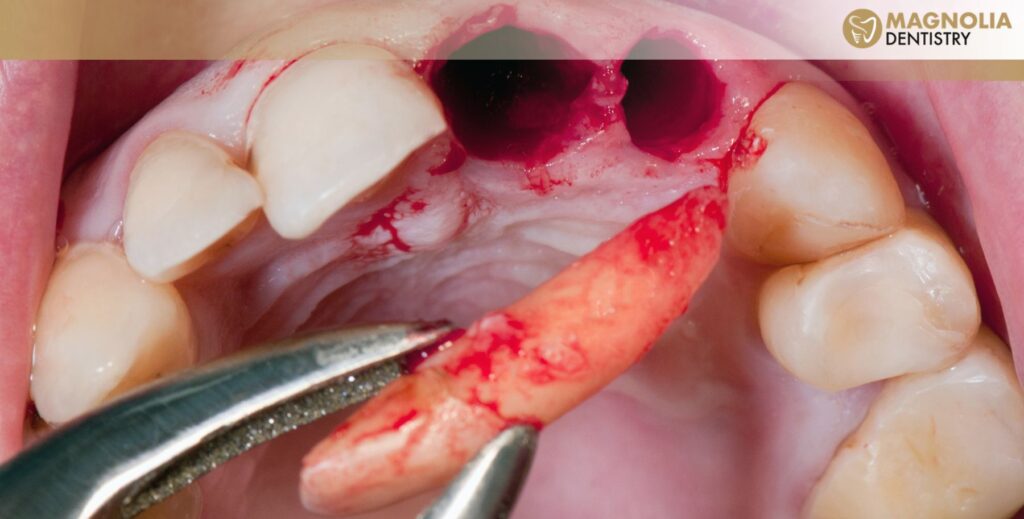
- Extraction: The dentist loosens the tooth using specialized tools. Simple extractions remove visible teeth; surgical extractions require a small incision.
- Closure: In some cases, stitches are placed to aid healing. Gauze helps stop bleeding and form a blood clot.
Understanding this process helps patients know what’s normal and what may require attention afterward.
Common Short-Term Side Effects After Tooth Extraction
Most people experience mild, short-term side effects during the first few days after extraction. These are natural parts of the healing process.
Mild Pain and Discomfort
After the anesthesia wears off, mild soreness is expected. Over-the-counter pain relievers or prescribed medications usually manage it effectively.
Swelling of the Gums or Cheek
Some swelling occurs in response to tissue trauma. Applying ice packs for 10–15 minutes at a time reduces inflammation during the first 24 hours.
Minor Bleeding
Small amounts of bleeding or pink saliva for the first few hours are normal. Biting gently on gauze helps control it.
Difficulty Opening the Mouth
Slight stiffness, known as trismus, can happen when the jaw muscles tighten temporarily after surgery. Warm compresses and gentle stretching exercises help ease it.
Bad Taste or Odor
This can occur from dried blood or poor oral hygiene during early recovery. Gentle rinsing after 24 hours keeps the mouth clean.
These side effects usually subside within a few days and are not a cause for concern.
Potential Complications After Tooth Extraction
Although rare, complications can occur if aftercare instructions aren’t followed properly.
Dry Socket (Alveolar Osteitis)
One of the most common complications, a dry socket happens when the blood clot at the extraction site dislodges or dissolves too soon. This exposes the bone and nerves, causing sharp pain.
Symptoms:
- Severe pain radiating to the ear or temple
- Unpleasant odor or taste
- Visible empty socket
Avoid smoking, using straws, or spitting forcefully to prevent it.
Infection
If bacteria enter the extraction site, infection may develop. Signs include prolonged pain, swelling, pus, or fever. Antibiotics and professional cleaning may be required.
Prolonged Numbness
In rare cases, nerve irritation during extraction (especially lower wisdom teeth) can cause temporary numbness of the lips, tongue, or chin. Most cases resolve within weeks.
Jawbone Inflammation or Bone Spurs
Occasionally, small fragments of bone rise to the surface during healing. These can cause irritation but are easily removed by a dentist.
Long-Term Side Effects of Tooth Extraction
While short-term effects fade quickly, long-term side effects can develop if the space left by the extracted tooth isn’t restored.
Bone Loss
After tooth removal, the jawbone begins to resorb or shrink because it no longer supports a tooth root. This bone loss may affect nearby teeth and facial structure.
Shifting of Adjacent Teeth
When a missing tooth isn’t replaced, nearby teeth may drift toward the gap, causing bite misalignment or spacing problems.
Chewing and Speech Issues
Missing teeth can make it harder to chew certain foods or pronounce words clearly. Restorative options like bridges or implants can fix these issues.
Aesthetic Changes
Over time, bone loss and shifting can subtly change your facial appearance, leading to a sunken or aged look.
Proper restorative planning prevents these complications and maintains long-term oral health.
Long-Term Side Effects of Tooth Extraction for Braces
Extractions are sometimes part of orthodontic treatment when teeth are crowded. While it helps create space, it’s important to understand the long-term implications.
Improved Alignment
Removing one or more premolars gives orthodontists room to align teeth properly, leading to improved aesthetics and bite function.
Potential Risks
- Slight narrowing of the dental arch if extractions are overdone.
- Temporary speech changes while adjusting to the new spacing.
- Mild bone resorption at the extraction site, which usually stabilizes.
When performed strategically, extractions for braces don’t cause harm they actually help achieve balance and symmetry in your smile.
Emotional and Physical Impact After Tooth Extraction
Dental extractions can affect patients emotionally and physically. Some people feel self-conscious about the gap left behind or anxious about the healing process.
Managing Anxiety
Your dentist can provide reassurance, sedation options, or relaxation techniques to help reduce fear before and during the procedure.
Post-Treatment Confidence
Once healing is complete or a replacement (like an implant or bridge) is placed, most patients feel relieved and confident about their oral health.
Healing Process and Recovery Stages
The healing process typically follows a predictable timeline, though it varies based on the tooth location, extraction type, and patient health.
First 24 Hours
A blood clot forms in the socket, which is crucial for healing. Follow your dentist’s instructions closely during this phase.
2–3 Days After Extraction
Swelling and soreness peak but begin to subside. Continue cold compresses and gentle rinses.
1 Week Later
Tissues start to repair. Stitches (if placed) may dissolve or be removed by your dentist.
2 Weeks and Beyond
New tissue grows over the extraction site. You can resume normal eating habits gradually.
Those preparing for wisdom tooth extraction should expect a slightly longer healing period since these extractions are often surgical and involve deeper tissues.
What Are the Side Effects of Wisdom Tooth Extraction?
Wisdom tooth removal, especially impacted ones, can produce more noticeable side effects.
Common Wisdom Tooth Extraction Side Effects
- Swelling of cheeks and jaw
- Mild bruising
- Limited mouth opening
- Temporary difficulty eating solid foods
Serious but Rare Side Effects
- Infection or dry socket
- Jaw stiffness lasting over a week
- Prolonged bleeding if clots fail to form
Most patients heal completely within two to three weeks with proper tooth extraction aftercare.
Tooth Extraction What to Do After
Following post-extraction instructions carefully minimizes side effects and speeds recovery.
Immediate Care Tips
- Bite gently on gauze for 30–45 minutes to stop bleeding.
- Avoid smoking or using a straw for at least 48 hours.
- Eat soft foods like yogurt, soup, and mashed potatoes.
- Keep your head elevated to reduce swelling.
Oral Hygiene Tips
After 24 hours, gently rinse your mouth with warm salt water several times a day. Avoid brushing directly over the extraction site for the first few days.
Nutritional Considerations After Tooth Extraction
Eating the right foods supports faster recovery and prevents irritation.
Recommended Foods
- Smoothies and protein shakes
- Scrambled eggs
- Oatmeal and soft pasta
- Applesauce and mashed bananas
Foods to Avoid
- Hard or crunchy items like nuts and chips
- Spicy or acidic foods that irritate the socket
- Alcoholic beverages, which delay healing
Proper nutrition ensures your body gets enough protein, vitamins, and minerals to rebuild tissue.
How to Prevent Long-Term Problems After Extraction
To avoid bone loss, shifting, and other long-term issues, your dentist may recommend tooth replacement options.
Dental Implants
They replace the tooth root and prevent bone loss by stimulating the jawbone.
Bridges and Partial Dentures
These restore chewing ability and keep neighboring teeth stable.
Regular Dental Checkups
Early monitoring helps detect complications before they worsen.
When to Contact Your Dentist
Contact your dentist if you experience any of the following:
- Persistent bleeding after 24 hours
- Severe or worsening pain
- Swelling that increases after day 3
- Fever, pus, or foul taste in the mouth
Prompt attention prevents infections and ensures complete healing.
Conclusion
While tooth extraction may cause short-term discomfort and rare long-term effects, most patients heal completely with proper care and follow-up. Understanding what to expect — from common side effects to preventive measures helps you recover safely and maintain your oral health.
If you’re concerned about extraction recovery or replacement options, consult Tooth Extraction Burbank, CA specialists to ensure your smile stays strong, balanced, and healthy for years to come.
FAQs
What are the bad reactions to tooth extraction?
Bad reactions include prolonged pain, infection, or dry socket. These are rare and usually occur when post-care instructions are not followed properly.
What happens to your body after a tooth extraction?
Your body initiates healing by forming a blood clot. Over time, tissue and bone regenerate to fill the gap.
How long does it take to recover from having a tooth pulled out?
Most recoveries take 7–10 days. Surgical extractions, like wisdom teeth, may require two to three weeks.
What are the negative effects of extraction?
Temporary pain, swelling, and minor bleeding are normal. Long-term effects include potential bone loss or tooth shifting if the gap isn’t restored.
What is the most common complication of tooth extraction?
Dry socket is the most common complication, caused by loss of the blood clot. It can be prevented with careful aftercare.