Tooth loss affects millions of Americans, and while the visible gap in your smile is the most obvious consequence, a hidden process occurs beneath your gums that can have far-reaching effects on your oral health and facial appearance. When you lose a tooth, the jawbone that once supported it begins to deteriorate in a process called bone resorption. This progressive bone loss can compromise your facial structure, make eating difficult, and complicate future dental treatments. Fortunately, dental implants offer a revolutionary solution that not only replaces missing teeth but also actively preserves and stimulates jawbone tissue. Understanding how implants prevent bone loss is essential for anyone facing tooth loss or considering tooth replacement options, particularly for Burbank, CA residents seeking long-term solutions for maintaining both function and aesthetics.
Table of Contents
The Science Behind Jawbone Deterioration After Tooth Loss
Your jawbone is living tissue that requires constant stimulation to maintain its density and volume. When teeth are present, everyday activities like chewing and biting transmit forces through the tooth roots into the surrounding bone, signaling your body to continuously rebuild and maintain that bone tissue through a process called bone remodeling.
How Natural Teeth Stimulate and Maintain Bone Density
Every time you bite, chew, or even clench your teeth, the roots embedded in your jawbone create mechanical stress that stimulates specialized bone cells called osteoblasts. These cells respond to the pressure by depositing new bone material, constantly renewing the alveolar bone the portion of the jaw that houses tooth roots. This biological feedback loop ensures that the bone remains dense, strong, and healthy. The force distribution is remarkably efficient: when you bite down, pressures up to 200 pounds per square inch on molars travel through the root structure, creating micro-deformations in the bone that trigger cellular responses. This constant cycle of stress and renewal keeps your jawbone robust and maintains its three-dimensional structure, supporting not just your teeth but also the soft tissues of your face.
The Cascade of Bone Resorption Following Tooth Extraction
When a tooth is lost through extraction, trauma, or periodontal disease, this crucial stimulation disappears immediately. Without the mechanical forces transmitted through tooth roots, your body perceives the bone in that area as unnecessary and begins a resorption process to reclaim the minerals for use elsewhere. This isn’t a design flaw—it’s an efficient biological mechanism that reallocates resources from unused areas. However, the consequences are significant. Studies show that within the first year after tooth loss, you can lose 25% of bone width in the affected area. The resorption continues progressively, with most bone loss occurring in the first 18 months but continuing throughout your lifetime at a slower rate. The bone deteriorates both vertically (height) and horizontally (width), creating a narrower, shorter ridge where the tooth once stood.
Long-Term Consequences of Untreated Bone Loss on Facial Structure
As jawbone volume decreases over months and years, the effects extend far beyond your mouth. The loss of bone support causes the lower third of your face to shorten, creating a collapsed appearance that ages you significantly. Your lips lose support and appear thinner, while deep wrinkles form around your mouth the classic “sunken face” associated with missing teeth. The chin may rotate forward and upward, and the distance between your nose and chin decreases, fundamentally altering your facial proportions. This isn’t merely cosmetic; severe bone loss affects your ability to chew effectively, limiting your diet and potentially impacting nutrition. Speech patterns may change as tongue position and air flow are affected. Additionally, extensive bone resorption creates challenges for future dental treatments there may be insufficient bone to support dentures comfortably or to place dental implants without complex bone grafting procedures.
How Dental Implants Function as Artificial Tooth Roots to Preserve Bone
Dental implants represent the only tooth replacement option that addresses both the visible crown and the critical root structure beneath the gum line, providing the mechanical stimulation necessary to maintain jawbone health.
The Osseointegration Process and Bone-Implant Fusion
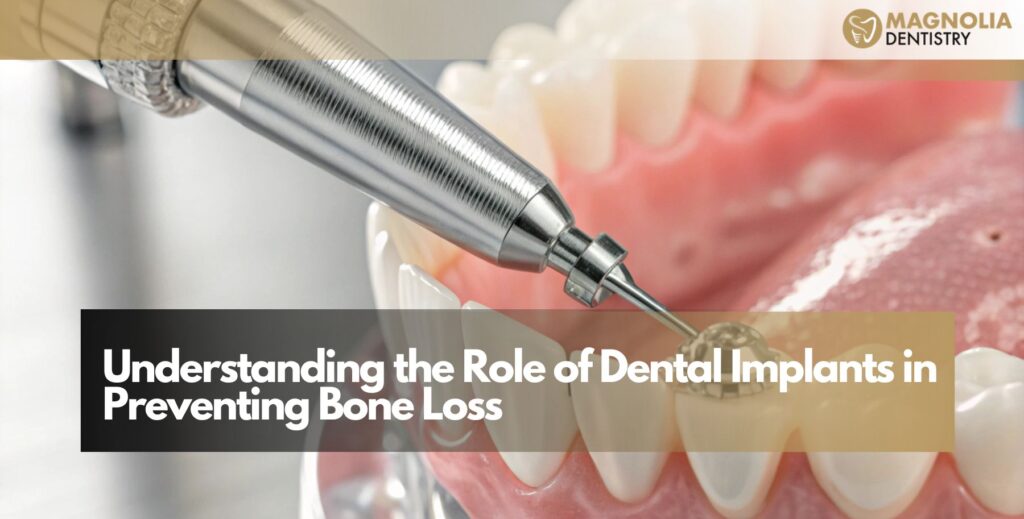
Dental implants are typically made from titanium, a biocompatible material that bone tissue naturally bonds with through a process called osseointegration. After a Burbank trusted Dentist surgically places the implant post into your jawbone, a remarkable biological process begins. Over the next 3-6 months, bone cells grow directly onto the implant surface, creating a structural and functional connection that essentially makes the implant part of your skeleton. This isn’t merely bone growing around the implant; at the microscopic level, bone tissue directly attaches to the titanium surface through chemical bonds. The implant becomes anchored with a stability that matches or exceeds natural tooth roots. This fusion creates a permanent foundation that can withstand the powerful forces of chewing. Studies show properly integrated implants can handle forces exceeding 200 pounds without loosening or failing.
Mechanical Load Transfer That Mimics Natural Tooth Function
Once osseointegration is complete and a crown is attached, dental implants function remarkably like natural teeth in transmitting forces to the jawbone. When you bite or chew on an implant-supported tooth, the force travels through the crown, into the implant post, and directly into the surrounding bone just as it would through a natural tooth root. This mechanical loading triggers the same cellular responses that maintain bone density, signaling osteoblasts to continuously deposit new bone material. The stimulation occurs with every meal, every conversation, and every instance of tooth contact, providing the constant biological signals your jawbone needs to maintain itself. Unlike dentures or bridges that rest on the gum surface and transmit minimal force to underlying bone, implants ensure the bone remains functionally active and metabolically engaged.
Clinical Evidence Demonstrating Implants’ Bone Preservation Benefits
Extensive research confirms dental implants’ effectiveness in preventing bone loss. A landmark study published in the Journal of Periodontology found that areas with dental implants maintained stable bone levels over 10+ years, while adjacent areas without teeth continued losing bone. Another study comparing implants to bridges showed that after five years, sites with implants had virtually no vertical bone loss, while sites under bridge pontics (artificial teeth) lost an average of 0.4-0.5mm of bone height. Research on full mouth dental implants solutions demonstrates even more dramatic benefits: patients who received implant-supported full arch restorations showed not only preservation of existing bone but in some cases, actual bone regeneration in response to the restored function. These findings have transformed treatment planning, with dental professionals now recommending implants not just for tooth replacement but as a preventive measure against the cascade of problems caused by bone resorption.
Comparing Dental Implants to Traditional Tooth Replacement Methods
Understanding how different tooth replacement options affect bone health helps you make informed decisions about which solution best serves your long-term oral health and quality of life.
Why Dentures and Bridges Fail to Prevent Jawbone Deterioration
Traditional dentures, whether partial or complete, rest on top of your gums and are held in place by suction, adhesives, or clasps attached to remaining teeth. While they restore the visible appearance of teeth and provide some chewing function, they do virtually nothing to prevent bone loss. In fact, the pressure dentures exert on the gum tissue can actually accelerate bone resorption in some cases. As the underlying bone continues to shrink, dentures become loose and ill-fitting, requiring periodic relining or complete replacement typically every 5-7 years. Many long-term denture wearers experience such extensive bone loss that their dentures no longer stay in place even with adhesives. Dental bridges fare slightly better by maintaining some stimulation in areas where the supporting teeth are located, but the edentulous area beneath the pontic (false tooth) receives no stimulation whatsoever, leading to continued bone resorption in that specific location.
Single Implants Versus Full Arch Implant Solutions for Extensive Bone Preservation
For patients missing multiple teeth or facing complete tooth loss, comprehensive implant solutions offer superior bone preservation across larger areas of the jaw. Single dental implants replace individual teeth with independent posts that function autonomously, providing localized bone stimulation exactly where each tooth was lost. For patients missing all teeth in an arch, All on 4 Dental Implants represents an innovative approach that uses just four strategically placed implants to support an entire arch of teeth. The implants are positioned to maximize contact with existing bone, often placed at angles to avoid areas of significant bone loss and engage stronger bone regions. This technique provides widespread stimulation across the jaw, helping preserve bone in broader areas. Full Mouth Dental Implants solutions may use 6-8 implants per arch for even greater stability and more comprehensive bone stimulation. These multi-implant approaches distribute chewing forces across multiple points, more closely mimicking the natural dentition’s bone-preserving effect while providing the strength to handle any food type without restriction.
Cost-Benefit Analysis of Implants for Long-Term Bone Health
While dental implants require a higher initial investment than dentures or bridges, the long-term value becomes clear when considering bone preservation and longevity. Traditional dentures may cost $1,000-$3,000 initially but require replacements every 5-7 years due to bone loss and wear, plus ongoing expenses for adhesives and adjustments. Over 20 years, total costs often exceed $15,000-$20,000. Bridges typically last 10-15 years before needing replacement and require grinding down healthy adjacent teeth, which may eventually need their own restorations or implants. In contrast, dental implants boast success rates exceeding 95% and can last 25+ years or even a lifetime with proper care. More importantly, they prevent the bone loss that would necessitate complex and expensive bone grafting procedures if you later decide you want implants. By preserving bone from the outset, implants maintain your facial structure, prevent the aging effects of bone resorption, and ensure you always have sufficient bone for future dental work if needed.
The Dental Implant Procedure and Timeline for Burbank, CA Residents
Understanding what to expect during the implant process helps you prepare mentally and practically for this transformative dental treatment that will preserve your bone health for decades to come.
Initial Consultation, Bone Assessment, and Treatment Planning
Your journey begins with a comprehensive evaluation by a qualified implant dentist who examines your oral health, reviews your medical history, and uses advanced imaging to assess your jawbone. Cone beam CT scans provide three-dimensional views of your bone, showing exact dimensions, density, and proximity to critical structures like nerves and sinuses. This detailed imaging allows precise implant placement planning. Your dentist evaluates whether you have sufficient bone for immediate implant placement or whether bone grafting is needed first. They’ll discuss your goals, timeline preferences, and budget to create a personalized treatment plan. For Burbank residents, many local practices offer virtual consultations or same-day assessments, making it convenient to explore your options without disrupting your busy schedule.
Surgical Placement and the Healing Phase for Osseointegration
The implant surgery itself is typically performed under local anesthesia with sedation options available for anxious patients. The procedure involves creating a precise opening in the jawbone and placing the titanium implant post at the exact depth and angle determined during planning. For single implants, the procedure often takes 30-60 minutes; comprehensive solutions like All on 4 may require 2-3 hours. Most patients report minimal discomfort during the procedure and manage post-operative pain easily with over-the-counter medications. The critical healing phase follows, during which osseointegration occurs over 3-6 months. During this time, you’ll wear a temporary restoration to maintain aesthetics and function while the implant fuses with your bone. Regular check-ups monitor healing progress, and once integration is confirmed, you move to the final restoration phase.
Final Restoration and Long-Term Maintenance for Optimal Results
After successful osseointegration, your dentist attaches an abutment (connector piece) to the implant and takes impressions for your final crown, bridge, or denture. The restoration is carefully crafted to match your natural teeth in color, shape, and function. Once placed, your implant restoration functions like natural teeth and requires similar care: brushing twice daily, daily flossing (using special floss designed for implants), and regular dental check-ups every six months. Professional cleanings remove buildup that could compromise the gum tissue around implants. With proper maintenance, your implants will continue stimulating your jawbone, preserving its volume and density while providing confident chewing, speaking, and smiling for decades.
Maximizing Bone Preservation Outcomes with Proper Implant Care
While dental implants are highly effective at preventing bone loss, their long-term success depends on maintaining the health of surrounding tissues and ensuring the implant remains functionally integrated with the bone.
Daily Oral Hygiene Practices to Protect Implant-Supported Bone
Maintaining excellent oral hygiene around dental implants prevents peri-implantitis, an inflammatory condition that can lead to bone loss around the implant. Brush at least twice daily using a soft-bristled brush, paying special attention to the area where the crown meets the gum line where bacterial plaque tends to accumulate. Use low-abrasive toothpaste to avoid scratching the implant restoration surface. Flossing is crucial; specialized implant floss or interdental brushes clean between implant restorations and natural teeth where regular floss might not reach effectively. Water flossers provide an excellent adjunct for flushing bacteria from around implant posts. Antimicrobial mouth rinses can reduce bacterial loads, though they shouldn’t replace mechanical cleaning. These daily practices maintain healthy gum tissue that protects the bone-implant interface.
Professional Monitoring and Preventive Care to Ensure Continued Success
Regular professional care is essential for long-term implant success and bone preservation. During six-month check-ups, your dentist examines the implant restoration for proper fit, checks gum tissue health around implants, and uses special instruments to gently clean areas you can’t reach at home. Periodic X-rays monitor bone levels around implants, allowing early detection of any bone loss before it becomes problematic. Professional cleanings remove calculus (hardened plaque) that can harbor bacteria and trigger inflammation. Your dental team can identify issues like bite imbalances that place excessive force on implants, potentially affecting the bone interface. Early intervention addresses minor problems before they compromise your implant or the surrounding bone.
Lifestyle Factors That Support Implant Longevity and Bone Health
Certain lifestyle choices significantly impact implant success and bone preservation. Smoking is the most detrimental factor it impairs blood flow, compromises healing, and dramatically increases implant failure rates while accelerating bone loss. Quitting smoking before implant placement substantially improves outcomes. Uncontrolled diabetes affects healing and bone metabolism; managing blood sugar levels optimizes osseointegration and long-term implant stability. A diet rich in calcium and vitamin D supports bone health systemically, benefiting both your implants and natural bone. Avoid using implant restorations to open packages, crack nuts, or chew ice these excessive forces can damage restorations or compromise the bone-implant interface. If you grind your teeth (bruxism), wearing a night guard protects both implants and natural teeth from destructive forces.
Conclusion
Dental implants represent far more than cosmetic tooth replacement they’re a comprehensive solution that addresses the hidden but critical issue of jawbone preservation. By functioning as artificial roots that integrate with your bone and transmit the mechanical forces necessary for bone maintenance, implants prevent the progressive deterioration that follows tooth loss. This preservation maintains your facial structure, prevents the aging effects of bone resorption, and ensures you retain the bone necessary for lifelong oral health.
For Burbank, CA residents facing tooth loss or currently struggling with the limitations of dentures, dental implants offer a permanent solution that improves quality of life while protecting your long-term health. Whether you need a single implant or a comprehensive solution like All on 4 or Full Mouth Dental Implants, consulting with a qualified professional is the first step toward preserving your jawbone and reclaiming confident function.
The investment in dental implants pays dividends not just in restored chewing ability and aesthetics, but in preventing the cascade of problems that bone loss creates. By choosing implants, you’re choosing to maintain your facial appearance, protect your remaining teeth, and preserve the foundation of your oral health for decades to come.
Frequently Asked Questions
Can dental implants be placed if I already have significant bone loss?
Many patients with existing bone loss can still receive dental implants, though additional procedures may be necessary. Bone grafting techniques can rebuild lost bone volume, creating sufficient foundation for implant placement. Procedures like sinus lifts add bone to the upper jaw, while ridge augmentation rebuilds width and height in deficient areas. Advanced implant designs, including shorter implants or zygomatic implants that anchor in cheekbone rather than jawbone, provide options when standard implants aren’t feasible. A thorough evaluation with cone beam CT scanning determines your specific needs. The key is not waiting too long the more bone you lose, the more complex and expensive restoration becomes.
How quickly does bone loss occur after losing a tooth?
Bone resorption begins immediately after tooth loss and progresses most rapidly during the first year. Research shows you can lose 25% of bone width in the affected area within just 12 months. The process continues throughout your lifetime, though at a slower rate after the initial 18 months. Vertical bone loss (height) averages 0.5-1.0mm per year in the first few years, while horizontal bone loss (width) can be even more dramatic. This is why dental professionals recommend implant placement as soon as possible after tooth extraction—the sooner you restore stimulation to the bone, the more you preserve. Some dentists offer immediate implant placement at the time of extraction, maximizing bone preservation.
Do All on 4 implants provide the same bone preservation as individual implants?
All on 4 Dental Implants effectively preserve bone, though the mechanism differs slightly from individual implants for each tooth. While four implants don’t provide stimulation at every former tooth location, they distribute forces across the arch and stimulate bone in strategic areas, preventing the overall collapse and resorption that occurs with dentures. The angled placement technique maximizes contact with healthy bone and creates broad force distribution. Studies show All on 4 patients maintain stable bone levels around implants and experience significantly less overall bone loss than denture wearers. For patients missing all teeth or facing complete extraction, All on 4 provides excellent bone preservation while requiring fewer implants, reducing cost and surgical complexity compared to placing an implant for every tooth.
What is the success rate of dental implants for preventing bone loss?
Dental implants boast impressive success rates, with studies showing 95-98% of implants successfully integrate and function long-term. When it comes to bone preservation specifically, research demonstrates that properly placed and maintained implants maintain stable bone levels for decades. A 10-year study found minimal bone loss around healthy implants typically less than 0.2mm, which is clinically insignificant. In contrast, areas without teeth lost 4-6mm of bone during the same period. The key factors affecting success include proper surgical technique, adequate initial bone quality and quantity, good oral hygiene, regular professional maintenance, and absence of risk factors like smoking or uncontrolled diabetes. When these conditions are met, implants reliably prevent the bone resorption that inevitably follows tooth loss.
Are there any health conditions that prevent dental implant placement?
While most people are candidates for dental implants, certain health conditions require careful evaluation or management before proceeding. Uncontrolled diabetes impairs healing and osseointegration, though well-managed diabetics have success rates comparable to non-diabetics. Active periodontal disease must be treated before implant placement to prevent infection. Heavy smoking significantly reduces success rates and should ideally be discontinued. Patients taking bisphosphonates for osteoporosis or certain cancer treatments face increased risk of jaw complications and require specialized protocols. Active cancer treatment, recent radiation to the jaw, or certain autoimmune conditions may necessitate delaying implant surgery. However, very few conditions absolutely prevent implant placement most simply require additional precautions, modified techniques, or timing considerations. A thorough medical evaluation helps your dentist develop a safe, effective treatment plan tailored to your specific health status.