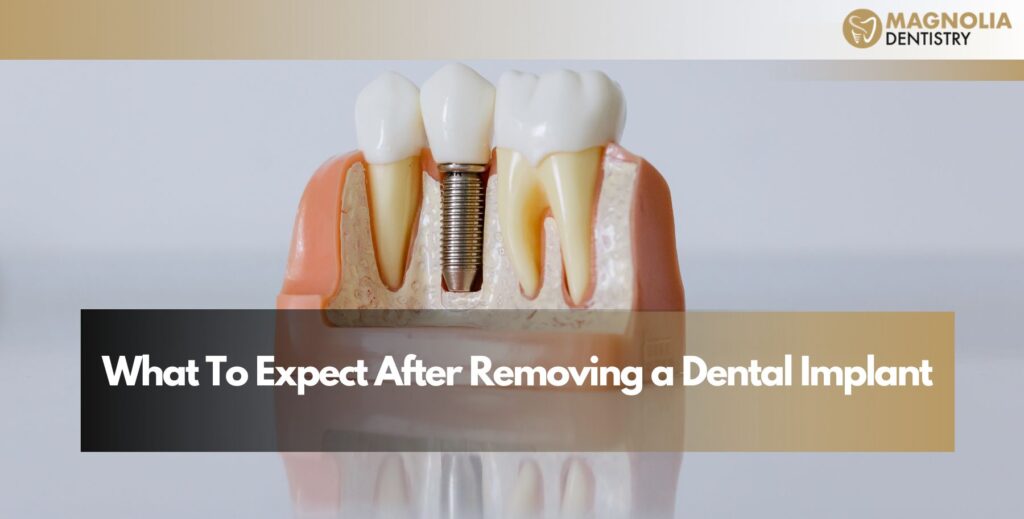
Dental implant removal is not very common, but it becomes necessary when an implant fails, becomes infected, or does not integrate properly with the bone. Understanding what to expect after the procedure helps patients feel calmer, more confident, and fully prepared for the healing process. Whether your implant was removed due to infection, bone loss, mobility, or persistent discomfort, proper aftercare ensures a smooth recovery and sets the stage for future replacement options.
This guide explains everything that happens after implant removal including pain levels, swelling, healing stages, long-term expectations, and the role of Restorative Dentistry moving forward.
Table of Contents
Why Dental Implants Are Sometimes Removed
Dental implants have one of the highest success rates in dentistry, but complications can still occur. Removal may be required due to infection, lack of bone integration, implant fractures, or gum recession. After removal, your dentist focuses on protecting the bone, preventing infection, and supporting efficient tissue healing. Implant removal may be simple or surgical. A simple removal involves gently unscrewing a mobile implant, while surgical removal requires bone contouring or small incisions when the implant is fused tightly. Your healing experience depends on the method used and the condition of the surrounding bone.
What Happens Immediately After Implant Removal
After implant removal, you will experience numbness from local anesthesia and mild pressure around the surgical area. The empty implant site creates a space in the bone, and your body immediately begins forming a protective blood clot to start the healing process. This clot prevents infection, reduces bleeding, and initiates new tissue growth. Common symptoms include minor bleeding, mild swelling, tenderness around the gums, and limited jaw movement. These symptoms usually improve within a few days. Pain medication and cold compresses help you stay comfortable as the anesthesia wears off.
Pain Levels After Removing a Dental Implant
Most patients are surprised to learn that implant removal causes less discomfort than the original implant surgery. Pain peaks during the first 24–48 hours and gradually decreases as inflammation reduces and tissues begin repairing. Mild to moderate discomfort may last 3–5 days. Surgical removals may require up to a week for noticeable relief. If pain worsens after day four, or you develop fever or drainage, contact your dentist promptly to rule out infection.
Swelling and Bruising After Implant Removal
Swelling is part of the natural immune response and is expected after removal. It helps protect the surgical site and indicates your body is actively healing. Swelling usually peaks around day 2 or 3 and improves by the end of the week. Bruising may appear near the cheeks or jawline and typically fades within 7–10 days. Applying cold compresses for the first 24 hours helps reduce inflammation.
Managing Bleeding and Supporting Blood Clot Formation
A blood clot begins forming soon after the implant is removed. Protecting this clot is essential, just like after a tooth extraction. Light bleeding or pink saliva is expected for several hours. You may need to change gauze a few times during the first evening. Heavy bleeding that continues for several hours is not normal and should be evaluated promptly.
Bone Healing After Dental Implant Removal
Your bone begins regenerating soon after the implant is removed. The goal is to maintain as much bone volume as possible so you remain a candidate for future implant placement. In the first two weeks, the empty socket begins filling with new tissue. By 6–8 weeks, bone density increases significantly. Complete bone maturation may take 4–6 months, depending on your health, oral hygiene, and whether grafting was placed.
Will You Need a Bone Graft After Implant Removal?
Many patients require bone grafting to preserve the structure of the jawbone and prevent future collapse. Grafting is not painful and significantly improves long-term treatment outcomes. A graft stabilizes the bone, prevents sinking or thinning, and supports proper density for future implant placement or other restoration options such as bridges or partial dentures.
Oral Hygiene Care After Dental Implant Removal
Keeping the surgical site clean helps prevent infection and speeds healing. Your dentist provides personalized instructions based on your removal type. Brush gently around the surgical site for the first few days. Use warm salt-water rinses to reduce bacteria and inflammation. Avoid mouthwash with alcohol until the tissues are fully healed.
What You Can Eat After Implant Removal
Soft foods are essential for protecting the surgical site and avoiding irritation. Avoid crunchy, sticky, spicy, or acidic foods during early healing. Good options include mashed potatoes, yogurt, applesauce, soft pasta, smoothies, oatmeal, eggs, and blended soups. These help maintain nutrition without stressing the tissues.
Activities to Avoid During Early Recovery
Your body needs energy to heal. Limiting certain activities reduces pressure on the surgical site and preserves the blood clot. Avoid smoking, drinking through a straw, strenuous workouts, and touching the surgical area. These can delay healing or create complications.
The Importance of Rest After Surgery
Healing requires downtime particularly during the first 24–48 hours. Your body repairs tissues faster when it is allowed to rest properly. You should allow time for Rest After Getting a Dental Implant removed, including limiting physical activity, resting your head elevated, and taking medication as directed.
Signs of Normal Healing vs. Concerning Symptoms
It’s important to differentiate between normal recovery symptoms and signs that require dental attention. Tenderness, mild swelling, bruising, temporary jaw stiffness, and slight bleeding are expected. Improvement should occur each day. Worsening pain, fever, foul taste, pus, difficulty swallowing, or swelling that increases after day three may indicate infection or another issue that needs evaluation.
How Long Does Healing Take After Implant Removal?
Healing time depends on your personal health, the complexity of the removal, and whether bone grafting was performed. Soft tissues typically heal within 2–3 weeks. Bone begins remodeling at six weeks and continues strengthening over several months. You may be ready for the next step in your treatment within 3–6 months.
When You Can Replace the Removed Implant
Many patients choose to replace the implant once the bone has healed enough to support it. Your dentist evaluates bone quality, gum health, graft maturation, and your bite alignment before recommending a timeline. Some patients qualify for immediate replacement, while others may wait several months.
How Removing a Failing Implant Protects Your Oral Health
Leaving a failing implant in place can lead to bone loss, gum inflammation, or further complications. Removing the implant protects the surrounding bone, gums, and remaining teeth. It also prevents infection from spreading and prepares your mouth for successful future Restorative Dentistry.
What To Expect Emotionally and Mentally After Implant Removal
It’s normal to feel disappointed or anxious after implant removal, especially if you were expecting a permanent solution. Understanding that removal is a step toward better long-term health can make the experience easier. Your dentist will guide you through replacement options and ensure the next treatment plan offers predictable, successful results.
The Role of Tooth Extraction Aftercare Principles in Implant Removal
Although the procedures differ, many recovery principles mirror Tooth Extraction Aftercare guidelines. Both require protecting the blood clot, maintaining oral hygiene, limiting physical strain, and avoiding smoking or suction to promote healing and prevent complications.
Long-Term Expectations After Dental Implant Removal
Most patients recover fully and remain excellent candidates for implant replacement or alternative tooth-replacement solutions. Proper brushing, flossing, and routine dental visits help preserve bone density and gum integrity, ensuring long-term oral health and better outcomes for future restorations.
Conclusion
Healing after implant removal is typically smooth and manageable with proper care. You can expect mild discomfort, swelling, and soft-tissue healing within a few weeks, followed by gradual bone regeneration over several months. Your dentist will guide you on hygiene, diet, medications, activity levels, and replacement options. Whether your implant was removed due to infection, mobility, or bone loss, proper aftercare ensures a healthy foundation for your next step in treatment. With the right support and follow-up care from your dental provider, you can look forward to restoring your smile with confidence.