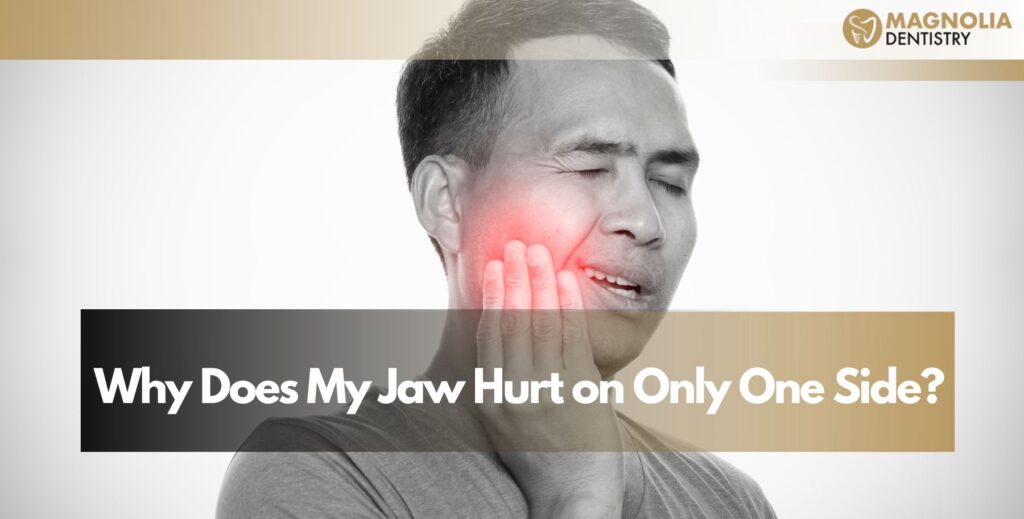
Experiencing jaw pain isolated to just one side of your face can be both puzzling and concerning. Unlike bilateral pain that affects both sides equally, unilateral jaw discomfort often signals specific problems requiring targeted attention and treatment. The jaw is a complex structure involving bones, joints, muscles, nerves, teeth, and surrounding tissues, any of which can become the source of one-sided pain. Understanding the potential causes of unilateral jaw pain, recognizing accompanying symptoms that indicate the underlying problem, and knowing when to seek professional care helps you address the issue effectively before it worsens or becomes chronic. This comprehensive guide explores the most common reasons for one-sided jaw pain and provides guidance on appropriate responses to various scenarios you might encounter.
Table of Contents
Temporomandibular Joint Disorders (TMJ/TMD)
The temporomandibular joint connects your lower jaw to your skull, and problems with this joint represent one of the most common causes of unilateral jaw pain. Understanding TMJ disorders helps you recognize whether this complex condition might be causing your symptoms.
Understanding TMJ Anatomy and Function
The temporomandibular joint is actually one of the most complex joints in your body, functioning as both a hinge and a sliding mechanism that allows your jaw to move up and down, side to side, and forward and backward. A small disc of cartilage sits between the ball and socket portions of the joint, cushioning the bones and allowing smooth movement. Muscles surrounding the joint control jaw movement and work constantly during talking, chewing, and swallowing. Because you have a TMJ on each side of your face, problems can develop in one joint while the other remains healthy, causing distinctly one-sided pain. TMJ disorders, collectively called TMD (temporomandibular disorders), involve dysfunction or damage to the joint, disc, surrounding muscles, or ligaments.
TMJ Symptoms Beyond Pain
TMJ disorders cause various symptoms beyond just jaw pain, helping differentiate them from other conditions. You might experience clicking, popping, or grinding sounds when opening or closing your mouth, which can occur on the affected side specifically. Limited jaw movement or difficulty opening your mouth fully often accompanies TMJ pain. The joint might feel like it’s locking or catching during movement, temporarily preventing smooth motion. Pain often radiates beyond the jaw itself to your ear, temple, neck, or shoulder on the affected side. Headaches, particularly tension-type headaches concentrated around the temples, frequently accompany TMJ disorders. Some people notice their jaw deviates to one side when opening, or that their bite feels different, with teeth not fitting together quite right.
TMJ Causes and Risk Factors
Various factors contribute to TMJ disorder development, often combining to create dysfunction. Teeth grinding or clenching (bruxism), particularly during sleep, places enormous stress on the TMJ and surrounding muscles, commonly causing unilateral problems if you favor one side. Injury or trauma to the jaw from accidents, falls, or blows to the face can damage one TMJ specifically. Arthritis can affect temporomandibular joints just like other joints in your body, causing inflammation and pain. Stress leads to muscle tension and unconscious clenching that stresses the TMJ. Misaligned teeth or bite problems create uneven forces on the joints. Some people have structural problems with the joint disc or congenital abnormalities affecting one side more than the other.
Dental Problems Causing Unilateral Pain
Various dental issues can cause jaw pain that appears isolated to one side, often because the problematic tooth or teeth are located on that side. Recognizing dental origins of jaw pain ensures appropriate dental treatment rather than mistakenly addressing it as a joint or muscle problem.
Tooth Decay and Abscesses
Advanced tooth decay creating cavities deep enough to reach the tooth’s nerve causes pain that radiates from the affected tooth throughout the jaw on that side. The pain typically worsens with chewing, consuming hot or cold foods, or when pressure is applied to the tooth. Dental abscesses—infections at a tooth’s root or in the surrounding gum cause severe, throbbing pain that can radiate extensively throughout the jaw, ear, and side of the face. Abscesses represent dental emergencies requiring immediate treatment to prevent the infection from spreading to other areas of your head, neck, or even bloodstream. If you suspect an abscess based on severe, unrelenting pain accompanied by fever, facial swelling, or foul taste in your mouth, contact Emergency Dental Care in Burbank, CA immediately rather than waiting for a regular appointment.
Gum Disease and Periodontal Infections
Advanced gum disease affecting teeth on one side of your mouth can cause jaw pain in that area. Periodontitis creates inflammation and infection in the tissues and bone supporting your teeth, leading to deep, aching pain that seems to emanate from the jaw itself rather than specific teeth. Localized periodontal abscesses can develop, creating swelling, tenderness, and pain concentrated on one side. Gum infections sometimes feel like jaw pain because the discomfort radiates through the entire area rather than remaining confined to the gum line. If you notice red, swollen, bleeding gums along with jaw pain, periodontal disease may be the culprit.
Wisdom Teeth Problems
Impacted wisdom teeth third molars that don’t have enough room to emerge properly frequently cause unilateral jaw pain since these teeth are located at the far back corners of your mouth. When a wisdom tooth tries to erupt without adequate space, it can push against adjacent teeth, grow at awkward angles, or partially emerge and trap food and bacteria under a flap of gum tissue. These problems create pain, swelling, and sometimes infection affecting the entire side of your jaw where the problematic wisdom tooth is located. The pain may come and go, worsening when the tooth tries to erupt or when infection develops. Jaw stiffness on the affected side often accompanies wisdom tooth pain, making it difficult to open your mouth fully.
Muscle-Related Jaw Pain
Muscles that control jaw movement can become strained, fatigued, or develop trigger points that cause unilateral jaw pain. Understanding muscle-related causes helps you identify whether your pain originates from muscular rather than joint or dental issues.
Muscle Strain and Overuse
The muscles that close your jaw (masseter and temporalis muscles) and those that open it can become strained from overuse, just like muscles elsewhere in your body. Chewing gum excessively, eating very tough or chewy foods, or habitually chewing on one side of your mouth preferentially can strain muscles on that side. Holding your mouth in unusual positions for extended periods—during lengthy dental procedures, playing wind instruments, or certain work tasks can fatigue jaw muscles on one side. Poor posture, particularly forward head position or holding a phone between your shoulder and ear on one side, creates muscle imbalances that stress jaw muscles asymmetrically. The resulting pain feels achy and worsens with jaw movement or muscle palpation.
Myofascial Pain and Trigger Points
Myofascial pain syndrome involves trigger points hyperirritable spots in muscles that create referred pain patterns. Trigger points in jaw muscles commonly refer pain throughout one side of the face, jaw, and even into the neck and head. These trigger points develop from chronic muscle tension, stress-related clenching, or muscle overuse. The pain pattern can be confusing because the trigger point location might not be where you feel the most pain pressing on your masseter muscle might create pain that shoots into your jaw and temple. Myofascial pain often responds well to physical therapy, massage, stretching, and stress reduction, differing from dental or joint problems that require different interventions.
Tension From Stress and Anxiety
Psychological stress manifests physically through muscle tension, and jaw muscles are particularly vulnerable to stress-related clenching and tension. Many people unconsciously clench their jaw or grind their teeth when stressed, anxious, or concentrating intensely, often favoring one side. This chronic tension creates sustained muscle contraction that leads to fatigue, soreness, and pain. You might not realize you’re clenching until you pay deliberate attention to your jaw position, or you might wake with jaw soreness indicating nighttime clenching. Stress-related jaw pain often fluctuates with your stress levels, worsening during particularly stressful periods and improving when you’re relaxed. Addressing underlying stress through relaxation techniques, therapy, or stress management strategies often significantly improves muscle-related jaw pain.
Other Medical Conditions Causing Jaw Pain
Beyond dental and joint problems, various medical conditions can cause unilateral jaw pain that might initially seem dental in origin but actually reflects systemic or neurological issues requiring different treatment approaches.
Trigeminal Neuralgia
Trigeminal neuralgia is a chronic pain condition affecting the trigeminal nerve, which carries sensation from your face to your brain. This condition causes sudden, severe, electric shock-like pain on one side of the face, often triggered by everyday activities like eating, talking, brushing teeth, or even light touch to the face. The pain episodes last from seconds to minutes but can occur repeatedly throughout the day. While trigeminal neuralgia primarily affects the face, the pain can involve the jaw area on the affected side. This condition differs markedly from dental pain in its sudden, shooting nature and specific triggers, requiring neurological rather than dental treatment.
Sinus Infections and Sinusitis
Your maxillary sinuses sit above your upper back teeth, and sinus infections or inflammation can create pain that radiates into your upper jaw on the affected side. Sinusitis-related jaw pain typically accompanies other sinus symptoms including nasal congestion, facial pressure, thick nasal discharge, reduced sense of smell, and tenderness over the sinus area. The pain often worsens when bending forward or lying down, and you might feel pressure or fullness in your cheeks and around your eyes. Your upper teeth on the affected side might feel tender or painful, leading to confusion about whether the problem is dental or sinus-related. Sinus-related jaw pain typically improves once the sinus infection resolves with appropriate treatment.
Salivary Gland Problems
Salivary gland infections, blockages, or stones can cause pain on one side of your jaw, particularly near the angle of your jaw or under your tongue where major salivary glands are located. Blocked salivary ducts prevent saliva from draining properly, causing the gland to swell and create pain that worsens during eating when saliva production increases. You might notice swelling in the floor of your mouth or along your jawline on the affected side. Infections of the salivary glands cause pain, swelling, fever, and sometimes pus discharge into your mouth. While less common than dental or TMJ causes, salivary gland problems represent important considerations for unexplained unilateral jaw pain, particularly if the pain intensifies during meals.
Discover the common causes of one-sided jaw pain, from TMJ disorders to dental infections, and learn when to seek professional treatment.
Injury and Trauma
Physical injury to one side of your jaw from accidents, impacts, or other trauma creates obvious unilateral pain but can also cause delayed symptoms that emerge days after the initial injury as inflammation develops.
Acute Injuries and Fractures
Direct blows to the jaw from falls, vehicle accidents, sports injuries, or physical altercations can fracture jaw bones, dislocate the TMJ, or damage surrounding soft tissues. Fractures cause severe pain, swelling, bruising, difficulty or inability to open or close your mouth properly, numbness in your lower lip or chin, loose or broken teeth, and misalignment of your bite. Even without fracture, soft tissue damage and bone bruising create significant pain on the injured side. Any suspected jaw fracture requires immediate medical evaluation and treatment to ensure proper healing and prevent long-term complications affecting jaw function.
Whiplash and Indirect Trauma
Vehicle accidents causing whiplash can injure your jaw even without direct impact to your face. The sudden jerking motion can strain jaw muscles, damage TMJ structures, or create muscle spasms affecting one side. Pain from whiplash-related jaw injury may not appear immediately but develops hours or days after the accident as inflammation increases. The connection between whiplash and jaw pain is not always immediately obvious, potentially causing confusion about the pain’s source. If you develop jaw pain following any accident involving sudden head or neck movement, inform healthcare providers about the accident timing to help them identify the connection.
Repetitive Strain and Chronic Microtrauma
Repeated minor stress to your jaw from habits like pen chewing, nail biting, or constantly chewing on one side creates cumulative microtrauma that eventually manifests as pain. While each individual action seems insignificant, the cumulative effect over weeks or months can damage joints, strain muscles, and create chronic pain. Sports involving jaw guards or mouth guards that don’t fit properly can create pressure points causing unilateral pain. Occupational habits like holding tools in your mouth or maintaining unusual jaw positions during work tasks contribute to repetitive strain. Identifying and modifying these habits becomes essential for resolving the resulting pain.
When to Seek Professional Care
Determining whether your jaw pain requires professional evaluation and what type of care you need depends on the severity, duration, and accompanying symptoms you’re experiencing.
Urgent Warning Signs
Some symptoms accompanying jaw pain indicate serious conditions requiring immediate medical or dental attention. Seek emergency care if you experience severe, unrelenting pain not controlled by over-the-counter medications, significant swelling of your face, jaw, or neck, fever above 101°F accompanied by jaw pain or swelling, difficulty swallowing or breathing, inability to open or close your mouth, or obvious jaw deformity or misalignment. Chest pain, left arm pain, or shortness of breath accompanying jaw pain on the left side could indicate cardiac problems requiring emergency evaluation, particularly in people with heart disease risk factors. These urgent situations require immediate professional assessment rather than waiting to see if symptoms improve.
Non-Emergency Professional Evaluation
Even without urgent symptoms, persistent or recurrent jaw pain warrants professional evaluation to identify the cause and prevent worsening. Schedule a dental or medical appointment if your jaw pain persists beyond a few days without improvement, keeps returning even if it temporarily resolves, progressively worsens over time, interferes with eating, speaking, or sleeping, or comes with other concerning symptoms like clicking, locking, or limited movement. Early professional evaluation often allows simpler, more effective treatment than waiting until problems become severe. Your dentist can perform examination and imaging to determine whether your pain stems from dental issues, TMJ disorders, or conditions requiring referral to other specialists.
Choosing the Right Professional
Determining which professional to consult depends on your symptoms and suspected cause. Start with your dentist for jaw pain accompanied by tooth sensitivity, obvious dental problems, or recent dental work, or if you’re unsure of the cause and want initial evaluation. See your primary care physician for jaw pain with sinus symptoms, recent trauma requiring medical clearance, or suspicion of systemic conditions like arthritis. Consult an oral surgeon for suspected jaw fractures, severe TMJ disorders not responding to conservative treatment, or impacted wisdom teeth requiring removal. See a neurologist for pain with electric shock-like quality, facial numbness, or other neurological symptoms. Most cases begin with dental evaluation, as dentists commonly diagnose and treat or appropriately refer jaw pain conditions.
Conclusion
Jaw pain affecting only one side of your face can result from numerous causes including TMJ disorders involving the joint and surrounding muscles, dental problems like cavities, abscesses, or wisdom teeth issues, muscle strain and tension from stress or overuse, medical conditions like trigeminal neuralgia or sinus infections, or injury and trauma to one side of your jaw. Identifying the specific cause requires attention to accompanying symptoms, pain characteristics, and when the pain occurs or worsens, helping differentiate between the various potential sources. While some jaw pain resolves with home care including rest, ice or heat application, over-the-counter pain relievers, and stress reduction, persistent or severe pain requires professional evaluation to ensure proper diagnosis and treatment. Early intervention often prevents acute problems from becoming chronic conditions requiring extensive treatment, making prompt professional consultation worthwhile when jaw pain doesn’t resolve quickly. For expert evaluation of your one-sided jaw pain, accurate diagnosis of the underlying cause, and effective treatment tailored to your specific condition whether dental, joint-related, or requiring referral to specialists, consult with an experienced Dentist in Burbank, CA who can provide comprehensive examination, appropriate diagnostic imaging, and skilled care that addresses your jaw pain effectively, restores comfortable jaw function, and prevents future problems from developing.