Blog
Can Your Mouth Reject a Crown Understanding Dental Crown Reactions
While dental crown allergies are uncommon, they can occur with various materials including metals, ceramics, and bonding cements used during placement.
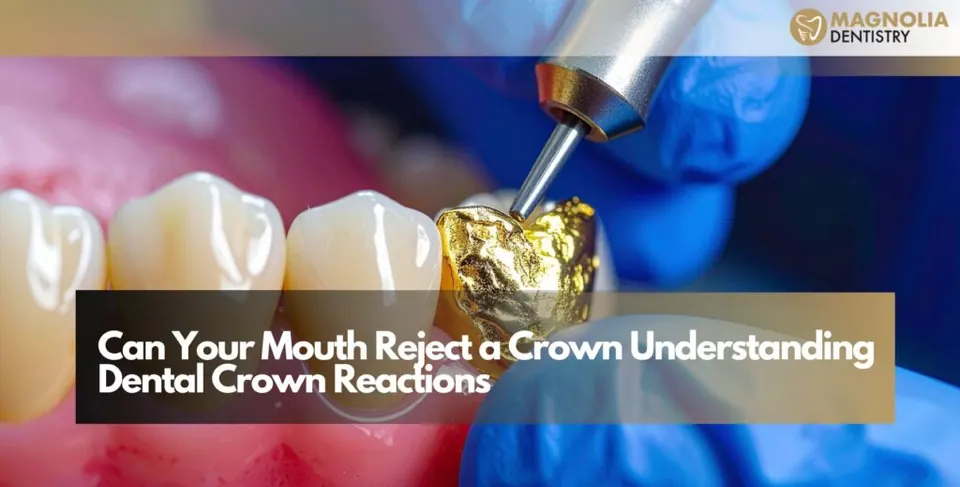
Dental crowns are used to protect weak, broken, worn, or heavily restored teeth. But if a crown starts hurting, feels loose, causes gum swelling, creates a bad taste, or feels uncomfortable, it is natural to wonder whether your mouth is rejecting it.
The simple answer is that your mouth usually does not “reject” a dental crown the way the body may reject a transplanted organ. A crown is not living tissue. However, your mouth can react badly to crown materials, dental cement, poor fit, bite pressure, decay under the crown, or gum irritation.
At Magnolia Dentistry, we help patients find the real cause behind crown discomfort instead of guessing. If you are dealing with crown pain, swelling, bad taste, sensitivity, or a loose-feeling crown, our restorative dentistry in Burbank, CA team can evaluate the crown and recommend the right fix.
Quick Answer: Can Your Mouth Reject a Crown?
Your mouth does not usually reject a dental crown in the same way it rejects living tissue. But crown-related problems can feel like rejection.
Common reasons a crown may feel wrong include an allergic reaction to metal or dental cement, a crown that does not fit well, a leaking crown margin, decay under the crown, a high bite, gum inflammation around the crown, a loose crown, a cracked tooth under the crown, or material wear.
If symptoms appear right after placement, the issue may be related to bite pressure, cement, gum irritation, or material sensitivity. If symptoms appear months or years later, the issue may be decay, leakage, gum recession, crown failure, or a cracked tooth.
For a trusted patient overview, you can read the MouthHealthy guide on dental crowns.
Dental Crown Reaction vs. Crown Rejection
A dental crown is made from materials such as ceramic, zirconia, porcelain, resin, metal, or porcelain fused to metal. Since a crown is not living tissue, true biological rejection is not the usual concern.
What patients call crown rejection is usually one of these problems:
- Material sensitivity.
- Dental cement irritation.
- Allergic reaction.
- Poor crown fit.
- Bite imbalance.
- Gum inflammation.
- Decay under the crown.
- A leaking crown margin.
- A cracked tooth under the crown.
This distinction matters because the treatment depends on the cause. An allergy may require changing the crown material. A high bite may only need a small adjustment. A leaking crown or decay under the crown may need crown replacement.
Common Dental Crown Problems
Dental crowns can last many years, but they still need care and monitoring. A crown can feel uncomfortable if the tooth, gum, bite, cement, or crown margin has a problem.
Common dental crown problems include pain when biting, sensitivity to hot or cold, gum swelling around the crown, a bad taste or odor, food getting trapped near the crown, a crown that feels loose, a rough or sharp crown edge, a dark line near the gumline, a cracked or chipped crown, a leaking crown margin, or decay under the crown.
These symptoms should be checked by a dentist. Waiting too long can allow decay or infection to worsen under the crown.
Bad Fitting Crown Symptoms
A crown should feel smooth, stable, and comfortable. If the crown does not fit properly, bacteria and food can collect around the edges. This may irritate the gums or allow decay to develop under the crown.
Symptoms of a bad fitting crown may include pain when biting, pressure or soreness on one side, gum swelling around the crown, food trapping near the crown, bad breath or bad taste, a visible gap near the gumline, a crown that feels too bulky, a crown that feels loose, floss shredding or getting stuck, or a bite that feels uneven.
A poorly fitting crown should not be ignored. Sometimes it can be adjusted. Other times, it may need to be replaced.
Leaking Crown Symptoms
A leaking crown means the edge of the crown is no longer sealed well against the tooth. This can happen because of cement breakdown, decay, gum recession, poor fit, or crown damage.
Signs of a leaking crown may include sensitivity near the crown edge, bad taste or odor, food getting stuck around the crown, gum irritation, dark staining near the crown margin, pain when chewing, a crown that feels loose, or decay under the crown.
A leaking crown can allow bacteria to reach the natural tooth underneath. Early treatment may help save the tooth and avoid more serious infection.
Types of Allergic Reactions to Dental Crowns
Allergic reactions to dental crowns are uncommon, but they can happen. Reactions may come from metal, dental cement, resin-based materials, or other components used during treatment.
Cleveland Clinic explains that dental crowns can be made from different materials, including metal, resin, porcelain-fused-to-metal, and ceramic, and some crown types may cause allergic reactions in some people. You can read more in the Cleveland Clinic guide on dental crowns.
Metal Crown Allergy Symptoms
Metal crown allergy symptoms may include gum redness, swelling, burning, itching, mouth irritation, metallic taste, or sores near the crown. This is more likely in patients with known metal sensitivity.
Crowns that contain nickel, cobalt, chromium, or other metals may trigger symptoms in sensitive patients.
If you have a known metal allergy, tell your dentist before choosing a crown material.
Dental Cement Allergy Symptoms
Dental cement allergy symptoms may include gum irritation around the crown, burning sensation, swelling, bad taste, redness, or discomfort that does not improve after placement.
Not every cement taste is an allergy. A temporary cement taste may happen soon after placement. But a persistent bad taste, burning, or swelling should be checked.
Sometimes the issue is not the cement itself. It may be excess cement trapped near the gumline, poor crown fit, gum irritation, or bacteria around the crown margin.
Zirconia Crown Allergy Symptoms
Zirconia is metal-free and considered a biocompatible crown material for many patients. A true zirconia allergy appears to be rare.
If a zirconia crown causes symptoms, the problem may be related to dental cement, gum inflammation, bite pressure, poor fit, or bacteria around the crown rather than the zirconia itself.
Symptoms around a zirconia crown that should be checked include gum swelling, pain when biting, burning gums, persistent bad taste, bleeding around the crown, or sensitivity that does not improve.
Gold Crown Tooth Side Effects
Gold crowns are durable and have been used for many years. But possible side effects may include metal taste, gum irritation in sensitive patients, temperature sensitivity, bite discomfort, or cosmetic concerns because of the visible gold color.
Gold crowns may also feel different from tooth-colored materials. If you notice long-lasting irritation, metallic taste, gum swelling, or discomfort after a gold crown, schedule an exam.
Bad Taste in Mouth After a Crown
A bad taste after a crown can happen for several reasons. Some causes are minor, while others need dental treatment.
Possible causes include temporary cement taste after placement, excess cement trapped near the gumline, a leaking crown margin, food trapped around the crown, gum inflammation, decay under the crown, infection around the tooth, or a loose crown.
If the bad taste lasts more than a few days, keeps coming back, or comes with swelling, pain, pus, or bad odor, call your dentist.
A foul taste with swelling or pain may be a sign of infection. Mayo Clinic explains that toothache with swelling, pain when biting, red gums, or foul-tasting discharge should be checked promptly. You can review the Mayo Clinic toothache first aid guide.
Cement Taste in Mouth After Crown
A cement taste after crown placement can sometimes happen for a short time. It may come from temporary cement, final cement, or small cement residue around the gumline.
A mild cement taste that fades quickly is usually not a major concern. But a cement taste that lasts, feels bitter, burns the gum, or comes with swelling should be checked.
Your dentist may need to remove excess cement, smooth the crown margin, check the gum tissue, or confirm that the crown is sealed properly.
Recognizing Signs of Crown Problems
Some mild sensitivity after crown placement can be normal. But symptoms should slowly improve, not get worse.
Symptoms Soon After Crown Placement
Call your dentist if you notice severe pain, worsening sensitivity, swelling around the crown, burning or itching gums, rash or sores around the mouth, strong metallic taste that does not fade, a crown that feels too high when biting, a crown that feels loose, or trouble breathing or swallowing.
Trouble breathing or swallowing should be treated as an emergency.
Symptoms Months or Years Later
Crown problems can also appear long after treatment. Watch for bad taste or odor, pain when chewing, gum recession around the crown, dark staining near the crown edge, food trapping, bleeding gums around the crown, a loose or moving crown, a crack or chip in the crown, or sensitivity that returns after months.
These symptoms may point to crown failure, leakage, gum disease, decay, or a cracked tooth.
What Does Crown Failure Feel Like?
A failed crown may feel loose, painful, rough, or uncomfortable when biting. Some patients feel like the crown no longer fits the same way. Others notice sensitivity, gum swelling, or food getting trapped.
Signs of crown failure may include the crown moving or clicking, pain when chewing, sensitivity to hot or cold, bad taste or smell, swelling around the gum, cracks or chips, a dark line near the gum, food trapping around the crown, or the bite feeling different.
A crown that feels loose should be checked quickly. If the crown comes off, save it and call your dentist.
What Causes Crown Complications?
Crown complications can happen for several reasons.
Poor Fit
If the crown does not fit tightly around the tooth, bacteria can enter and cause decay under the crown. A poor fit can also irritate the gum tissue.
Bite Problems
If the crown is too high, the tooth may take extra pressure. This can cause soreness, biting pain, or sensitivity.
Cement Breakdown
Over time, crown cement can weaken. If the seal breaks down, the crown may loosen or leak.
Decay Under the Crown
A crown covers the tooth, but the natural tooth underneath can still get decay at the edges. This often happens near the gumline.
Gum Disease
Inflamed gums around a crown can cause bleeding, tenderness, bad breath, and recession.
Grinding and Clenching
Heavy grinding can crack crowns, loosen cement, or stress the tooth underneath.
Material Sensitivity
Some patients react to metals, cement, or resin-based materials. This is less common than bite or fit issues, but it should be considered when symptoms do not improve.
Treatment Options for Crown Reactions and Crown Problems
Treatment depends on the cause. Your dentist may need to examine the crown, check your bite, take X-rays, and look for decay, leakage, or gum inflammation.
Bite Adjustment
If the crown is too high, a small bite adjustment may relieve pressure and sensitivity.
This is often a simple fix when the crown feels uncomfortable only while biting or chewing.
Cleaning Around the Crown
If gum inflammation is caused by plaque, tartar, or trapped cement, professional cleaning may help.
For prevention and gum care, Magnolia Dentistry offers dental cleaning and prevention in Burbank, CA.
Crown Repair
Small chips or rough edges may be smoothed or repaired, depending on the crown material.
If the crown has a minor rough area that irritates your tongue or cheek, your dentist may be able to polish or smooth it.
Crown Replacement
If the crown is leaking, poorly fitted, cracked, loose, or causing confirmed material sensitivity, replacement may be needed.
For crown replacement and tooth repair options, visit our restorative dentistry in Burbank, CA page.
Root Canal Treatment
If the nerve inside the tooth is infected or inflamed, root canal treatment may be needed before placing a new crown.
This may happen if decay has reached under the crown or if the tooth nerve becomes irritated after long-term crown problems.
Learn more about root canal treatment in Burbank, CA.
Emergency Dental Care
If you have swelling, severe pain, pus, fever, or trouble biting, you may need urgent care.
Magnolia Dentistry offers emergency dental care in Burbank, CA for urgent crown pain, infection signs, and dental emergencies.
Can Decay Happen Under a Crown?
Yes. The crown itself cannot get a cavity, but the natural tooth underneath can still decay.
Decay often starts at the crown edge where the crown meets the tooth. If the margin leaks, if the gum has receded, or if plaque stays around the edge, bacteria can enter and damage the tooth underneath.
Signs of decay under a crown may include bad taste, sensitivity, pain when chewing, gum swelling, food trapping, or a dark line near the crown.
Early diagnosis matters because decay under a crown can sometimes be repaired before the tooth becomes badly damaged.
How to Prevent Crown Problems
Good daily care can help your crown last longer and reduce the chance of gum inflammation, decay, or leakage.
Brush twice daily with a soft toothbrush. Clean carefully around the crown edge. Floss daily unless your dentist gives different instructions. Avoid chewing ice, hard candy, or very hard objects. Wear a nightguard if you grind your teeth. Keep regular dental checkups. Call your dentist if the crown feels high, loose, painful, rough, or different from before.
Even if the crown looks fine, regular exams help your dentist check the margins, gums, bite, and tooth underneath.
Conclusion
Your mouth usually does not reject a dental crown like it would reject living tissue. But crown problems can still happen. Allergies, cement sensitivity, poor fit, leaking margins, decay under the crown, bite pressure, gum inflammation, or material wear can all make a crown feel wrong.
The key is to find the real cause early. A crown that hurts, tastes bad, feels loose, causes gum swelling, or changes your bite should be checked by a dentist. In many cases, a small adjustment or early repair can prevent a bigger problem.
Magnolia Dentistry can evaluate crown pain, allergic-type symptoms, bad taste, leaking crowns, loose crowns, and failed crowns. Schedule a visit with our dentist in Burbank, CA to find out what is happening and how to fix it.
FAQs
Can your mouth reject a dental crown?
Your mouth does not usually reject a dental crown like an organ transplant because a crown is not living tissue. But you can have allergic reactions, cement sensitivity, poor fit, decay, or bite problems that feel like rejection.
What are symptoms of allergic reaction to dental crowns?
Symptoms may include gum swelling, redness, burning, itching, mouth sores, metallic taste, rash around the mouth, or irritation that does not improve. Trouble breathing or swallowing needs emergency care.
What are dental cement allergy symptoms?
Dental cement allergy symptoms may include gum irritation, burning, swelling, bad taste, redness, or discomfort near the crown margin. A dentist should check whether the issue is cement, fit, bite, or gum inflammation.
What are bad fitting crown symptoms?
Bad fitting crown symptoms include pain when biting, food trapping, bad breath, gum swelling, a visible gap, floss shredding, a bulky feeling, or a crown that feels loose.
What are leaking crown symptoms?
Leaking crown symptoms include sensitivity near the crown edge, bad taste, odor, dark staining, food trapping, gum irritation, pain when chewing, or decay under the crown.
Why do I have a bad taste in my mouth after a crown?
A bad taste after a crown may come from temporary cement, excess cement, food trapping, gum inflammation, a leaking margin, decay, or infection. If it lasts or comes with pain or swelling, call your dentist.
Can zirconia crowns cause allergies?
True zirconia allergy appears rare. If symptoms happen around a zirconia crown, the cause may be cement, gum irritation, bite pressure, bacteria, or poor fit instead of the zirconia itself.
What are gold crown tooth side effects?
Gold crown side effects may include metal taste, gum irritation in sensitive patients, temperature sensitivity, bite discomfort, or cosmetic concerns. Patients with metal allergies should discuss material options before treatment.
What does a failed crown feel like?
A failed crown may feel loose, painful, rough, high when biting, or sensitive to temperature. You may also notice bad taste, gum swelling, food trapping, or visible damage.
Is a loose crown an emergency?
A loose crown should be checked quickly because bacteria can get under it and damage the tooth. If the crown falls off, save it and contact your dentist.
Can decay happen under a crown?
Yes. The crown itself cannot decay, but the natural tooth underneath can develop decay at the crown edge if bacteria enter through a gap or leaking margin.
When should I call a dentist about crown pain?
Call a dentist if crown pain lasts more than a few days, gets worse, hurts when biting, comes with swelling, bad taste, pus, fever, or the crown feels loose.
Your next step
Talk with Dr. Massaband about your situation
Articles explain general options; an examination tells you what applies to you. Call the Burbank office or book online.
This article is general patient education and is not a diagnosis or a substitute for an in-person dental examination.