Discovering you have a broken tooth can feel devastating, leaving you worried about your smile’s appearance and wondering if the damage can truly be repaired. The excellent news is that modern restorative dentistry offers remarkable solutions for broken teeth, with techniques and materials that can restore even severely damaged teeth to full function and natural appearance. Dentists successfully repair thousands of broken teeth daily, using approaches ranging from simple cosmetic fixes for minor chips to complex reconstructions for extensive fractures. The key to successful restoration lies in seeking prompt professional care, choosing the appropriate treatment for your specific damage, and understanding what’s realistically achievable based on the fracture’s severity and location. This comprehensive guide explores how dentists restore broken teeth, what treatment options exist, and what you can expect during the restoration process, providing the knowledge you need to make informed decisions about your dental health.
Table of Contents
How Dentists Assess Broken Teeth
Before recommending any tooth restoration, dentists conduct thorough evaluations to understand the damage extent and determine which treatment approach offers the best long-term outcome.
Visual Examination and Patient History
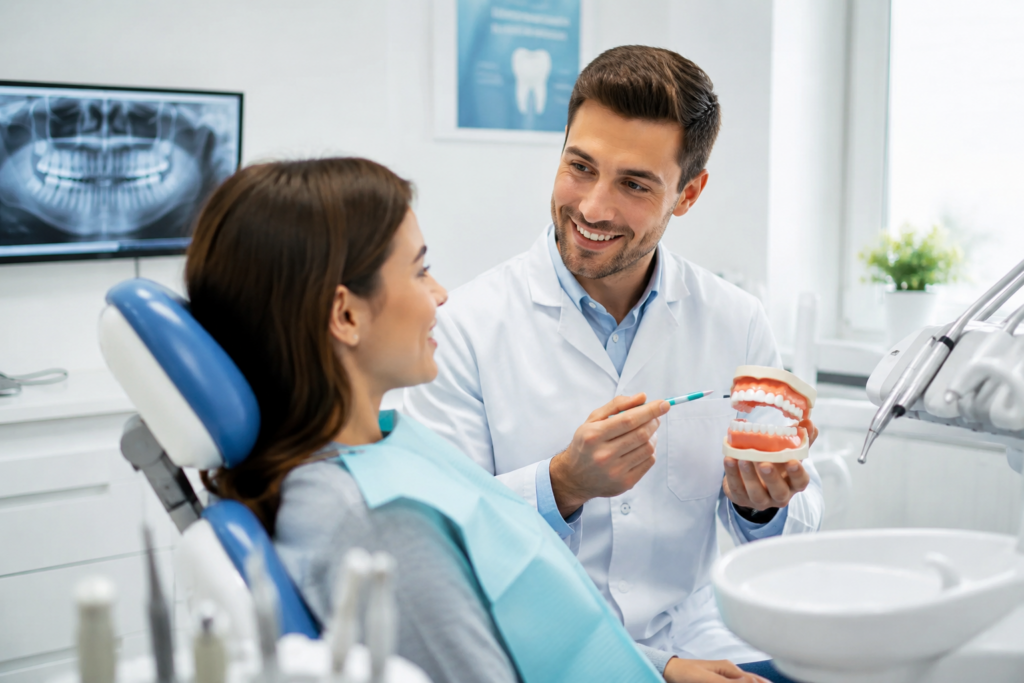
Your dental examination begins with a detailed visual inspection of the broken tooth and surrounding structures. The dentist looks at the fracture pattern, size, and location, checking whether damage is confined to enamel or extends into deeper tooth layers. They examine adjacent teeth for related damage that might have occurred simultaneously. Your bite alignment is assessed to determine if the fracture resulted from uneven chewing forces. The dentist asks about the circumstances surrounding the break did you bite something hard, suffer an accident, or did the tooth break spontaneously? Understanding how the fracture occurred provides clues about underlying problems like weakened tooth structure or grinding habits. They’ll inquire about symptoms including pain, sensitivity, and how long ago the break happened. Patient history regarding previous dental work on the tooth, general health conditions, and medications helps predict healing capacity and treatment success. This comprehensive evaluation forms the foundation for treatment planning.
Digital X-Rays and Advanced Imaging
Dental x-rays reveal damage hidden beneath the surface that visual examination cannot detect, making imaging essential for accurate diagnosis and treatment planning. Standard x-rays show the tooth roots, surrounding bone, and presence of decay or infection. They reveal whether fractures extend into the root structure and help identify cracks that aren’t visible externally. For complex cases, cone beam CT scans provide three-dimensional images showing precise fracture patterns, bone structure, and proximity to nerves and sinuses. This advanced imaging technology allows dentists to visualize the tooth from every angle, identifying complications that standard x-rays might miss. Digital imaging also documents your condition, creating before-treatment records useful for insurance claims and tracking healing progress. The detailed information from x-rays and scans ensures your dentist recommends appropriate treatment rather than discovering unexpected complications during procedures.
Testing Tooth Vitality
Determining whether the tooth nerve (pulp) remains healthy or has been damaged by the fracture critically influences treatment decisions. Your dentist performs vitality tests to assess nerve function. The cold test involves applying extreme cold to the tooth. A healthy nerve responds with sensitivity that quickly subsides when cold is removed. Electric pulp testing sends mild electric current through the tooth to stimulate nerve response. Percussion testing involves tapping the tooth to check for pain indicating inflammation or infection. Bite tests using specialized instruments help identify exactly which tooth hurts and determine if pain results from fracture movement. If tests indicate the nerve is damaged or dying, root canal treatment becomes necessary before the tooth can be restored. Healthy nerve response suggests simpler restoration without endodontic therapy. These tests take just minutes but provide crucial information guiding treatment choices.
Evaluating Remaining Tooth Structure
The amount and quality of remaining tooth structure determines which restoration options are viable and provides the best long-term prognosis. Dentists assess how much natural tooth remains above and below the gum line, as restorations need adequate tooth structure for support and retention. They check the strength and thickness of remaining walls thin, weakened walls may not support large fillings and require crown protection. The condition of existing dental work is evaluated, as old, large fillings weaken teeth and influence restoration planning. Tooth structure assessment considers whether enough healthy tooth exists to bond restorations effectively. Teeth broken below the gum line present challenges since restorations need to attach to tooth structure, not just gums. Sometimes crown lengthening surgery or orthodontic extrusion can expose more tooth structure, making restoration possible. In severe cases where insufficient structure remains, extraction becomes necessary despite the dentist’s best efforts to save the tooth.
Creating a Personalized Treatment Plan
Based on examination findings, your dentist develops a customized treatment plan addressing your specific situation, goals, and budget. They explain which treatment options suit your broken tooth, discussing pros and cons of each approach. The plan outlines the number of appointments required, expected timeline from start to finish, and what you’ll experience during each visit. Cost estimates for recommended treatment and alternative options help you make informed financial decisions. Your dentist considers factors like your age, overall dental health, aesthetic concerns, and how much you use the damaged tooth when recommending treatments. For complex cases requiring multiple procedures perhaps extraction, bone grafting, and implant placement the plan sequences treatments logically. You’ll receive information about temporary solutions maintaining function and appearance during multi-stage treatments. This collaborative planning ensures you understand exactly what to expect and feel confident in your treatment decisions.
Treatment Options for Broken Teeth
Dental restoration options for broken teeth range from minimally invasive cosmetic repairs to extensive reconstructions, with the appropriate choice depending on damage severity and location.
Dental Bonding for Minor Chips
Tooth bonding provides an excellent solution for repairing small chips and minor breaks, particularly on front teeth where aesthetics matter most. This conservative treatment preserves maximum natural tooth structure while delivering beautiful results. The procedure involves applying composite resin a tooth-colored plastic material directly to the damaged area. Your dentist selects a shade matching your natural tooth color, then roughens the tooth surface and applies a conditioning liquid that helps the bonding material adhere. The composite resin is applied in layers, with each layer sculpted to restore the tooth’s natural contour before being hardened with a special curing light. Once all layers are placed, the bonded area is shaped and polished to blend seamlessly with surrounding tooth structure. Dental bonding typically requires no anesthesia unless the chip exposed sensitive inner tooth layers. The entire process takes 30-60 minutes per tooth and can be completed in a single appointment. Results last 3-7 years with proper care, making bonding a cost-effective cosmetic solution.
Porcelain Veneers for Front Tooth Damage
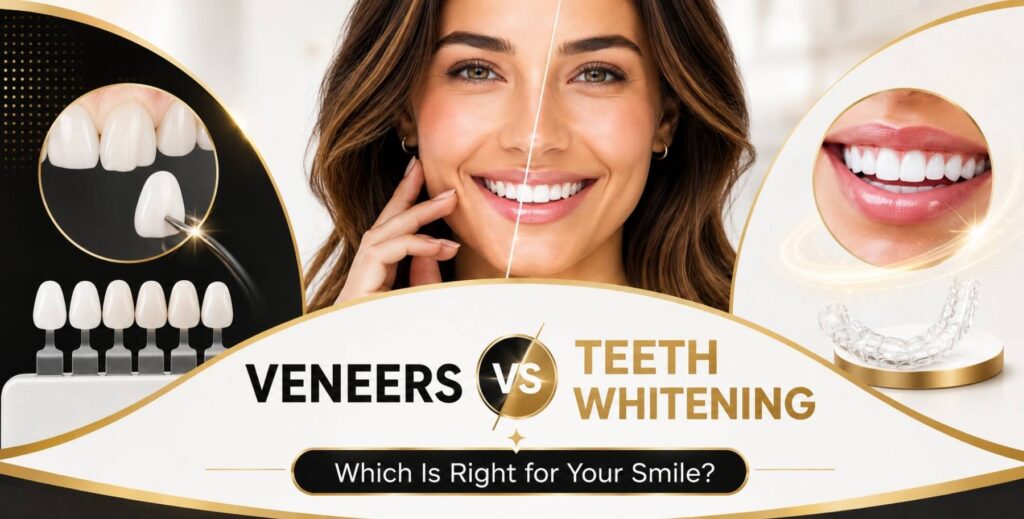
Dental veneers transform broken or damaged front teeth by covering their visible surface with thin shells of porcelain or composite material. Veneers work beautifully for teeth with chips, cracks, or irregular shapes affecting appearance but not requiring full crown coverage. The process begins with removing a thin layer of enamel from the tooth’s front surface typically 0.5mm to accommodate the veneer without making the tooth look bulky. Impressions or digital scans capture precise tooth dimensions for veneer fabrication. Temporary veneers protect prepared teeth while the permanent ones are created in a dental laboratory over 1-2 weeks. Porcelain veneers offer exceptional aesthetics, mimicking natural tooth translucency and resisting stains better than natural enamel. They’re incredibly strong when properly bonded, lasting 10-15 years or longer. During the second appointment, your dentist bonds the custom veneers to your prepared teeth using strong dental cement, checking fit, color, and bite alignment. Veneers provide a dramatic smile transformation for teeth with cosmetic damage.
Dental Crowns for Extensive Breaks
Dental crowns represent the most common restoration for teeth with significant breaks, large cracks, or structural damage too extensive for fillings or bonding. A crown completely covers the damaged tooth above the gum line, protecting weakened structure while restoring full chewing function and natural appearance. The crown procedure begins with reshaping the broken tooth, removing additional structure if necessary to create proper crown fit. Your dentist takes impressions or digital scans, then places a temporary crown protecting the tooth while the permanent restoration is fabricated. Modern porcelain crowns offer outstanding strength and aesthetics, with materials like zirconia providing durability rivaling natural teeth. All-ceramic crowns work beautifully for front teeth requiring maximum aesthetics, while porcelain-fused-to-metal or full metal crowns provide extra strength for back teeth enduring heavy chewing forces. Crown placement typically requires two appointments over 2-3 weeks, though same-day crowns are available with CAD/CAM technology. With proper care, crowns last 10-15 years or longer, successfully restoring even severely broken teeth.
Root Canal Treatment When Necessary
When a tooth breaks deeply enough to expose or damage the tooth pulp (nerve and blood vessels), root canal therapy becomes necessary before the tooth can be restored. Signs that root canal treatment is needed include severe pain, prolonged sensitivity, tooth discoloration, or infection visible on x-rays. The procedure removes damaged pulp tissue, thoroughly cleans and disinfects the inner tooth, and seals the root canals to prevent reinfection. Modern root canal treatment is performed under local anesthesia and causes no more discomfort than receiving a filling the procedure relieves pain rather than causing it. After root canal therapy, the tooth requires a crown for protection since removing the pulp makes teeth more brittle and prone to fracture. The combination of root canal and crown restoration saves teeth that would otherwise need extraction, allowing them to function normally for many years. Success rates exceed 90%, making endodontic treatment highly predictable for preserving broken teeth with nerve involvement.
Extraction and Replacement for Unsalvageable Teeth
Despite modern dentistry’s capabilities, some broken teeth are damaged beyond repair and require extraction. Teeth with fractures extending deep into roots, extensive decay alongside the break, or insufficient remaining structure for restoration support cannot be saved. Vertical root fractures and completely split teeth usually necessitate extraction. Your dentist thoroughly evaluates whether any technique could save the tooth before recommending extraction, as preserving natural teeth is always the priority. When extraction is unavoidable, immediate planning for tooth replacement prevents complications. Dental implants provide the most durable, natural-feeling replacement option, while bridges and partial dentures offer alternatives depending on your situation and budget. Replacing extracted teeth maintains proper bite function, prevents neighboring teeth from shifting, and preserves jawbone density. While losing a natural tooth is disappointing, modern replacement options restore both function and aesthetics remarkably well.
The Process of Tooth Restoration
Understanding what happens during broken tooth repair helps you feel prepared and confident as you proceed through treatment to restore your smile.
Anesthesia and Pain Management
Dental anesthesia ensures your comfort during tooth restoration procedures, with pain management beginning before treatment starts. For most restoration procedures, local anesthesia injected near the treatment site completely numbs the tooth and surrounding tissues. You’ll feel a brief pinch during injection, followed by numbness developing over several minutes. Once fully numb, you feel pressure and movement during treatment but no pain. The numbness typically lasts 2-4 hours after the procedure. For patients with dental anxiety or those undergoing lengthy procedures, sedation dentistry options provide additional relaxation. Nitrous oxide (laughing gas) offers mild sedation while you remain conscious and responsive. Oral sedatives taken before your appointment create deeper relaxation. IV sedation provides the deepest sedation level for extremely anxious patients or complex procedures. Post-procedure pain management involves over-the-counter medications like ibuprofen for most patients, with prescription pain medication available for more extensive work. Modern pain control makes tooth restoration comfortable and stress-free.
Tooth Preparation and Decay Removal
Preparing your broken tooth for restoration involves removing damaged structure, any decay present, and shaping the tooth to accommodate the chosen restoration. Your dentist uses high-speed handpieces (drills) or laser technology to remove compromised tooth structure precisely. All decay must be eliminated leaving bacteria-infected tooth structure beneath restorations leads to continued decay and restoration failure. The preparation shape depends on the restoration type: dental bonding requires minimal preparation beyond roughening the surface, while crowns need comprehensive reshaping of the entire tooth. Your dentist creates proper contours ensuring the restoration fits correctly and doesn’t interfere with your bite. Water spray and suction keep the area clean and comfortable during preparation. For deeper preparations approaching the nerve, your dentist may place medication or a protective liner before the final restoration. The prepared tooth is thoroughly cleaned and dried before restoration placement, as moisture contamination compromises bonding strength.
Impression Taking and Temporary Restorations
For restorations fabricated in dental laboratories crowns, veneers, inlays, and onlays dental impressions capture precise tooth dimensions necessary for creating custom restorations. Traditional impressions involve placing putty-like material in a tray that you bite into for several minutes while it sets. Digital impressions using intraoral scanners provide a more comfortable alternative, creating 3D images through digital photography without messy materials. The impressions capture your prepared tooth, adjacent teeth, and opposing teeth for proper fit and bite alignment. While your permanent restoration is fabricated over 1-3 weeks, temporary crowns or veneers protect prepared teeth and maintain appearance and function. These temporaries are usually made from acrylic or composite materials and cemented with temporary cement allowing easy removal. You’ll need to be gentle with temporaries, avoid sticky or hard foods and chew on the opposite side when possible. Temporaries occasionally come loose or break; if this happens, save the piece and contact your dentist for re-cementation.
Final Restoration Placement
When your permanent tooth restoration is ready, you return for the placement appointment where the temporary is removed and the final restoration is tried in and permanently attached. Your dentist first checks the restoration’s fit, ensuring it seats completely on the prepared tooth without gaps. Color is verified to confirm it matches surrounding teeth appropriately. Bite adjustment ensures the restoration contacts opposing teeth correctly your dentist uses articulating paper to identify high spots that need adjustment. For bonded restorations like crowns and veneers, the tooth surface is treated with etching solution and bonding agents that create strong adhesion between tooth and restoration. Dental cement permanently bonds the restoration in place. Excess cement is carefully removed from around the gum line. Final bite checks ensure comfort when your teeth come together. Your dentist provides care instructions specific to your restoration type and schedules a follow-up appointment to verify everything is functioning correctly.
Post-Treatment Care and Follow-Up
Immediately after restoration placement, you may experience some sensitivity to temperature and pressure as your tooth adjusts to the new restoration. This typically resolves within 1-2 weeks as nerve irritation from preparation subsides. Avoid extremely hot, cold, or hard foods for the first few days. Continuing excellent oral hygiene, brushing and flossing the restored tooth just like your natural teeth restorations require the same care to prevent decay and gum disease. Follow-up appointments within 1-2 weeks allow your dentist to check healing, verify the restoration is functioning properly, and address any concerns. Report any issues like persistent pain, sharp edges catching your tongue, or bite feeling off. Most patients find that within 2-4 weeks, the restored tooth feels completely natural and functions indistinguishably from other teeth. Long-term care involves regular dental checkups every six months for monitoring and professional cleaning, protecting the restored tooth from future damage through mouthguards if needed, and avoiding habits like chewing ice or using teeth as tools.
Factors Affecting Restoration Success
Several variables influence how well broken tooth restoration succeeds long-term, with some factors within your control and others determined by the initial damage characteristics.
Extent and Location of the Break
The fracture severity and where it’s located in your mouth significantly impact both treatment options and long-term success rates. Small chips in enamel are easiest to repair with excellent prognosis, while deep fractures extending into tooth roots present major challenges. Front teeth (incisors and canines) are generally easier to restore than back teeth (molars) since they endure less chewing force. However, front tooth restorations face higher aesthetic demands; the repair must match surrounding teeth perfectly. Breaks below the gum line are problematic since restorations need tooth structure above the gums for retention. Sometimes crown lengthening surgery or orthodontic extrusion can expose more teeth, making restoration possible. Fractures involving tooth roots have poor prognosis, often requiring extraction. Multiple fractures or breaks affecting several tooth surfaces are more complex to restore than single breaks. The fracture pattern itself matters; clean breaks are easier to repair than jagged, complicated fractures with multiple fragments.
Timing of Treatment
Seeking prompt dental care after a tooth breaks significantly improves restoration outcomes compared to delaying treatment. Immediate treatment prevents complications like infection, further tooth breakdown, or damage to adjacent teeth. Broken edges can cut your tongue and cheeks, causing painful sores. Delaying allows food particles and bacteria to accumulate in damaged areas, increasing decay risk. Teeth weakened by breaks often fracture further under normal chewing forces, with each additional break making restoration more difficult and expensive. Timely treatment also prevents tooth shifting if a significant portion broke off adjacent teeth can drift into the space, complicating eventual restoration. Exposed inner tooth layers (dentin and pulp) are sensitive and vulnerable prolonged exposure allows bacteria to reach the nerve, potentially necessitating root canal treatment that wouldn’t have been needed with immediate repair. Most dental offices accommodate emergency appointments for broken teeth, recognizing the urgency. Don’t adopt a “wait and see” approach and seek evaluation within 24-48 hours of the break.
Quality of Remaining Tooth Structure
The amount and condition of tooth structure remaining after the break determines which restorations are feasible and likely to succeed long-term. Healthy, thick tooth walls provide excellent support for restorations, while thin, weakened walls may not withstand restoration forces. Teeth with large existing fillings have less remaining natural structure, making them more prone to future fracture even after restoration. The presence of decay in remaining tooth structure must be completely removed before restoration, sometimes leaving insufficient structure for repair. Natural tooth preservation is always preferred. Dentists conserve as much healthy tooth as possible during preparation. However, severely compromised teeth sometimes require extraction despite the desire to save them. The quality of tooth structure matters too factors like fluorosis, developmental defects, or previous trauma can affect structure integrity. Teeth with strong, intact structure accept and retain restorations better than those with compromised structure.
Patient Health and Healing Capacity
Your overall health status and ability to heal influence restoration success, particularly for procedures requiring tissue healing like extractions or crown lengthening. Well-controlled diabetes poses minimal additional risk, while uncontrolled diabetes impairs healing and increases infection risk. Autoimmune conditions and immune-suppressing medications affect healing capacity. Patients with bleeding disorders require special precautions during invasive procedures. Bone quality impacts treatments involving bone osteoporosis affects bone-supported restorations. Medications like bisphosphonates for osteoporosis require timing considerations relative to dental procedures. Age itself isn’t a barrier healthy older adults heal well but accumulated health conditions are more common with age. Smoking dramatically impairs healing and should be avoided before and after dental procedures. Nutritional status matters: adequate protein, vitamins C and D, and calcium support healing. Your dentist reviews your medical history to anticipate how health factors might impact treatment success and adjust approaches accordingly.
Long-Term Maintenance Commitment
The longevity of your tooth restoration depends heavily on how well you care for it after placement. Restorations require the same diligent oral hygiene as natural teeth brushing twice daily, flossing once daily, and regular dental checkups. Poor hygiene allows plaque accumulation around restoration margins, leading to decay that undermines restorations. Protective measures like wearing nightguards if you grind teeth prevent excessive forces that crack restorations and natural teeth. Avoiding habits that caused the original break chewing ice, biting hard objects, using teeth as tools prevents damage to both restored and natural teeth. Diet affects restoration longevity, limiting very hard, sticky, or staining foods extends restoration life. Regular dental monitoring allows early detection of problems like loose crowns, worn bonding, or recurrent decay while they’re still minor. Patients committed to excellent long-term care typically achieve maximum lifespan from their restorations 10-15 years for crowns, 5-10 years for bonding while those with poor maintenance experience premature failures requiring replacement.
Conclusion
Yes, dentists can absolutely restore broken teeth using a wide array of modern techniques and materials that return damaged teeth to full function and natural appearance. From simple dental bonding for minor chips to complex crown restorations for extensive breaks, contemporary restorative dentistry successfully repairs most broken teeth, saving them from extraction. The key to optimal outcomes lies in seeking prompt professional evaluation, choosing appropriate treatment based on damage extent, and maintaining excellent care after restoration. While some severely damaged teeth cannot be saved, the vast majority respond beautifully to restoration, allowing you to enjoy your natural smile for years to come. Understanding your options and what to expect during treatment empowers you to make confident decisions about your dental care. Don’t let fear or uncertainty prevent you from seeking help for a broken tooth. Modern dentistry makes restoration comfortable, predictable, and remarkably successful in preserving your natural teeth and restoring your confident smile.
If you’ve broken a tooth and need professional restoration, consulting with an experienced dentist in Burbank, CA ensures you receive expert evaluation and comprehensive treatment options tailored to your specific situation, restoring your tooth and smiling effectively.
Frequently Asked Questions
Can a dentist rebuild a broken tooth?
Yes, dentists can rebuild broken teeth using various techniques including dental bonding, crowns, veneers, inlays, or onlays depending on damage severity. Modern materials and methods successfully restore even extensively broken teeth to full function and natural appearance. The specific rebuilding approach depends on how much tooth structure remains and where the break occurred.
Can a dentist put a broken tooth back together?
Dentists cannot typically reattach a broken piece to the original tooth, as the fracture surface doesn’t bond reliably enough for long-term success. Instead, they rebuild the tooth using dental materials like composite resin or porcelain that bond strongly to remaining tooth structure. These restorations recreate the tooth’s original shape and function effectively.
How much does it cost to rebuild a broken tooth?
Cost varies by treatment type: dental bonding costs $300-$600 per tooth, veneers range $800-$2,500, crowns cost $800-$3,000, and root canal plus crown ranges $1,500-$3,500. Dental insurance typically covers 50-80% of restorative treatments after deductibles. Many dental offices offer payment plans to make treatment affordable.
Can broken teeth be recovered?
Yes, most broken teeth can be successfully restored and “recovered” through appropriate dental treatment. Minor breaks are easily repaired with bonding, while more extensive damage requires crowns or other restorations. Only severely broken teeth with damage extending deep into roots or below the gum line may be unrecoverable and require extraction.
At what point are teeth not fixable?
Teeth become unfixable when fractures extend deep into roots, split the tooth completely into segments, break far below the gum line with insufficient structure remaining, or have extensive decay alongside the fracture. Vertical root fractures and teeth with less than 2mm of healthy structure above bone level typically cannot be saved and require extraction.