Blog
How Long Do Full Mouth Implants Last
When considering full mouth dental implants as a solution for extensive tooth loss, one of the most important questions patients ask is about longevity and durability.

Full mouth dental implants can be a long-term solution for replacing missing or failing teeth, but their lifespan is not the same for every part of the restoration. The implant posts placed in the jawbone can often last 20 years or longer with proper care, and in some cases they may last a lifetime. The attached prosthetic teeth, bridge, or denture usually experiences more daily wear and may need repair or replacement after about 10 to 15 years.
That difference matters. When patients ask, “How long do full mouth implants last?” they are usually asking about the whole system. In reality, the implant foundation and the visible replacement teeth age differently.
At Magnolia Dentistry, we help patients understand what affects implant longevity, how to care for full mouth implants, what warning signs to watch for, and when repair or replacement may be needed. If you are considering treatment, you can learn more about our full mouth dental implants in Burbank, CA.
Quick Answer: How Long Do Full Mouth Dental Implants Last?
Full mouth dental implant posts can last 20 years or longer with proper planning, good bone support, healthy gums, and consistent maintenance. In some patients, the implant posts can last a lifetime.
The visible prosthetic teeth attached to the implants usually do not last as long as the implant posts. A fixed bridge, denture, or full-arch prosthesis may need repair, resurfacing, or replacement after about 10 to 15 years because of normal chewing wear, staining, chipping, or changes in the bite.
A simple way to understand it:
- The implant posts are the long-term foundation.
- The prosthetic teeth are the replaceable chewing surface.
- The gums and bone need regular monitoring.
- Daily cleaning and dental visits help protect the full system.
For a trusted patient overview, you can also read the guide on dental implants.
Understanding Full Mouth Dental Implants
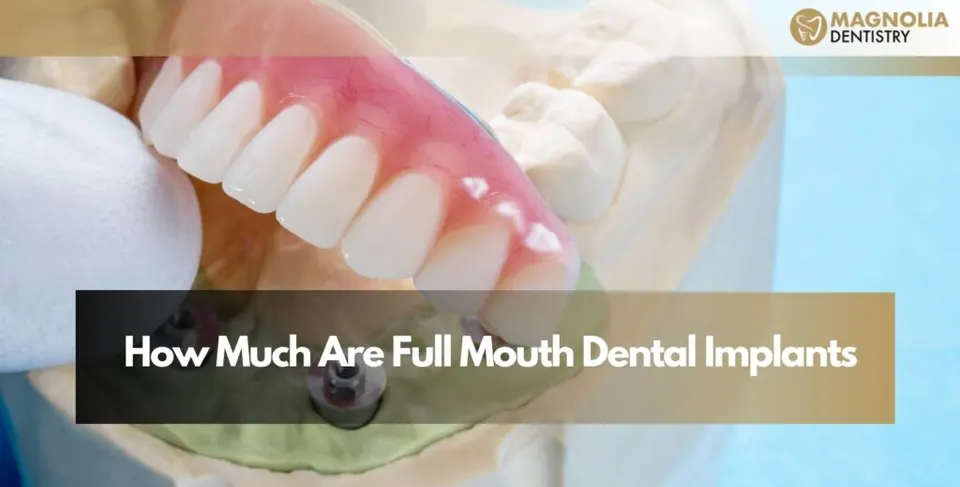
Full mouth dental implants replace a full arch of missing or failing teeth. Instead of replacing each tooth with a separate implant, several implants are placed in the jaw to support a full set of replacement teeth.
These replacement teeth may be fixed, removable, or implant-supported, depending on the treatment plan. Some patients receive a full-arch bridge. Others may receive implant-supported dentures.
The goal is to restore chewing support, improve smile appearance, and create more stability than traditional removable dentures.
Why Implant Posts and Prosthetic Teeth Have Different Lifespans
Full mouth implants are not one single piece. They are made of several parts, and each part handles stress differently.
The implant posts sit in the jawbone and act like artificial tooth roots. These are designed to be long-term foundations. Once they heal and bond with the bone, they can stay stable for many years with proper care.
The prosthetic teeth are the visible part you chew with and smile with. They handle daily biting pressure, food stains, grinding force, and normal wear. Because of that, they usually need maintenance sooner than the implant posts.
This is why a patient may keep the same implant posts for decades but still need the bridge, denture, or prosthetic teeth repaired or replaced over time.
Expected Lifespan of Full Mouth Dental Implants
Full mouth implants are made of different parts, and each part has a different expected lifespan.
Implant Posts
The implant posts are placed in the jawbone and act like artificial tooth roots. Once they fuse with the bone, they create a strong foundation for the replacement teeth.
With proper care, implant posts may last 20 years or longer. Some patients keep them for life. Long-term success depends on bone health, oral hygiene, gum health, bite force, smoking habits, medical conditions, and regular dental maintenance.
For more background on implant outcomes, you can review the AAID guide on dental implant success rates.
Prosthetic Teeth or Full-Arch Bridge
The prosthetic teeth are the part you see when you smile and use when chewing. These teeth may be made from acrylic, composite, porcelain, zirconia, or another dental material.
Because they handle daily chewing pressure, they usually need maintenance sooner than the implant posts. Many patients need repair or replacement after about 10 to 15 years, depending on the material and how well the bite is managed.
A patient who grinds their teeth, chews hard foods often, or skips maintenance may notice wear sooner. A patient with good cleaning habits and a protected bite may get longer use from the prosthetic teeth.
Screws, Abutments, and Connectors
Full mouth implants also include connectors that attach the prosthetic teeth to the implants. These small parts may loosen, wear, or need replacement over time.
If something feels loose, do not ignore it. Often, early repair is much easier than waiting until a larger problem develops.
How Long Do Full Mouth Dental Implants Last and How Do I Care for Them?
Full mouth dental implants last longer when the gums, bone, implant posts, and prosthetic teeth are all maintained together.
To care for them properly, brush twice daily with a soft toothbrush. Clean under and around the prosthetic teeth. Use floss threaders, interdental brushes, or a water flosser if your dentist recommends them. Avoid chewing ice or very hard foods. Wear a nightguard if you grind your teeth. Do not smoke or vape. Keep regular dental cleanings and implant checkups. Report looseness, pain, swelling, bleeding, or bite changes early.
Professional maintenance is important because plaque and tartar can collect around implant parts. If bacteria build up around implants, the tissue can become inflamed and bone support can be lost.
For preventive visits and long-term implant care, Magnolia Dentistry provides cleaning and prevention in Burbank, CA.
What Affects How Long Full Mouth Implants Last?
Several factors affect implant longevity. Some are controlled during treatment planning, while others depend on long-term care.
Bone Quality and Implant Planning
Healthy bone helps support stable implants. If there is not enough bone, bone grafting may be needed before or during treatment.
Proper implant placement matters because the implants must be positioned to handle chewing pressure safely. If the bite is not balanced, the prosthetic teeth or implant parts may wear faster.
Mayo Clinic explains that dental implant surgery can involve several steps and may take months because healing and new bone growth take time. You can read more in the Mayo Clinic dental implant surgery guide.
Osseointegration
Osseointegration is the process where the jawbone joins with the implant surface. This is what gives the implant its strength.
If osseointegration is successful, the implant can become stable enough to support chewing forces. If healing is affected by smoking, infection, poor bone quality, or uncontrolled health conditions, the implant may have a higher risk of failure.
Cleveland Clinic explains more about this process in its Cleveland Clinic guide on dental implants.
Oral Hygiene
Poor oral hygiene can lead to inflammation around the implants. If left untreated, this can become peri-implantitis, a condition that can damage the bone supporting the implants.
Patients with full mouth implants need a daily cleaning routine that reaches under the prosthetic teeth and along the gumline.
Even though implants cannot get cavities, the gum and bone around them can still become infected or inflamed.
Smoking and Vaping
Smoking can reduce blood flow to the gums and slow healing. It may also increase the risk of implant complications.
If you smoke, tell your dentist before treatment so your risks and care plan can be discussed clearly.
Teeth Grinding
Grinding or clenching can put heavy pressure on implant-supported teeth. Over time, this can chip the prosthetic teeth, loosen screws, or stress the implant system.
A custom nightguard may help protect the restoration.
Medical Conditions
Uncontrolled diabetes, immune-related conditions, some medications, and poor bone health may affect healing and long-term implant success.
This does not mean implants are impossible. It means treatment should be planned carefully with your dental and medical history in mind.
Bite Balance
Full mouth implants need a balanced bite. If one side takes more pressure than the other, the bridge, prosthetic teeth, screws, or implant parts may wear faster.
This is why follow-up visits matter. Your dentist can check whether your bite still feels even and make adjustments when needed.
Does Cost Affect How Long Full Mouth Implants Last?
The cost of full mouth implants can vary because different materials, implant systems, and prosthetic designs are used. Cost can also change if bone grafting, extractions, sedation, or temporary teeth are needed.
A lower-cost option is not always worse, and a higher-cost option is not automatically better. What matters most is proper planning, safe placement, quality materials, good bite design, and long-term maintenance.
If a restoration wears down, it may not always mean the implant posts failed. Often, the prosthetic teeth can be repaired or replaced while the implant posts stay in place.
If you are comparing full-arch options, you may also want to learn about All-on-4 dental implants in Burbank, CA.
Signs Your Full Mouth Implants May Need Attention
Full mouth implants should feel stable and comfortable once healed. If something changes, it should be checked early.
Call your dentist if you notice bleeding around the implants, swollen or tender gums, bad taste or pus, pain when chewing, a loose bridge or denture, clicking or movement, a change in your bite, food trapping in new areas, chips, cracks, worn prosthetic teeth, bad breath that does not improve, or gaps between the gums and prosthetic teeth.
These signs do not always mean the implants are failing. Sometimes the issue is a loose screw, worn prosthetic, inflamed gums, or bite imbalance. Early treatment can often prevent bigger problems.
For urgent pain, swelling, or infection signs, contact Magnolia Dentistry for emergency dental care in Burbank, CA.
Can Full Mouth Implant Teeth Be Replaced Without Removing the Implants?
Yes, in many cases the prosthetic teeth can be repaired or replaced without removing the implant posts. This is one of the biggest advantages of full mouth implants.
If the implant posts are healthy and stable, your dentist may only need to repair or replace the visible bridge, denture, teeth, or attachment parts.
When Repair May Be Enough
Repair may be possible if there is a small chip, worn tooth surface, loose screw, or minor fit issue.
Sometimes the issue is not with the implant itself. It may be the prosthetic teeth, the connector, or the bite.
When Replacement May Be Better
Replacement may be recommended if the prosthetic teeth are heavily worn, cracked, stained, loose, or no longer fit the gumline well.
Over time, the gum and bone shape can also change. If the prosthetic no longer fits well, replacement may improve comfort and cleaning.
Why Regular Checkups Matter
Regular checkups help your dentist find wear before the prosthetic breaks. Small repairs are usually easier than emergency replacement.
For full-arch replacement and stability options, you can learn more about implant-supported dentures in Burbank, CA.
Do All-on-4 Implants Last as Long as Full Mouth Implants?
All-on-4 implants are a type of full-arch implant treatment. They use four implants to support a full arch of replacement teeth.
The implant posts in All-on-4 treatment can last many years with proper care. The prosthetic teeth still experience daily wear and may need repair or replacement over time.
The lifespan depends on oral hygiene, bite force, smoking, gum health, bone support, material quality, and professional maintenance.
If you are comparing options, ask your dentist whether traditional full mouth implants, All-on-4, or implant-supported dentures are better for your case.
What Can Shorten the Life of Full Mouth Implants?
Full mouth implants may not last as long if the gums and bone are not kept healthy. The most common risk factors include smoking, poor cleaning habits, missed dental visits, untreated gum inflammation, teeth grinding, uncontrolled diabetes, heavy bite pressure, trauma, and ignoring early signs of looseness or pain.
The good news is that many of these risks can be managed. A good maintenance plan can help protect your investment and reduce the chance of major repairs.
How Often Should Full Mouth Implants Be Checked?
Most patients with full mouth implants should visit the dentist at least every 6 months. Some patients need visits every 3 to 4 months, especially if they have a history of gum disease, heavy plaque buildup, smoking, diabetes, or implant inflammation.
At these visits, your dentist or hygienist may check gum health, clean around the implant parts, check the bite, look for loose screws, examine the prosthetic teeth, and take X-rays when needed.
These visits are not only for cleaning. They help catch small problems before they become expensive or painful.
Are Full Mouth Dental Implants Worth It Long Term?
For many patients, full mouth dental implants are worth it because they offer stronger chewing support, better stability, and a more secure fit than traditional removable dentures.
They can also help patients feel more confident while eating, speaking, and smiling. But they do require maintenance. Full mouth implants are not a “set it and forget it” treatment.
The best results come from good planning, good home care, regular professional maintenance, and quick attention when something feels different.
Conclusion
Full mouth dental implants can last many years, but the implant posts and the prosthetic teeth do not always age the same way. The implant posts can often last 20 years or longer with proper care, and some may last a lifetime. The visible prosthetic teeth usually need repair, resurfacing, or replacement after about 10 to 15 years because of normal wear.
The best way to make full mouth implants last is to keep them clean, protect them from heavy bite forces, avoid smoking, manage health conditions, and visit your dentist regularly for professional maintenance.
If you are considering full mouth implants or want to check the condition of your current implants, Magnolia Dentistry can help you understand your options and create a care plan that protects your long-term results.
Schedule a visit with our dentist in Burbank, CA to discuss full mouth implant lifespan, maintenance, repair, or replacement.
FAQs
How long do full mouth dental implants last?
Full mouth implant posts can often last 20 years or longer with proper care, and some may last a lifetime. The attached prosthetic teeth usually need repair or replacement after about 10 to 15 years because of normal chewing wear.
Do full mouth implants last a lifetime?
The implant posts may last a lifetime in some patients, but the prosthetic teeth usually do not. The bridge, denture, or full-arch teeth may need replacement over time due to wear, stains, chips, or bite changes.
How long do full mouth implant bridges last?
A full mouth implant bridge may last around 10 to 15 years before repair or replacement is needed. Some last longer with excellent hygiene, regular checkups, good materials, and a protected bite.
How do you make full mouth implants last longer?
Brush daily, clean under the prosthetic teeth, use a water flosser or interdental tools if recommended, avoid smoking, wear a nightguard if you grind, avoid chewing hard objects, and keep regular dental cleanings.
What causes full mouth implants to fail?
Implants may fail because of infection, poor oral hygiene, smoking, uncontrolled diabetes, poor bone support, excessive bite force, trauma, or untreated teeth grinding.
Can the prosthetic teeth be replaced without removing the implants?
Yes, if the implant posts are healthy and stable, the prosthetic teeth can often be repaired or replaced without removing the implants.
Do All-on-4 implants last as long as other full mouth implants?
All-on-4 implants can last many years with proper care. The implant posts can last decades, while the prosthetic teeth may need repair or replacement over time.
How often should full mouth implants be professionally cleaned?
Many patients need professional cleanings every 3 to 6 months. Your dentist will recommend the right schedule based on gum health, plaque buildup, medical history, and implant condition.
What are signs full mouth implants need repair?
Signs include looseness, clicking, pain when chewing, swollen gums, bleeding, bad taste, chips, cracks, worn teeth, bite changes, or food getting trapped in new areas.
Is it normal for full mouth implants to feel loose?
No, full mouth implants should not feel loose once healed. A loose feeling may come from a screw, attachment, prosthetic fit issue, or implant problem. It should be checked by a dentist.
Can smoking shorten the lifespan of full mouth implants?
Yes, smoking can affect healing, gum health, blood flow, and infection risk. This may shorten implant lifespan and increase the chance of complications.
Are full mouth implants worth it long term?
For many patients, full mouth implants are worth it because they provide strong chewing support, better stability than removable dentures, and long-term tooth replacement. The value depends on your oral health, goals, budget, and ability to maintain them.
Your next step
Talk with Dr. Massaband about your situation
Articles explain general options; an examination tells you what applies to you. Call the Burbank office or book online.
This article is general patient education and is not a diagnosis or a substitute for an in-person dental examination.