Author: Dr. Liyan Massaband, DDS | Magnolia Dentistry, Burbank, CA
Medically Reviewed: June 2026 | Reading Time: 6 min
Quick Summary: After a root canal, what you eat directly affects how quickly and comfortably you heal. For the first 24 hours, stick to ultra-soft or liquid foods while your mouth is still numb and the treated area is most sensitive. From days two through seven, expand to a full soft food diet while avoiding anything hard, crunchy, sticky, or very hot. This guide gives you a complete day-by-day food list, an avoid list with reasons, nutrition tips that speed healing, and answers to every common post-procedure food question.
Why Your Diet Matters After a Root Canal
A root canal procedure removes the infected or inflamed pulp from inside your tooth, cleans and disinfects the root canals, and seals everything with a filling material. The tooth itself is preserved, but the surrounding gum tissue and the periapical area (the bone and ligament around the root tip) have been through a therapeutic procedure and need time to settle.
Several things are happening in your mouth in the days immediately after treatment that make your food choices genuinely important:
The anaesthetic is still working. For two to four hours after your appointment, the local anaesthetic numbs your lip, cheek, tongue, and gum tissue. Eating while numb is a real risk for biting your cheek or tongue without feeling it. Wait until sensation has fully returned before chewing anything.
A temporary crown or filling is in place. Most root canal-treated teeth receive a temporary restoration while the permanent crown is being fabricated. Temporary materials are not designed for the same biting forces as permanent restorations. Hard and sticky foods can dislodge or fracture a temporary crown, which means an unplanned return visit.
The periapical tissue is healing. Even after successful treatment, the bone and ligament around the root tip can remain tender for several days to two weeks. Biting firmly on the treated tooth before this settles can cause unnecessary pain and slow the healing response.
Sensitivity to temperature is common. The tooth itself no longer has a live nerve (the nerve was removed), but the surrounding gum and bone tissue can be sensitive to extreme heat and cold during the healing period.
None of this requires a dramatic dietary restriction. Most patients are eating comfortably within three to five days. You just need to be thoughtful for the first week.
The First 24 Hours: Ultra-Soft Foods Only
The first day is the most critical window for protecting your temporary restoration and the treated tooth. Your goal: zero chewing pressure on the treated side, and nothing that requires significant jaw effort anywhere.
Wait until the numbness has fully gone before eating anything at all. This typically takes two to four hours depending on the type and amount of anaesthetic used.
Best foods for the first 24 hours:
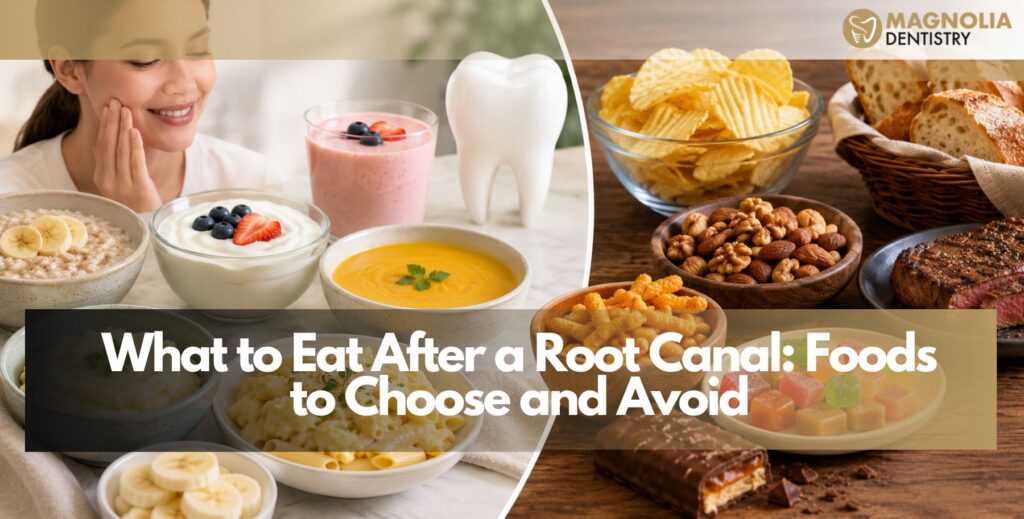
- Smoothies and protein shakes: The ideal first meal. Nutrient-dense, require no chewing, and the cool temperature is soothing on tender gum tissue. Avoid using a straw for the first day as the suction pressure, while much gentler than after extraction, is still an unnecessary force on the area.
- Yogurt: Cool, smooth, and soft enough to require no jaw effort. Greek yogurt has higher protein which actively supports tissue healing.
- Applesauce: A practical, easy option that requires no chewing. Room temperature or slightly cool is best.
- Pudding and soft gelatin: Gentle, non-sticky, and effortless. Avoid very cold versions directly from the refrigerator if you are experiencing temperature sensitivity.
- Broth-based soups: Warm, not hot. The warmth is comforting and the nutrients in bone broth (collagen, minerals) support tissue healing. Let soup cool to a comfortable temperature before eating — not steaming.
- Mashed banana: Soft, naturally sweet, and rich in potassium. No preparation needed.
- Ice cream or soft sorbet: One of the unexpected perks of post-root-canal recovery. Cool temperatures can mildly numb the area and reduce local inflammation. Stick to soft-serve or regular ice cream rather than very hard frozen varieties.
What to avoid in the first 24 hours:
Essentially everything except the foods above. Even foods you might normally think of as soft, bread, pasta, rice, require more jaw movement than is ideal in the first day. Keep it simple.
Days 2 to 3: Soft Foods You Can Eat
By day two, most patients notice a significant reduction in initial soreness. The temporary restoration is in place, the anaesthetic effects are long gone, and you can start expanding your diet, carefully.
The guiding principle for days two and three: soft enough to cut easily with a fork, and eaten on the opposite side from the treated tooth wherever practical.
Good choices for days 2 to 3:
- Scrambled eggs: Protein-rich, soft, and requiring minimal chewing. One of the best post-procedure foods recommended across dental aftercare guidelines.
- Oatmeal: Cooked until soft, not crunchy. Avoid adding nuts, seeds, or granola at this stage. A little honey or soft fruit puree works well.
- Soft pasta or noodles: Well-cooked pasta, ramen noodles, or macaroni are ideal. Ensure they are cooked through rather than al dente, which requires more bite force.
- Mashed potatoes: A classic recovery food for good reason. Smooth and filling. Avoid adding crunchy toppings.
- Avocado: One of the best recovery foods available, soft enough to eat without any meaningful chewing, rich in healthy fats that reduce inflammation, and loaded with vitamins C and E that support tissue repair.
- Soft fish: Tilapia, cod, or salmon cooked until flaking. Fish is an excellent source of lean protein and omega-3 fatty acids, both of which actively support healing.
- Soft tofu: Silken or medium-firm tofu requires almost no chewing and provides protein and calcium.
- Hummus: A useful protein-containing dip eaten with a spoon or with very soft bread torn into small pieces.
- Cottage cheese: Soft, high-protein, and requiring no chewing effort.
Eating technique matters: Take smaller bites than usual, chew slowly, and direct chewing away from the treated tooth. There is no need to be dramatic about it, just be mindful.
Week 1 Full Food List
Use this as your shopping guide and meal planner for the first seven days after your root canal.
Proteins
- Scrambled, poached, or soft-boiled eggs
- Soft fish (salmon, tilapia, cod)
- Silken or soft tofu
- Yogurt (Greek yogurt for higher protein)
- Cottage cheese
- Hummus
- Smooth nut butters (peanut, almond) spread on very soft bread
- Shredded or minced slow-cooked chicken or turkey (well-moistened)
Grains and Starches
- Oatmeal (cooked soft)
- Cream of wheat or rice porridge
- Soft pasta and noodles
- Mashed potatoes
- White rice (well-cooked and slightly mushy is fine)
- Soft bread (without crunchy crust)
- Macaroni and cheese
- Soft pancakes
Fruits and Vegetables
- Banana (mashed or soft)
- Avocado
- Applesauce
- Ripe mango, papaya, or soft peach (avoid stringy fibers)
- Cooked carrots, zucchini, or squash
- Soft steamed broccoli florets (small pieces)
- Blended vegetable soups
- Mashed sweet potato
Liquids and Comfort Foods
- Smoothies and protein shakes
- Broth and cream soups (cooled to warm, not hot)
- Warm (not hot) herbal teas
- Milk
- Ice cream and soft sorbet
- Pudding and yogurt parfaits
Foods to Avoid After a Root Canal
This is the list that matters most for protecting your temporary crown and avoiding unnecessary pain during recovery.
Hard and crunchy foods
Chips, nuts, seeds, raw carrots, raw apples, popcorn, hard bread, pretzels, crackers, granola, and hard candy all create significant biting force that the treated tooth and its temporary restoration are not ready for. Even a single hard bite can crack or dislodge a temporary crown, meaning an unplanned return visit.
Sticky and chewy foods
Caramel, taffy, gummy candies, toffee, dried fruit (raisins, apricots, dates), chewing gum, and bagels are the most common culprits for pulling out temporary crowns. Sticky textures grip the crown surface and the force required to separate them is often enough to break the temporary seal. Avoid these entirely until your permanent crown is placed.
Very hot foods and drinks
Hot coffee, hot tea, hot soup, and freshly cooked meals can spike sensitivity in the gum tissue around the treated tooth during the healing period. The tooth itself has no live nerve, so it will not feel temperature directly, but the surrounding periodontal tissue is still healing and can be sensitive to thermal changes. Let hot food and drinks cool to a warm, comfortable temperature before eating or drinking.
Very cold foods and drinks
Iced drinks, frozen treats eaten directly, or very cold food can also trigger sensitivity in the healing periapical tissue. Soft ice cream at normal serving temperature is fine, but a cup of ice water sipped on the treated side is not.
Spicy and acidic foods
Hot sauces, chili peppers, citrus fruits and juices, tomato-based sauces, and vinegar-heavy dressings can irritate inflamed gum tissue and slow local healing. Wait until your gum tissue has settled before returning to spicy or highly acidic meals.
Sugary snacks and drinks
Candy, soda, and sweet baked goods contribute to bacterial growth in the mouth at a time when the treated area is most vulnerable. Good oral hygiene combined with reducing sugar intake gives the healing area its best environment.
Alcohol
Alcohol can interact with any prescription pain medication or antibiotics you have been given, and it may increase local inflammation and slow healing. Avoid alcohol for the first 24 to 48 hours and for the duration of any antibiotic course.
When Can You Eat Normally Again?
The honest answer depends on two things: how your healing progresses and whether you have a temporary or permanent crown.
With a temporary crown: You should maintain soft food precautions and avoid hard and sticky foods for the entire period between your root canal and permanent crown placement. This is typically two to three weeks. The temporary crown is protecting the tooth during this window, but it is not as durable as your permanent restoration.
After the permanent crown is placed: Once your dentist confirms the permanent crown is securely bonded and your bite feels comfortable, you can progressively return to a normal diet. Your dentist will advise you to avoid biting hard objects with the crown long-term as a general maintenance principle, but food restrictions specific to recovery are lifted.
For the tooth itself: The root canal-treated tooth no longer has a live nerve, which means you will not feel temperature sensitivity from inside the tooth. However, the supporting bone and ligament can take two to four weeks to fully settle after treatment. During this period, you might notice that the tooth feels slightly tender when you bite down firmly, this is normal and resolves gradually.
If you are still noticing significant pain when chewing after two weeks, or if any pain is increasing rather than decreasing, contact your dentist. This could indicate that the bite needs adjustment or that the healing is not progressing as expected. See our guide on root canal recovery time and what to expect for a complete week-by-week healing timeline.
Managing Sensitivity While Eating
Even with a careful diet, some eating-related discomfort in the days after a root canal is normal. Here is how to manage it effectively.
Chew on the opposite side. This is the single most effective thing you can do to protect the treated tooth while eating. Make a conscious habit of directing food to the untreated side for at least the first week.
Eat smaller bites. Smaller pieces require less jaw effort and reduce the chance that a food particle will contact the treated tooth with any meaningful force.
Let hot foods cool before eating. A practical habit: if you can comfortably hold your finger near the bowl of soup and feel warm steam but not discomfort, the temperature is appropriate for eating post-root canal.
Take ibuprofen before meals if needed. If eating is uncomfortable, taking 400 mg of ibuprofen 30 to 45 minutes before a meal can reduce the inflammation enough to make eating comfortable. The American Dental Association supports NSAIDs as the first-line option for managing post-procedure dental discomfort, either alone or combined with acetaminophen.
Rinse after eating. A gentle warm saltwater rinse after meals clears food debris from the area around the temporary crown and keeps the local bacterial load down. This is especially important if any food does contact the treated tooth.
Nutrition That Supports Healing
The foods you choose during recovery are not just about protecting the tooth, they can actively accelerate tissue healing. A few nutrients deserve specific attention.
Protein: Tissue repair requires amino acids, which come from dietary protein. Aim to include a protein source at every meal during recovery. Eggs, soft fish, yogurt, tofu, and cottage cheese all provide excellent protein in formats that are gentle on the healing area.
Vitamin C: Essential for collagen synthesis, which is the main structural protein in gum tissue and bone. Good soft-food sources include applesauce, mashed ripe mango, soft-cooked sweet potato, and smoothies made with strawberries or citrus juice. If citrus is too acidic, take a vitamin C supplement.
Vitamin D and Calcium: Both are critical for bone health and remodeling in the periapical area during healing. Soft dairy foods including yogurt, cottage cheese, and milk are excellent sources of both. Fortified plant milks work well as substitutes.
Omega-3 fatty acids: These have documented anti-inflammatory effects that support tissue healing. Soft, cooked salmon is an ideal recovery food for this reason. Alternatively, a fish oil supplement provides the same benefit.
Zinc: Plays a role in immune function and wound healing. Soft sources include eggs, hummus, and yogurt.
Hydration: Staying well-hydrated keeps the healing tissue oxygenated and supports every phase of the repair process. Water at room temperature or slightly cool is the best option. Herbal teas (not too hot) are a good addition.
For more on what to eat when your mouth is sore or sensitive, our page on what to eat when you have a toothache covers a closely related soft-food framework that many Magnolia patients have found useful.
Post-Root Canal Food: Quick Reference Card
SAFE FOODS (Days 1 to 7)
| Meal | Options |
|---|---|
| Breakfast | Smoothie, yogurt, scrambled eggs, oatmeal, soft pancakes |
| Lunch | Cream soup, soft pasta, mashed potato, avocado, soft tofu |
| Dinner | Soft fish, shredded chicken in broth, mashed sweet potato, cooked veg |
| Snacks | Applesauce, banana, hummus, pudding, cottage cheese, ice cream |
| Drinks | Water, milk, herbal tea (warm), broth, protein shakes |
AVOID (Until Permanent Crown is Placed)
- Anything hard, crunchy, or requiring firm biting
- Sticky candies, gum, taffy, dried fruit
- Very hot food and drinks
- Very cold drinks on the treated side
- Spicy sauces and acidic citrus
- Alcohol during medication course
FAQs
How soon can I eat after a root canal?
Wait until the local anaesthetic has fully worn off before eating anything, typically two to four hours. Eating while numb risks biting your cheek or tongue without feeling it. Once sensation returns, you can start with ultra-soft foods like yogurt, a smoothie, or applesauce.
Can I drink coffee after a root canal?
Yes, but let it cool down substantially before drinking. Very hot coffee can increase sensitivity in the healing gum tissue around the treated tooth. Lukewarm or room-temperature coffee is fine. Avoid drinking coffee through a straw immediately after treatment.
Can I eat rice after a root canal?
Yes. Well-cooked white rice is one of the safer grain options after a root canal because it is soft and requires minimal chewing force. Cook it a little longer than normal so it is soft throughout, and eat it on the untreated side. Avoid fried rice or rice dishes with crunchy ingredients.
Can I eat bread after a root canal?
Soft bread without a hard crust is acceptable from day two onward. Avoid crusty baguette, hard rolls, or toast, as these require significant biting force that could dislodge a temporary crown. A soft sandwich bread is fine — especially if the fillings are also soft.
Can I eat pasta or noodles after a root canal?
Yes. Well-cooked pasta and noodles are among the best post-root-canal foods because they require minimal chewing, provide carbohydrates for energy, and are easy to combine with soft proteins like eggs or cottage cheese. Cook until soft rather than al dente.
Can I eat pizza after a root canal?
Not immediately. Pizza crust, particularly the edge, requires significant biting force and is often chewy. The cheese can also be sticky. If you want to eat pizza during recovery, remove the crust entirely and eat only the soft center portion, cut into very small pieces, on the untreated side. Wait until after your permanent crown is placed to enjoy pizza normally.
Can I eat chicken after a root canal?
Soft, slow-cooked, or shredded chicken that is moist and tender is fine from day two. Avoid grilled chicken breast or anything with a firm or chewy texture. Chicken soup with well-cooked chicken pieces is an excellent recovery meal.
Is it normal for my tooth to hurt when eating after a root canal?
Mild tenderness when chewing on the treated side for the first three to five days is completely normal. The periapical tissue (bone and ligament around the root) takes time to settle after treatment. If pain is moderate to severe, worsening after day three, or accompanied by swelling, contact your dentist. You can read more about the full healing timeline in our guide on what to expect during root canal recovery.
Do I need to change how I brush after a root canal?
Continue brushing and flossing your teeth normally. Be gentle around the treated tooth, light pressure, not vigorous scrubbing directly over the temporary crown. A soft-bristle brush is ideal. Maintaining oral hygiene is important during recovery to prevent bacterial buildup around the temporary restoration.
Questions About Your Recovery?
Every patient’s experience after a root canal is slightly different. If you are concerned about your healing, experiencing more discomfort than expected, or unsure whether a specific food is safe, the best resource is your dental team.
At Magnolia Dentistry, our experienced dentist in Burbank, CA, Dr. Liyan Massaband, and our caring team are always available to answer post-procedure questions, check your healing, and help make your recovery as smooth and comfortable as possible.
Contact Magnolia Dentistry for Post-Root Canal Care in Burbank
This article was written by Dr. Liyan Massaband, DDS, for general informational purposes only. It does not constitute personalized dental or medical advice. For diagnosis and treatment specific to your situation, please consult a licensed dental professional.