Blog
Best Ways to Remove Plaque from Teeth Without a Dentist
Before diving into removal techniques, it's important to understand what plaque is and why it's such a concern for your dental health.
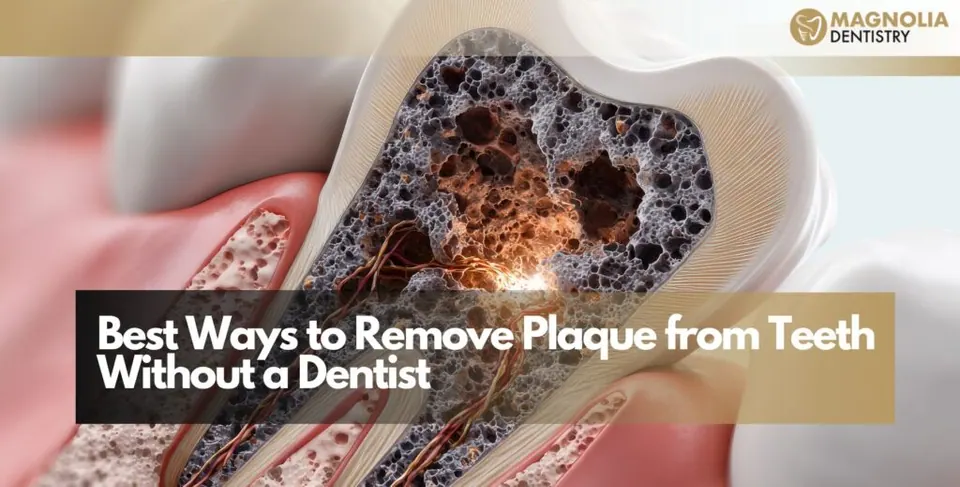
Feel that fuzzy coating on your teeth? That’s plaque: a sticky film of bacteria that forms throughout the day and hardens into tartar within days. While professional dental cleanings are essential, removing plaque between dental visits is crucial for preventing cavities, gum disease, and costly dental problems.
Good news: You can effectively remove plaque at home with the right techniques. In this comprehensive guide, we’ll cover 7 proven methods recommended by dental professionals, compare their effectiveness, and show you exactly how to prevent plaque buildup before it becomes a serious problem.
Understanding Plaque and Why It Matters
Before diving into removal techniques, it’s important to understand what plaque is and why it’s such a concern for your dental health. Plaque is a soft, sticky biofilm composed of bacteria, food particles, and saliva that constantly forms on your teeth. Unlike tartar (also called calculus), plaque can be removed at home, but only if you address it before it hardens.
How Quickly Does Plaque Become Tartar?
Plaque hardens into tartar within 24 to 72 hours if left untouched. Once it becomes tartar, only a professional dentist can remove it using specialized scaling tools. This is why daily plaque removal is essential: it is far easier to prevent tartar formation than to treat it after the fact. If you need professional help, learn what to expect at your dental cleaning appointment.
Why Is Plaque Dangerous?
The bacteria in plaque produce acids that attack your tooth enamel, leading to cavities and tooth decay. Additionally, plaque buildup along the gum line causes inflammation, resulting in gingivitis (red, swollen gums) and potentially progressing to periodontitis (severe gum disease). Left untreated, gum disease can lead to tooth loss and has been linked to heart disease and diabetes. That’s why learning how to remove plaque at home is crucial for preventing serious oral health problems.
Plaque vs. Tartar: What’s the Difference?
| Feature | Plaque | Tartar |
| Texture | Soft, sticky | Hard, crusty |
| Color | White/yellow | Brown/black |
| Removable? | Yes (at home) | No (dentist only) |
7 Effective Home Methods to Remove Plaque
The good news is that plaque removal at home is entirely possible with the right techniques and consistency. Here are the most effective methods ranked by scientific evidence and effectiveness:
1. Proper Brushing Technique (Most Important)
Brushing your teeth correctly is your first line of defense against plaque and forms the foundation of any home oral hygiene routine.
How to Brush Correctly:
- Choose a soft-bristled toothbrush or electric toothbrush (electric brushes are up to 11% more effective at reducing plaque than manual brushing)
- Use fluoride toothpaste containing at least 1000 ppm fluoride
- Hold your brush at a 45-degree angle to your gums
- Use gentle, circular motions rather than aggressive scrubbing (hard brushing can damage gums)
- Brush for at least two minutes, twice daily (morning and before bed)
- Do not forget your tongue and the back of your molars
- Wait 30-60 minutes after eating acidic foods before brushing to avoid enamel damage
2. Daily Flossing (40% of Tooth Surface Are Unreachable by Brushing)
Flossing reaches areas your toothbrush cannot access, removing plaque and food particles from between teeth and along the gum line where gum disease often starts.
How to Floss Properly:
- Use about 18 inches of floss
- Wind most of the floss around one finger and the remainder around your opposite hand
- Gently slide the floss between teeth using a zigzag motion
- Curve the floss around each tooth in a C-shape
- Move it up and down against the tooth surface with gentle pressure
- If traditional floss is challenging, try floss picks, water flossers, or interdental brushes
3. Antimicrobial Mouthwash (Supplementary Step)
An antimicrobial or antiseptic mouthwash can help reduce bacteria that cause plaque buildup and gingivitis, but it should never replace brushing or flossing.
- Look for mouthwashes containing chlorhexidine, cetylpyridinium chloride, or essential oils (like peppermint or tea tree)
- Swish the mouthwash around your mouth for 30 seconds to one minute after brushing and flossing
- Rinse your mouth with water afterward
Note: Mouthwash is a supplementary step. Overrelying on mouthwash while neglecting brushing and flossing will not prevent plaque buildup.
4. Baking Soda for Natural Plaque Removal
Baking soda (sodium bicarbonate) is a mild abrasive that can help remove plaque naturally. It also neutralizes acids in your mouth, creating an environment less conducive to bacterial growth. Research shows baking soda is as effective as traditional toothpaste for plaque removal.
- Mix baking soda with a small amount of water to create a paste
- Or sprinkle a small amount of baking soda directly on your wet toothbrush
- Brush gently for 2 minutes
- Use this method 2-3 times per week, not daily, as overuse can erode tooth enamel
5. Oil Pulling for Plaque Reduction
Oil pulling is an ancient practice involving swishing coconut oil (or sesame oil) in your mouth for 10-20 minutes. The oil attracts and traps bacteria, helping to reduce plaque buildup. While research on its effectiveness is mixed, many people find it a helpful addition to their dental care routine. This method works best as a supplement, not a replacement for brushing and flossing.
- Perform oil pulling in the morning on an empty stomach
- Use 1 tablespoon of coconut oil or sesame oil
- Swish gently for 10-20 minutes (start with 5 minutes if it feels uncomfortable)
- Spit the oil into the trash, not the sink, as it can clog pipes
- Rinse your mouth thoroughly and brush your teeth
6. Plaque-Disclosing Tablets (Track Your Progress)
Plaque-disclosing tablets are chewable tablets that temporarily stain plaque on your teeth with a harmless dye, making it visible so you can see exactly where plaque remains. They’re invaluable for ensuring you’re not missing any spots during your oral hygiene routine and for checking if your techniques are improving.
- Chew the tablet for 30 seconds
- Swish with water to distribute the dye
- Look in the mirror to identify stained areas (this is where plaque remains)
- Use once a week to improve your brushing technique
7. Water Flosser (Modern Alternative to String Floss)
Water flossers use a pressurized water stream to remove plaque and food particles from between teeth and below the gum line. They’re especially effective for people with braces, implants, or difficulty using traditional floss.
- Fill the reservoir with lukewarm water
- Start with the lowest pressure setting
- Angle the tip slightly toward the gum line
- Work through all teeth systematically
Quick Comparison: Which Method Is Most Effective?
| Method | Effectiveness | Daily Use? | Cost |
| Brushing | ★★★★★ | Yes (2x) | $5-20/year |
| Flossing | ★★★★★ | Yes (1x) | $2-3/year |
| Mouthwash | ★★★☆☆ | Yes | $3-10/month |
| Baking Soda | ★★★★☆ | 2-3x/week | <$1 |
| Oil Pulling | ★★★☆☆ | Optional | <$5 |
| Water Flosser | ★★★★☆ | Yes (1x) | $40-80 once |
Diet and Lifestyle Tips to Prevent Plaque
Beyond your daily oral care routine, certain dietary choices and lifestyle habits can significantly impact plaque formation:
Limit Sugary and Starchy Foods
Bacteria in your mouth feed on sugar and carbohydrates, producing acids that contribute to plaque and tooth decay. Minimize consumption of sugary snacks, sodas, sports drinks, and processed foods. If you do indulge, rinse your mouth with water immediately and wait 30-60 minutes before brushing to avoid damaging softened enamel.
Eat Crunchy, Fibrous Foods
Foods like apples, carrots, celery, and raw vegetables act as natural teeth cleaners. Their crunchy texture helps scrub away plaque and stimulates saliva production, which naturally rinses away food particles and neutralizes acids. These foods are excellent snacks for maintaining oral health between meals.
Stay Hydrated with Water
Drinking plenty of water throughout the day helps wash away food particles and bacteria. Water also keeps your mouth moist and supports saliva production, which is your body’s natural defense against plaque and cavities. If possible, choose fluoridated water, which provides additional protection against tooth decay.
Foods and Drinks That Help Prevent Plaque:
- Green tea (contains antioxidants that reduce plaque-forming bacteria)
- Dairy products like cheese and yogurt (boost saliva production)
- Nuts and seeds (require more chewing, stimulating saliva)
- Citrus fruits (contain natural acids that help dissolve bacteria)
- Cranberries (contain polyphenols that may inhibit plaque formation)
When to See a Dentist
While these home methods are highly effective for removing soft plaque, they cannot replace professional dental care. Once plaque hardens into tartar, only a dental hygienist or dentist can remove it. Schedule regular dental checkups to catch and prevent serious problems early.
Signs You Need to Schedule a Dental Appointment:
- Persistent bad breath that does not improve with brushing
- Bleeding gums when brushing or flossing
- Red, swollen, or tender gums (signs of gingivitis)
- Visible tartar buildup on your teeth (brownish or black deposits)
- Tooth pain or sensitivity
- Loose teeth
- It has been more than 6 months since your last professional cleaning
Regular dental checkups and cleanings every six months are essential for catching potential problems early and keeping your teeth and gums healthy. Your dentist can identify issues you might miss during your home routine and provide professional treatments that go beyond what’s possible at home.
Frequently Asked Questions About Plaque Removal
How long does it take for plaque to turn into tartar?
Plaque typically hardens into tartar within 24 to 72 hours if left untouched. Once it becomes tartar, only professional cleaning can remove it. This is why daily plaque removal is so critical.
Can I remove tartar at home?
No. Once plaque hardens into tartar (calculus), it’s too strong to remove with a toothbrush or floss. Only professional dental scaling and root planing can remove tartar. Attempting to scrape tartar off yourself can damage your enamel and gums.
Is an electric toothbrush better than a manual toothbrush?
Research shows electric toothbrushes are about 11% more effective at reducing plaque than manual brushes, particularly oscillating-rotating brushes. However, a manual toothbrush is effective if you use proper technique. The best toothbrush is the one you’ll use correctly twice daily.
Why is my plaque yellow or brown?
Plaque can appear yellow, brown, or even black depending on various factors. Brown or black plaque may indicate staining from coffee, tea, tobacco, or staining bacteria. It’s still soft plaque and can be removed at home, but discolored plaque often indicates biofilm buildup and should prompt more thorough cleaning.
Can oil pulling remove tartar?
No. Oil pulling can help reduce soft plaque buildup to some extent, but once tartar forms, only professional cleaning removes it. Oil pulling should be used as a supplementary practice, not a replacement for brushing, flossing, and regular dental visits.
Is baking soda safe for daily brushing?
Baking soda is safe as an occasional treatment (2-3 times per week), but daily use can gradually erode your tooth enamel due to its mild abrasiveness. For daily cleaning, stick with fluoride toothpaste and use baking soda as a supplementary treatment.
How much time should I spend flossing?
Flossing thoroughly should take 2-3 minutes. Most people rush through it in 30 seconds, which does not effectively remove plaque. Take your time, gently curve the floss around each tooth, and move it in an up-and-down motion along the tooth surface and under the gum line.
Does mouthwash alone prevent plaque?
No. Mouthwash is a supplementary step that reduces bacteria, but it cannot physically remove plaque like brushing and flossing can. A complete oral hygiene routine requires brushing + flossing + mouthwash, not just mouthwash alone.
Can I prevent plaque if I only brush and do not floss?
Brushing alone only cleans about 60% of your tooth surfaces. Plaque in the tight spaces between teeth and below the gum line will accumulate, leading to gum disease even if your visible teeth look clean. Flossing is non-negotiable for complete plaque control.
How often should I use plaque-disclosing tablets?
Use them once a week to track your progress and identify problem areas. After you’ve improved your brushing technique and consistently see less staining, you can use them monthly for maintenance. They’re great for fine-tuning your technique.
Does water fluoridation help prevent plaque?
Fluoride strengthens enamel and helps prevent cavities caused by plaque bacteria, but it does not prevent plaque formation itself. Water fluoridation works best combined with proper brushing, flossing, and plaque removal techniques.
Your Daily Anti-Plaque Routine
Here’s a simple routine you can follow every day to keep plaque under control:
Morning Routine (5 minutes):
- Brush teeth for 2 minutes with fluoride toothpaste using proper technique
- Rinse with water, then use mouthwash for 30-60 seconds
Evening Routine (5-7 minutes):
- Floss thoroughly for 2-3 minutes, reaching all spaces between teeth
- Brush teeth for 2 minutes
- Rinse with water, then use mouthwash for 30-60 seconds
Weekly (2-3 times):
- Use baking soda paste instead of regular toothpaste for added plaque-removing power
Monthly:
- Use plaque-disclosing tablets to check your technique and identify weak spots
- Schedule a professional dental cleaning every 6 months
Conclusion
Removing plaque at home is absolutely achievable with dedication to proper oral hygiene practices. By brushing twice daily with correct technique, flossing daily, using mouthwash, and making smart dietary choices, you can significantly reduce plaque buildup and protect yourself from cavities and gum disease.
Remember, while these home remedies are powerful tools in your dental health arsenal, they work best when combined with regular professional dental visits. Your dentist can identify issues you might miss and provide treatments that go beyond what’s possible at home. Take charge of your oral health today. Your smile and your overall health will thank you.
Ready for Professional Plaque Removal? If you’re in the Burbank, CA area and need professional plaque removal or want expert guidance on your home routine, contact Magnolia Dentistry for a personalized consultation. Our experienced team provides comprehensive preventive care to keep your teeth and gums healthy.
Your next step
Talk with Dr. Massaband about your situation
Articles explain general options; an examination tells you what applies to you. Call the Burbank office or book online.
This article is general patient education and is not a diagnosis or a substitute for an in-person dental examination.