Gum disease is one of the most common oral health conditions affecting adults in the United States, and one of the most underestimated. Many patients do not realise they have it until it has already caused significant damage to the tissue and bone supporting their teeth.
At Magnolia Dentistry in Burbank, CA, Dr. Liyan Massaband, DMD, MPH provides comprehensive gum disease treatment for patients at every stage, from early gingivitis to advanced periodontitis. Her approach combines modern diagnostic tools, targeted treatment, and a personalised maintenance plan designed to protect your oral health for the long term. If your gums bleed when you brush, feel tender, or you have noticed your teeth looking longer than they used to, do not wait. Early detection makes the difference between a simple professional cleaning and more complex periodontal therapy. Call (818) 846-9041 to schedule a gum evaluation with Dr. Massaband.
What Is Gum Disease?
Gum disease, also called periodontal disease, is a bacterial infection of the tissues that surround and support your teeth. It begins in the space between your gum and tooth, where plaque accumulates if not thoroughly removed by daily brushing and flossing.
When plaque hardens into tartar (calculus), it becomes impossible to remove with a toothbrush. Bacteria in the tartar release toxins that irritate the gum tissue, triggering an immune response that, over time, damages the gum, the ligament anchoring the tooth, and the jawbone itself.
Gingivitis: The Early Stage
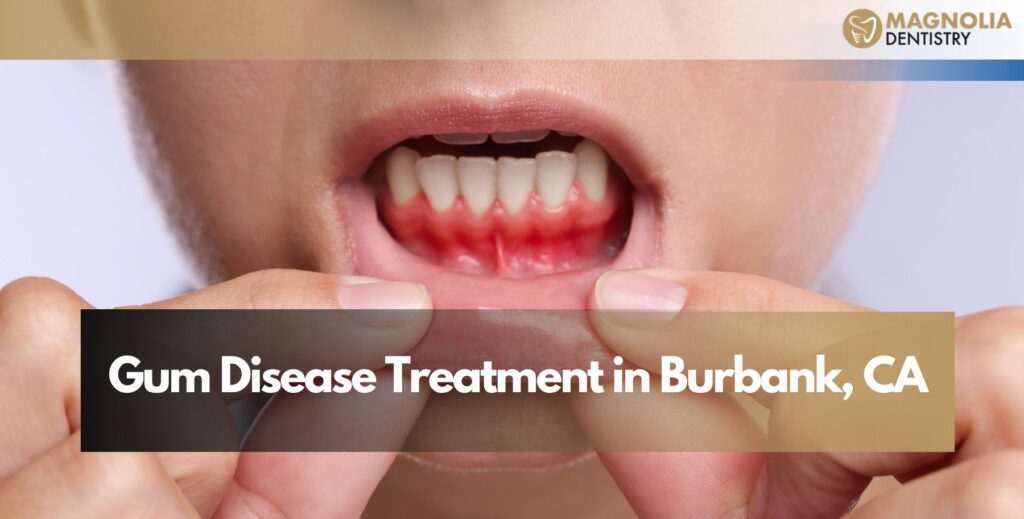
Gingivitis is the earliest and most treatable stage of gum disease. The gums become red, swollen, and bleed easily when brushed or flossed. At this stage, the bone and connective tissue supporting the teeth are not yet affected. Gingivitis is completely reversible with a professional cleaning and consistent home care.
Dr. Massaband identifies gingivitis at routine check-up appointments through gum pocket measurements and visual assessment. Most patients are surprised that they have it, because gingivitis is often painless in its early stages.
Periodontitis: Advanced Gum Disease
When gingivitis is not treated, the infection spreads below the gum line. The body’s immune response begins to destroy the bone and connective tissue that hold the teeth in place. Pockets form between the gum and the tooth root, deepening over time as more tissue is lost. At this stage, the condition is called periodontitis. The bone loss is not reversible, but the progression of the disease can be stopped with appropriate periodontal treatment. Early intervention is critical to preserving as much bone and as many natural teeth as possible.
Signs and Symptoms of Gum Disease
Gum disease is often called a silent condition because it can progress for years without causing obvious pain. By the time discomfort appears, significant damage may already have occurred. Knowing the warning signs allows for earlier diagnosis and simpler treatment.
Contact Magnolia Dentistry for a gum evaluation if you notice any of the following:
- Bleeding gums when brushing, flossing, or eating hard foods
- Gums that are red, swollen, or tender to touch
- Persistent bad breath that does not improve with brushing or mouthwash
- Gum recession: teeth appearing longer than they used to
- Sensitivity at the gum line or near the tooth roots
- Loose or shifting teeth
- Changes in the way your teeth fit together when biting
- Visible pus or discharge around a tooth
Many of these symptoms appear gradually and are easy to dismiss or attribute to other causes. If you have experienced any of them for more than two weeks, a gum assessment with Dr. Massaband is the appropriate next step.
Causes and Risk Factors
The immediate cause of gum disease is bacterial plaque that is not fully removed from the teeth and gum line. However, certain conditions and habits make some patients significantly more susceptible to developing the disease or to progressing quickly from gingivitis to periodontitis.
Risk factors Dr. Massaband evaluates at every gum assessment include:
- Inconsistent or inadequate brushing and flossing
- Tobacco use: smoking reduces blood flow to the gums and dramatically impairs healing after treatment
- Diabetes: poorly controlled blood sugar reduces the body’s ability to fight infection, including gum infection
- Hormonal changes during pregnancy, puberty, or menopause
- Medications that cause dry mouth, gum overgrowth, or reduced immune response
- Genetic predisposition: some patients develop periodontitis despite good oral hygiene
- Nutritional deficiencies, particularly vitamin C deficiency
- Stress, which suppresses immune function and promotes inflammation
Understanding your specific risk factors allows Dr. Massaband to design a treatment and maintenance plan that addresses the root causes, not just the current symptoms.
Gum Disease Treatment Options at Magnolia Dentistry
The appropriate treatment for gum disease depends on its stage and severity. Dr. Massaband assesses your gum pocket depths, bone levels on X-ray, and the overall health of your gum tissue before recommending a treatment plan. Every plan is explained clearly with timelines and costs before any procedure begins.
Professional Dental Cleaning for Gingivitis
In patients with early-stage gingivitis, a professional cleaning by Dr. Massaband or her hygienist removes the plaque and tartar responsible for the inflammation. Combined with improved home care, a professional cleaning can fully reverse gingivitis. Most patients with healthy gums require cleanings every six months to maintain that health.
Scaling and Root Planing: Deep Cleaning in Burbank
Scaling and root planing is the first-line treatment for periodontitis. It is a thorough deep cleaning performed under local anaesthetic that removes plaque and tartar from below the gum line and from the root surfaces of the teeth.
Scaling uses specialised instruments to remove deposits from the tooth root surfaces within the gum pockets. Root planing smooths the root surfaces so that gum tissue can reattach to the tooth and bacterial deposits are less able to adhere in future. The procedure is typically completed in two appointments, treating one side of the mouth per visit.
Most patients find that after scaling and root planing, gum pockets reduce in depth and bleeding significantly decreases at follow-up appointments three to four months later.
Antibiotic and Laser Therapy
In some periodontitis cases, Dr. Massaband may recommend placing antimicrobial medication directly into the gum pockets after deep cleaning to reduce the bacterial load and support healing. Laser therapy is also available as a minimally invasive option to remove infected tissue and bacteria from the pockets with less discomfort and faster healing compared to traditional surgical methods.
Pocket Reduction Surgery
When gum pockets remain too deep after non-surgical treatment, pocket reduction surgery may be recommended. Dr. Massaband lifts the gum tissue to access and thoroughly clean the root surfaces underneath, then repositions the gum at a level that makes it easier to clean at home and during maintenance appointments.
Bone Grafting and Tissue Regeneration
In patients with significant bone loss around the teeth, bone grafting can help rebuild the lost bone and restore structural support. Biocompatible grafting materials placed at the site encourage new bone growth. Guided tissue regeneration membranes may also be used to help the bone and gum tissue grow back in the correct positions.
Gum Grafting for Recession
When gum recession has exposed the tooth root, gum grafting replaces the lost tissue. Tissue taken from the roof of the mouth or from a donor source is attached to the receded area, covering the exposed root, reducing sensitivity, and improving the appearance of the gum line. Gum grafting also prevents further recession and protects the tooth root from decay.
Periodontal Maintenance After Treatment
Gum disease is a chronic condition. Once you have been treated for periodontitis, the bacteria that caused the infection can return if maintenance is not continued. Periodontal maintenance visits are a critical part of the long-term treatment plan.
Periodontal Maintenance Cleanings
After completing active periodontal treatment, most patients require professional maintenance cleanings every three to four months rather than the standard six-month interval. These visits are different from a routine cleaning: they include a full re-assessment of gum pocket depths, removal of deposits from below the gum line, and monitoring of any areas that previously showed active disease.
The frequency of maintenance is determined by how well the gum disease is controlled and how quickly bacterial deposits reform in your specific case. Some patients eventually extend to four to six month intervals as their gum health stabilises.
Home Care After Treatment
Dr. Massaband provides specific home care instructions tailored to your situation after every maintenance visit. For most patients this includes brushing twice daily with a soft-bristled toothbrush and fluoride toothpaste, daily flossing or use of an interdental brush, and a prescription-strength antimicrobial rinse if indicated.
Gum Health and Your Overall Health
Research published over the past two decades has established clear links between periodontal disease and several serious systemic health conditions. The connection is bidirectional: gum disease worsens certain medical conditions, and certain conditions make gum disease worse.
Conditions linked to periodontal disease include:
- Heart disease: gum disease bacteria can enter the bloodstream and contribute to inflammation in the arteries
- Type 2 diabetes: periodontal infection raises blood sugar levels, making diabetes harder to control; improved gum health can improve blood sugar management
- Stroke: the same inflammatory pathway that links gum disease to heart disease also increases stroke risk
- Adverse pregnancy outcomes: periodontal disease during pregnancy has been associated with preterm birth and low birth weight
- Respiratory disease: inhaled oral bacteria can contribute to lung infections in susceptible patients
Dr. Massaband’s background in public health informs her whole-patient approach to periodontal care. Treating your gum disease is not only about protecting your teeth. It is an investment in your general health.
Why Choose Dr. Massaband for Gum Disease Treatment in Burbank?
When you choose Magnolia Dentistry for periodontal care, you are working with a dentist who has both the clinical training and the public health background to treat gum disease as part of your overall health, not just a dental problem.
- DMD (Doctor of Dental Medicine) + MPH (Master of Public Health) credentials
- 15 or more years of clinical experience treating periodontal disease in Burbank, CA
- Digital imaging and comprehensive pocket depth measurements at every evaluation
- Personalised treatment plans: no two gum disease cases are the same
- Full range of periodontal treatments under one roof, from scaling and root planing to gum grafting
- Laser gum therapy available as a minimally invasive alternative for appropriate cases
- Transparent cost estimates before any treatment begins
- Most major PPO dental insurance plans accepted
- 4.8-star rating from more than 350 verified Google reviews
Dr. Massaband takes time to explain your diagnosis, your treatment options, and what to expect at each stage. Patients consistently describe leaving their gum disease consultation feeling informed rather than overwhelmed.
Gum Disease Treatment Cost in Burbank, CA
The cost of gum disease treatment depends on the type and extent of treatment required. At Magnolia Dentistry, a written cost estimate is provided before every procedure. There are no surprise fees.
General price ranges at our Burbank practice:
- Professional cleaning for gingivitis: $150 to $300 (often covered at 100% by PPO plans as a preventive service)
- Scaling and root planing (per quadrant): $200 to $400
- Full-mouth deep cleaning (all four quadrants): $700 to $1,500
- Periodontal maintenance visit: $150 to $250
- Laser gum therapy: $300 to $600 per area
- Gum grafting: $800 to $1,500 per site (varies by procedure type and extent)
- Bone grafting: varies based on number of sites and material used
Insurance coverage:
Most PPO dental insurance plans provide partial coverage for periodontal procedures. Scaling and root planing is typically covered at 50 to 80 percent of the contracted fee after your deductible. Periodontal maintenance visits are usually covered differently from routine cleanings. Our front desk team verifies your specific benefits before your appointment and submits all claims on your behalf.
Verify your coverage: (818) 846-9041
Frequently Asked Questions About Gum Disease Treatment in Burbank
What causes gum disease?
The primary cause is plaque, a sticky film of bacteria that forms on teeth when brushing and flossing are inconsistent. When plaque hardens into tartar, the bacteria it contains release toxins that inflame the gum tissue. Over time, this inflammation damages the tissue and bone supporting the teeth. Risk factors that accelerate gum disease include tobacco use, diabetes, hormonal changes, certain medications, and genetic predisposition.
Is gum disease reversible?
Early-stage gingivitis is completely reversible with a professional cleaning and improved home care. Periodontitis (advanced gum disease) causes permanent bone loss that cannot be reversed, but the progression of the disease can be stopped and controlled with appropriate periodontal treatment and ongoing maintenance. This is why early diagnosis and treatment matter so much.
How do I know if I need gum disease treatment?
Signs that indicate you should have a gum evaluation include bleeding when you brush or floss, swollen or tender gums, persistent bad breath, gum recession, loose or shifting teeth, and visible changes in the gum line. Many patients with periodontitis have no pain until the disease is advanced, which is why Dr. Massaband measures gum pocket depths at every check-up appointment rather than relying on symptoms alone.
Does scaling and root planing hurt?
Scaling and root planing is performed under local anaesthetic so the procedure itself is comfortable. You will feel pressure and movement but not pain. After the appointments, it is normal to experience mild soreness and sensitivity in the treated gum areas for two to four days. Over-the-counter ibuprofen manages this effectively for most patients. Dr. Massaband provides detailed aftercare instructions before you leave.
How long does gum disease treatment take?
Treatment duration depends on the severity of the disease. Gingivitis can often be addressed in one or two professional cleaning appointments. Periodontitis requiring scaling and root planing is typically completed over two to four appointments, followed by a reassessment at three months. Advanced cases requiring surgery may span several months of active treatment. Dr. Massaband provides a complete timeline at your consultation.
Can gum disease cause tooth loss?
Yes. Untreated periodontitis destroys the bone and connective tissue that hold teeth in their sockets. As this support is lost, teeth become mobile and eventually require extraction. Gum disease is the leading cause of adult tooth loss in the United States. Treating gum disease early significantly reduces the risk of losing teeth.
How can I prevent gum disease from returning after treatment?
The key steps are consistent home care (brushing twice daily, daily flossing or interdental brushing), attending your scheduled periodontal maintenance appointments every three to four months, avoiding tobacco, and managing systemic conditions like diabetes that affect gum health. Patients who maintain these habits consistently rarely experience significant recurrence of periodontitis.
Can laser therapy treat gum disease?
Laser gum therapy is an effective option for some periodontitis cases. The laser removes infected tissue from the gum pocket and disinfects the area with minimal bleeding and faster healing than traditional surgical methods. Not every case is suitable for laser therapy alone; Dr. Massaband assesses whether laser treatment, scaling and root planing, or a combination approach is appropriate for your situation.
Does insurance cover gum disease treatment?
Most PPO dental insurance plans cover periodontal treatment. Scaling and root planing is typically covered at 50 to 80 percent after your deductible under basic restorative benefits. Periodontal maintenance visits have their own coverage rate. Our team verifies your specific benefits before every appointment and handles all insurance claims on your behalf.
Is gum disease contagious?
The bacteria that cause gum disease can be present in saliva and transferred between people through kissing or sharing utensils. However, developing gum disease requires the right combination of bacteria, immune response, and oral hygiene habits. Simply being exposed to the bacteria does not cause gum disease without other contributing factors.