Blog
Broken Tooth Pain Relief: What to Do Until You See a Dentist
Severe breaks that reach the tooth pulp, the innermost part containing nerves and blood vessels constitute a true dental emergency.
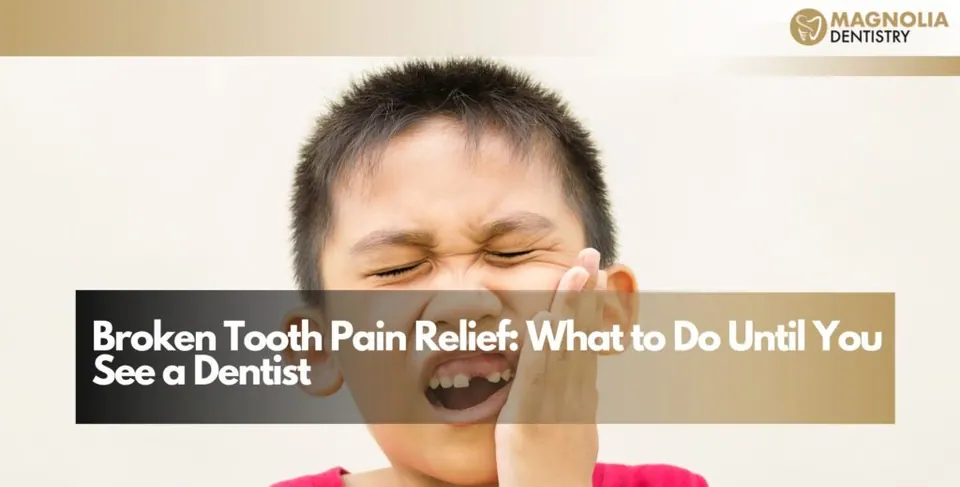
A broken, cracked, or chipped tooth can cause sudden pain, sharp edges, swelling, and sensitivity when you eat or drink. If your tooth hurts, the most important step is to protect the tooth and see a dentist as soon as possible. Home care can only give temporary relief. It cannot repair the break or remove infection inside the tooth.
To help with broken tooth pain until your appointment, rinse gently with warm water, use a cold compress on the outside of your cheek, avoid chewing on that side, cover sharp edges with dental wax if needed, and use over-the-counter pain relief only as directed on the label.
At Magnolia Dentistry, we provide emergency dental care in Burbank, CA for broken teeth, cracked teeth, severe toothache, swelling, and dental injuries. This guide explains what you can do right now, what to avoid, when the pain is an emergency, and what treatment options may help save the tooth.
How to Stop a Toothache From a Broken Tooth
If you have a toothache from a broken tooth, start with simple steps that reduce irritation and protect the damaged area until you can see a dentist.
Rinse your mouth gently with warm water to clean the area. Use a cold compress on the outside of your cheek for swelling or throbbing pain. Avoid chewing on the broken tooth. Cover sharp edges with dental wax or temporary dental cement from a pharmacy. Eat soft foods and avoid very hot, cold, hard, sticky, or sugary foods. Use over-the-counter pain medication only as directed on the label. Call a dentist as soon as possible, especially if the pain is strong, constant, or getting worse.
The American Dental Association’s MouthHealthy emergency guide recommends rinsing with warm water, using a cold compress for swelling, and seeing a dentist as soon as possible after a cracked tooth. You can read the MouthHealthy dental emergency guide for more first-aid guidance.
These steps may reduce pain for a short time, but they do not fix the tooth. A broken tooth can expose dentin or pulp, allowing bacteria to enter and cause infection.
Why a Broken Tooth Can Hurt So Much
A broken tooth may hurt because the outer enamel has cracked and exposed the sensitive inner layers of the tooth. In some cases, the break may reach the pulp, which contains nerves and blood vessels.
Pain can also happen when a crack moves under biting pressure. You may feel sharp pain when chewing and then sudden relief when you stop biting. This can happen with cracked teeth, broken molars, chipped teeth, or old fillings that have fractured.
A broken tooth can also become infected if bacteria enter through the damaged area. That is why pain should not be ignored, even if it comes and goes.
How Serious Is Your Broken or Cracked Tooth?
Not every broken tooth has the same urgency. Some chips are small, while deeper fractures can reach the nerve and become a true dental emergency.
Minor Chip or Small Crack
A minor chip usually affects the outer enamel. It may feel rough against your tongue but may not cause much pain.
You should still schedule a dental visit because small chips can worsen, collect plaque, or cut your tongue or cheek.
Moderate Break With Sensitivity
A moderate break may expose the dentin layer under the enamel. This can cause pain when the tooth touches air, cold drinks, sweet foods, or chewing pressure.
This type of injury should usually be checked within 24 to 48 hours.
Severe Break With Exposed Nerve
If you see pink or red tissue inside the tooth, feel severe throbbing pain, notice bleeding, or have swelling, the break may have reached the pulp. This needs urgent dental attention.
A deep broken tooth may need root canal treatment in Burbank, CA, a crown, or extraction if the tooth cannot be saved.
Broken Tooth Pain Relief Until You See a Dentist
Pain relief should be safe, temporary, and focused on avoiding more damage.
Use Cold Compresses
Place a cold compress or ice pack wrapped in a towel on the outside of your cheek. Use it for short intervals to reduce swelling and calm throbbing pain.
Cleveland Clinic recommends a cold compress near a broken or chipped tooth to relieve pain and reduce swelling while you arrange dental care. You can read the Cleveland Clinic dental emergency guide for more emergency dental steps.
Use Pain Medicine Safely
Over-the-counter pain medication may help, but follow the label directions. Do not exceed the recommended dose. If you are pregnant, take blood thinners, have liver disease, kidney disease, stomach ulcers, allergies, or other medical concerns, ask a dentist, physician, or pharmacist before taking medication.
Do not place aspirin directly on the broken tooth or gums. MouthHealthy warns not to place aspirin on an aching tooth or gum tissue because it can harm the soft tissue.
Rinse Gently With Warm Salt Water
A gentle warm salt water rinse can help clean the area and remove debris. Do not swish aggressively if the tooth is very painful, loose, or bleeding.
Use Temporary Dental Wax or Cement
If the tooth edge is sharp, dental wax or temporary dental cement can help cover it until your appointment. Do not use super glue or household adhesives.
Avoid Clove Oil on Exposed Nerves
Some people use clove oil for temporary toothache relief, but it can irritate soft tissue if used incorrectly. Do not put undiluted clove oil into a broken tooth or directly on exposed nerve tissue. If you use any topical dental product, follow the instructions and stop if it burns or worsens irritation.
What If a Broken Tooth Is Cutting Your Tongue or Cheek?
A sharp broken tooth can cut your tongue, cheek, or lip. This can make the area sore and may lead to small ulcers or bleeding.
To protect your mouth, rinse gently with warm water and cover the sharp edge with dental wax. Temporary dental cement may also help if it is available. Avoid chewing on that side. Do not file the tooth at home. Do not use super glue. Call a dentist for repair.
If the soft tissue is bleeding, apply gentle pressure with clean gauze. If bleeding does not slow down, seek urgent care.
Why Does a Cracked Tooth Hurt?
A cracked tooth can hurt because the crack allows movement, pressure, air, or bacteria to irritate the inner layers of the tooth. Pain may come and go at first. Some patients feel sharp pain when biting and then relief when pressure is released.
Cracked tooth pain may be caused by exposed dentin, inflamed nerve tissue, a crack reaching the pulp, bacteria entering through the fracture, pressure when biting, or a cracked filling or crown.
Even if the pain is not constant, a cracked tooth should be checked. Small cracks can deepen over time and may become harder to repair.
What to Do for Broken Molar Pain
A broken molar can be especially painful because molars handle heavy chewing pressure. If a molar breaks, avoid chewing on that side and schedule a dental visit quickly.
A broken molar may need a filling, crown, root canal, or extraction depending on how deep the damage is. If the break reaches the nerve, pain may become severe or throbbing.
Call a dentist urgently if the broken molar causes swelling, fever, bad taste, pus, or pain that wakes you up at night.
What Not to Do With a Broken Tooth
Certain home fixes can make a broken tooth worse.
Do not use super glue or household glue. Do not file the sharp tooth edge yourself. Do not chew on the broken tooth. Do not place aspirin directly on the gum or tooth. Do not use heat on facial swelling. Do not ignore pain just because it comes and goes. Do not delay care if there is swelling, fever, bad taste, or severe pain. Do not try to pull out a broken tooth at home.
Temporary home care is only meant to protect the tooth until a dentist can treat it.
When Is Broken Tooth Pain an Emergency?
Broken tooth pain becomes an emergency when the pain is severe, the tooth is bleeding, the nerve is exposed, or there are signs of infection.
Call a dentist right away if you have severe throbbing pain, swelling in the gum, jaw, or face, fever, bad taste or pus, pain when biting, a loose or displaced tooth, a broken tooth from trauma, bleeding that does not stop, trouble opening your mouth, or pain spreading to the ear, jaw, or neck.
Mayo Clinic says you should call a dentist or doctor right away if toothache lasts more than a day or two, comes with fever, or has infection symptoms such as swelling, pain when biting, red gums, or foul-tasting discharge. If you have trouble breathing or swallowing, go to a hospital emergency department.
For urgent dental symptoms, Magnolia Dentistry offers emergency dental care in Burbank, CA.
Can a Broken Tooth Get Infected?
Yes, a broken tooth can get infected if bacteria enter the inner part of the tooth. This is more likely when the crack is deep, the nerve is exposed, or the tooth has untreated decay.
Signs of infection may include swelling, throbbing pain, bad taste, pus, fever, swollen gums, or pain that spreads to the jaw or ear.
An infected broken tooth may need root canal treatment, drainage, antibiotics in some cases, or extraction if the tooth cannot be saved. Antibiotics alone usually do not repair the tooth. The source of the problem still needs dental treatment.
Treatment Options for a Broken Tooth
The right treatment depends on how much tooth structure is damaged and whether the nerve is affected.
Dental Bonding
Small chips may be repaired with dental bonding. Tooth-colored resin is shaped and polished to restore the tooth’s appearance and smooth sharp edges.
Dental Filling
If the break is small to moderate and does not involve the nerve, a filling may restore the damaged area. You can learn more about dental fillings in Burbank, CA.
Dental Crown
A larger fracture may need a crown to cover and protect the tooth. A crown can strengthen the remaining tooth structure and reduce the risk of further cracking. Magnolia Dentistry can review crown and repair options through restorative dentistry in Burbank, CA.
Root Canal Treatment
If the break reaches the pulp or the nerve becomes infected, a root canal may be needed before placing a crown. Learn more about root canal treatment in Burbank, CA.
Tooth Extraction
If the tooth is split, cracked below the gumline, or too damaged to save, extraction may be necessary. Magnolia Dentistry can explain tooth extractions and preservation options.
Tooth Replacement
If the broken tooth has to be removed, replacement options may include a dental implant, bridge, or partial denture. You can learn more about dental implants in Burbank, CA.
How Soon Should You See a Dentist for a Broken Tooth?
You should see a dentist as soon as possible if a broken tooth hurts, feels sharp, bleeds, or is sensitive to temperature or pressure.
A small chip without pain may not need same-day care, but it should still be checked. A painful crack, exposed nerve, swelling, bad taste, or broken molar should be treated more urgently.
The longer a broken tooth stays untreated, the more likely it is to worsen, become infected, or need more complex treatment.
Can You Sleep With Broken Tooth Pain?
You may be able to rest for a short time while waiting for dental care, but severe broken tooth pain should not be ignored.
Try sleeping with your head slightly elevated. Avoid lying on the painful side. Do not chew on the broken tooth before bed. Use medication only as directed on the label.
If the pain keeps you awake, becomes severe, or comes with swelling, fever, pus, or bad taste, contact an emergency dentist.
Conclusion
Broken tooth pain can feel frightening, but the right steps can protect your tooth until you get dental care. Rinse gently, use a cold compress, avoid chewing on the broken tooth, cover sharp edges if needed, and use over-the-counter pain relief only as directed.
These steps are temporary. A broken, cracked, or chipped tooth cannot heal on its own. If the pain is severe, the tooth is bleeding, the nerve is exposed, or you notice swelling, fever, pus, or bad taste, call a dentist right away.
Magnolia Dentistry provides emergency dental care, root canal treatment, fillings, crowns, extractions, and tooth replacement options for broken teeth. If you are dealing with broken tooth pain, schedule a visit with our dentist in Burbank, CA so we can help relieve pain and protect your smile.
FAQs
How do I stop a toothache from a broken tooth?
Rinse gently with warm water, apply a cold compress, avoid chewing on the broken tooth, cover sharp edges with dental wax, and use over-the-counter pain medicine only as directed. See a dentist as soon as possible because home care will not repair the tooth.
What can I put on a broken tooth for pain?
You can use temporary dental wax or temporary dental cement to cover sharp edges. For pain, follow the label on over-the-counter pain medicine. Do not put aspirin, super glue, or undiluted clove oil directly on the broken tooth or gums.
Can a broken tooth heal on its own?
No. A broken tooth cannot heal on its own because enamel and dentin do not grow back. Without dental treatment, the break can worsen or allow bacteria to enter the tooth.
Is cracked tooth pain an emergency?
Cracked tooth pain may be an emergency if the pain is severe, the tooth is loose, the nerve is exposed, or you have swelling, fever, pus, or pain when biting. Call a dentist quickly for an exam.
What if my broken tooth is cutting my tongue?
Cover the sharp edge with dental wax or temporary dental cement and avoid chewing on that side. Do not file the tooth yourself. Call a dentist so the tooth can be smoothed or repaired safely.
Can I eat with a broken tooth?
You can eat soft foods, but avoid chewing on the broken tooth. Stay away from hard, crunchy, sticky, very hot, very cold, or sugary foods because they can worsen pain or damage.
Why does my broken tooth hurt?
A broken tooth may hurt because dentin or nerve tissue is exposed, the crack moves under biting pressure, or bacteria have entered the tooth. Pain can also come from swelling or infection.
What helps broken molar pain?
Avoid chewing on the broken molar, rinse gently, use a cold compress, cover sharp edges if possible, and call a dentist. Broken molars often need a filling, crown, root canal, or extraction depending on the damage.
Can I sleep with broken tooth pain?
You can try sleeping with your head slightly elevated and avoid pressure on the painful side. If pain keeps you awake, becomes severe, or is joined by swelling or fever, contact an emergency dentist.
Will antibiotics help a broken tooth?
Antibiotics may be used if there is a spreading infection, but they do not repair the broken tooth. The tooth still needs dental treatment such as a filling, crown, root canal, or extraction.
How long can I wait to see a dentist for a broken tooth?
Minor chips without pain may wait a few days, but painful cracks, exposed dentin, exposed nerve, swelling, or bleeding should be checked quickly. Severe pain, swelling, fever, or trouble swallowing needs urgent care.
Can I use super glue to fix a broken tooth?
No. Super glue is not safe for your mouth and can harm oral tissues. Use dental wax or temporary dental cement only as a short-term cover, then see a dentist.
Your next step
Talk with Dr. Massaband about your situation
Articles explain general options; an examination tells you what applies to you. Call the Burbank office or book online.
This article is general patient education and is not a diagnosis or a substitute for an in-person dental examination.