Blog
Can a Tooth Get Infected After a Filling?
Yes, a filled tooth can get infected if bacteria remain, decay returns, or the filling leaks. Learn the warning signs, why pain can happen months later, and when to call a dentist.
Dental fillings are used to repair cavities, protect weakened tooth structure, and stop decay from spreading deeper into the tooth. Most fillings heal well and last for years with good care. But sometimes, a tooth can still become painful or infected after a filling.
So, can a tooth get infected after a filling? Yes, it can. It is not the most common outcome, but it can happen if bacteria remain inside the tooth, decay continues under the filling, the filling cracks, or the cavity was already very deep before treatment.
Some patients notice pain soon after a filling. Others feel fine for months and then suddenly develop tooth pain, sensitivity, swelling, or a bad taste near the filled tooth. This is why it is important to understand the difference between normal post-filling sensitivity and signs of a possible infection.
At Magnolia Dentistry, we help patients with comfortable, precise dental fillings in Burbank, CA, and we also evaluate older fillings when pain, pressure, or infection symptoms appear later.
Understanding What Happens During a Dental Filling
A dental filling is placed after your dentist removes the decayed part of the tooth. The area is cleaned, shaped, and sealed with a filling material such as composite resin, porcelain, or another suitable restorative material.
The goal is simple. The filling closes the space where decay was removed and helps protect the tooth from more bacteria.
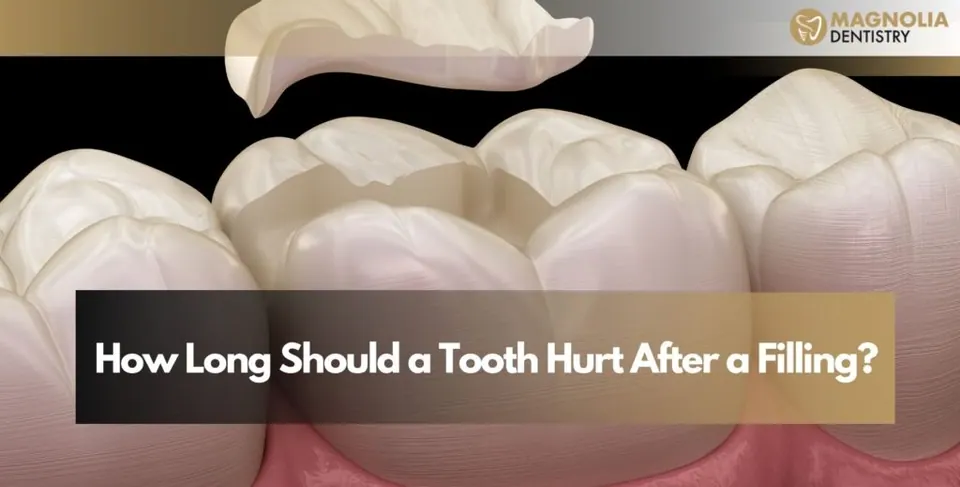
In many cases, the tooth feels normal after a short adjustment period. Mild sensitivity to cold, air, or pressure can happen for a few days or sometimes a few weeks, especially if the cavity was deep. That does not always mean the tooth is infected.
The concern starts when pain becomes stronger, lasts longer than expected, comes back after months, or is joined by swelling, pus, a bad taste, or pain when biting.
Why Can a Tooth Hurt After a Filling?
Not every painful filling means infection. A tooth can hurt after a filling for several reasons, and the cause matters because the treatment is different.
Normal Sensitivity After a Filling
Some sensitivity after a filling is common. The tooth may react to cold drinks, sweet foods, or pressure because the nerve inside the tooth was irritated during the procedure.
This type of discomfort usually improves over time. It should not get worse each week. It should not cause swelling. It should not wake you up at night with throbbing pain.
If your main concern is sensitivity only, you may also find this guide helpful: Is It Normal for My Teeth to Be Sensitive After a Filling?
High Filling or Bite Pressure
Sometimes the filling is slightly too high. This can make the tooth hurt when you bite down because that tooth is taking more pressure than it should.
A high filling does not always cause infection, but leaving it untreated can irritate the tooth and the ligament around it. The pain often feels sharp when chewing or tapping the tooth.
The good news is that a bite adjustment is usually simple when caught early.
Deep Cavity Close to the Nerve
If the original cavity was very deep, the nerve may already have been inflamed before the filling was placed. Even when the filling is done correctly, the tooth may not fully recover if bacteria had already reached close to the pulp.
This is one of the most common reasons a tooth may need root canal treatment after a filling.
Cracked, Loose, or Leaking Filling
Fillings are strong, but they do not last forever. Over time, a filling can crack, wear down, loosen, or pull away slightly from the tooth. This creates a tiny gap where bacteria can enter.
Once bacteria get under the filling, decay can start again. This is often called recurrent decay. If it reaches the nerve, the tooth may become infected.
If your filling feels loose or uneven, read this related guide: How To Avoid a Loose Dental Filling
Infected Filling: How Does It Happen?
An infected filling does not mean the filling material itself is infected. It usually means bacteria have entered the tooth around or beneath the filling and reached the deeper layers of the tooth.
This can happen soon after treatment, but it can also happen months or years later.
Bacteria Left Behind in a Deep Cavity
Dentists remove decay carefully before placing a filling. But if a cavity is extremely deep, bacteria may already be very close to the pulp. In some cases, the tooth reacts badly even after proper treatment.
The tooth may first feel sensitive, then later become painful, especially when chewing or drinking something hot.
New Decay Under an Old Filling
A filling seals the treated area, but the natural tooth around it can still develop decay. If brushing, flossing, diet, dry mouth, or grinding create problems around the filling edge, bacteria can work their way under the restoration.
This is why an old filling can suddenly start hurting after months or years.
Filling Leakage
A leaking filling allows saliva, food particles, and bacteria to enter small spaces between the filling and tooth. This can lead to sensitivity, decay, bad taste, or infection.
You may not always see the leakage yourself. A dentist may need X-rays and a clinical exam to find it.
Cracks in the Tooth
Sometimes the tooth around the filling cracks. This can happen from biting hard foods, teeth grinding, trauma, or having a large filling that leaves less natural tooth structure.
A cracked tooth can let bacteria reach deeper areas and may cause sharp pain when biting.
Signs of Infection After a Cavity Filling
The signs of infection after cavity filling can be mild at first. Some people ignore them because they think pain is normal after dental work. But infection-related symptoms usually do not keep improving on their own.
Tooth Pain That Gets Worse Instead of Better
Mild soreness after a filling should slowly improve. Pain that gets stronger, becomes throbbing, or spreads to the jaw, ear, or side of the face may suggest a deeper problem.
This is especially important if the pain wakes you up at night or does not settle with normal pain relief.
Pain When Biting or Chewing
Pain when biting can happen from a high filling, but it can also happen when the nerve is inflamed or infection has reached the root area.
If the tooth hurts every time you chew on it, do not wait too long. A small adjustment may solve the problem if it is bite-related. But if infection is present, delaying care can make treatment more complicated.
Sensitivity That Lasts Too Long
Cold sensitivity for a short time after a filling can be normal. But sensitivity that lingers for many seconds, gets worse, or starts months after the filling may be a warning sign.
Hot sensitivity can be more concerning, especially if the pain lingers after the hot drink or food is gone.
Swelling Around the Tooth or Gum
Swelling near a filled tooth is not normal healing. Gum swelling, cheek swelling, or tenderness near the tooth may mean infection is building under the surface.
If swelling is spreading, or if you also have fever or trouble swallowing, treat it as urgent.
Bad Taste, Bad Smell, or Pus
A bad taste near a filled tooth can happen when bacteria or pus drains from an infected area. Some patients describe it as bitter, sour, metallic, or unpleasant.
A small pimple-like bump on the gum near the tooth may also be a dental abscess. This bump may drain and then come back again.
Tooth Discoloration
If the filled tooth starts looking gray, dark, or noticeably different from nearby teeth, the nerve may be damaged or dying. This does not always happen with infection, but it should be checked.
Why Does My Tooth Filling Hurt After Months?
This is one of the most important questions because many patients feel confused when a filling seemed fine at first.
A tooth filling can hurt after months because of new decay under the filling, a small crack, bite pressure, nerve inflammation from a deep cavity, or a loose filling that allows bacteria to enter.
Pain after months is not the same as normal post-filling sensitivity. Normal sensitivity usually appears soon after treatment and gradually improves. Pain that starts later often means something has changed.
You should schedule an exam if:
The tooth hurts when chewing.
Sensitivity has returned after being gone.
The tooth feels higher than others.
You notice bad taste or swelling.
The filling feels rough, cracked, or loose.
The pain is getting worse instead of better.
For related guidance, you can also read: Is Pain Normal After a Dental Filling?
Infection After Tooth Filling: Why It Shouldn’t Be Ignored
An infection after tooth filling should not be ignored because it usually means bacteria have reached deeper parts of the tooth or the surrounding root area.
A tooth infection does not heal the same way a small cut on the skin heals. Once the pulp inside the tooth is infected or dying, professional dental treatment is usually needed.
It Can Turn Into a Tooth Abscess
A tooth abscess is a pocket of infection that can form around the root of the tooth or in the gum. It may cause swelling, throbbing pain, pus, bad taste, and pressure.
Some abscesses drain through the gum, which may reduce pain for a short time. But drainage does not mean the infection is gone.
It Can Damage the Bone Around the Tooth
If infection stays around the root, it can affect the surrounding bone. This may show on an X-ray as a dark area near the root tip.
Early treatment gives your dentist a better chance to save the tooth.
It Can Lead to Tooth Loss
If the tooth is too damaged, cracked, or infected for too long, extraction may become the only option. This is why it is better to check pain early rather than waiting until the tooth cannot be saved.
How Is an Infected Tooth Filling Diagnosed?
At Magnolia Dentistry, diagnosis usually starts with a conversation about your symptoms. Your dentist may ask when the filling was placed, when the pain started, what triggers it, and whether the pain lingers.
- A proper exam may include:
- Checking the filling edges.
- Testing your bite.
- Taking digital X-rays.
- Checking gum swelling or drainage.
- Testing cold or heat response.
- Tapping the tooth gently.
- Looking for cracks or recurrent decay.
This helps separate normal sensitivity from infection, bite imbalance, cracked tooth problems, or deep nerve inflammation.
How Is an Infected Tooth Filling Treated?
Treatment depends on how deep the problem is. Some teeth only need a new filling. Others may need root canal treatment or, in severe cases, extraction.
Replacing the Filling
If bacteria or decay is limited to the area under or around the filling, your dentist may remove the old filling, clean the tooth, remove any decay, and place a new restoration.
This works best when the infection has not reached the pulp.
Bite Adjustment
If the filling is too high and the tooth is painful from pressure, your dentist may adjust the filling surface so your bite feels even again.
This is usually quick, but it should still be done by a dentist. Trying to “wait it out” can keep irritating the tooth.
Root Canal Treatment
If bacteria have reached the pulp, the tooth may need root canal treatment. During a root canal, the infected or inflamed pulp is removed, the canals are cleaned and sealed, and the tooth is restored.
Root canal treatment is often the best way to save a tooth that would otherwise need removal.
You can learn more here: Root Canal Treatment in Burbank, CA
Emergency Dental Care
If you have swelling, severe pain, pus, or pain that is spreading into the jaw or face, you may need urgent care. Magnolia Dentistry offers emergency dental care in Burbank, CA for patients dealing with sudden dental pain and infection symptoms.
For severe tooth pain that may need urgent root canal care, this guide may help: How to Know When Emergency Root Canal Treatment Is Needed
Extraction in Severe Cases
If the tooth is badly cracked, the infection is too advanced, or there is not enough healthy structure left, extraction may be needed. Your dentist will explain replacement options such as a dental implant, bridge, or partial denture after the infection is controlled.
Can Antibiotics Fix an Infected Filling?
Antibiotics may help reduce swelling or stop infection from spreading in certain cases, but they usually do not fix the source of the problem inside the tooth.
If bacteria are trapped inside the tooth or under a filling, the tooth usually needs dental treatment. This may mean replacing the filling, draining an abscess, or performing root canal therapy.
Antibiotics alone may make symptoms feel better for a short time, but the infection can return if the source is not treated.
When Is Tooth Pain After a Filling an Emergency?
Tooth pain after a filling becomes more urgent when it is severe, spreading, or linked with signs of infection.
- Call a dentist quickly if you have:
- Throbbing pain that does not settle.
- Swelling in the gum, jaw, or face.
- A gum boil or pus.
- Fever.
- Bad taste with pain or swelling.
- Pain that spreads to the ear, jaw, or neck.
- Difficulty opening your mouth.
- Trouble swallowing or breathing.
If you have facial swelling, fever, trouble swallowing, or breathing difficulty and cannot reach a dentist, seek emergency medical care.
How to Prevent Infection After a Dental Filling
You cannot control every dental problem, especially if a cavity was already deep. But you can lower the risk of infection after a filling with good daily care and regular dental visits.
Keep the Filling Area Clean
Brush twice daily and floss once daily. Pay attention to the edges of filled teeth because plaque can collect around restoration margins.
Do Not Ignore New Sensitivity
If sensitivity is mild and improving, it may be normal. But if sensitivity returns months later or keeps getting worse, schedule an exam.
Avoid Chewing Hard Objects
Ice, hard candy, popcorn kernels, and pen chewing can crack fillings or natural tooth structure.
Treat Grinding or Clenching
Nighttime grinding can put heavy pressure on fillings. If you wake up with jaw soreness or notice worn teeth, ask your dentist if a nightguard may help.
Keep Regular Dental Checkups
Routine dental visits allow your dentist to check older fillings before they become painful. Small cracks, leakage, and recurrent decay are easier to treat when found early.
What to Expect at Your Appointment
If you visit Magnolia Dentistry for pain after a filling, the first step is to find the real cause. We do not guess based only on symptoms.
Your dentist will examine the tooth, check your bite, review X-rays if needed, and explain whether the problem appears to be sensitivity, bite pressure, decay under the filling, a cracked tooth, or infection.
From there, we recommend the most conservative treatment that can protect your tooth and relieve your symptoms. Sometimes that means a simple adjustment or new filling. Other times, root canal treatment is the best option to save the tooth.
Our goal is to keep you comfortable, explain everything clearly, and help you avoid bigger dental problems later.
Conclusion
A tooth can get infected after a filling, but it is not always the first reason for pain. Some discomfort after a filling is normal, especially when the cavity was deep. But pain that gets worse, starts months later, hurts when biting, causes swelling, or comes with a bad taste should be checked by a dentist.
The earlier you find the cause, the better your chance of saving the tooth with simpler treatment.
If you are dealing with tooth pain, swelling, sensitivity, or an old filling that suddenly feels wrong, Magnolia Dentistry can help. Schedule an appointment for a careful evaluation and personalized care.
FAQs
Can a cavity filling get infected?
Yes, a cavity filling can get infected if bacteria remain deep inside the tooth, if decay returns under the filling, or if the filling cracks or leaks over time. The infection is usually in the tooth structure or pulp, not in the filling material itself.
Can fillings get infected?
Fillings themselves do not get infected, but the tooth around or under the filling can. This may happen when bacteria enter through a crack, gap, loose edge, or new decay around an old filling.
How do I know if my filling is infected?
Common signs include throbbing pain, pain when biting, swelling near the tooth, a bad taste, pus, a gum boil, lingering hot or cold sensitivity, or pain that spreads to the jaw or ear. A dentist will need to confirm the cause with an exam and X-rays.
Can a tooth get infected after a filling?
Yes, a tooth can get infected after a filling. It may happen soon after treatment if the cavity was very deep, or months later if the filling leaks, cracks, or decay develops underneath it.
Why does my tooth filling hurt after months?
A filling can hurt after months because of recurrent decay, a cracked filling, a loose filling, bite pressure, or nerve inflammation from a deep cavity. Pain that starts months later should be checked because it is usually not normal healing sensitivity.
Is it normal for a filling to hurt when I bite down?
Pain when biting can happen if the filling is too high, but it may also mean the tooth is cracked, inflamed, or infected. If bite pain lasts more than a few days or gets worse, schedule a dental exam.
Can a deep filling turn into a root canal?
Yes, a deep filling can later need root canal treatment if the nerve inside the tooth becomes inflamed or infected. This can happen even when the filling was done properly, especially if the original cavity was close to the pulp.
What does a bad taste after a filling mean?
A bad taste after a filling may come from trapped food, an issue with the filling edge, or drainage from infection. If the bad taste comes with pain, swelling, or a gum bump, see a dentist as soon as possible.
Can an infected filling heal on its own?
No, a true tooth infection usually does not heal on its own. Symptoms may come and go, especially if an abscess drains, but the source of infection often remains until treated by a dentist.
What should I do if my face is swollen after a filling?
Facial swelling after a filling may be a sign of infection. Contact a dentist right away. If swelling is spreading or you have fever, trouble swallowing, or breathing difficulty, seek urgent medical care.
Your next step
Talk with Dr. Massaband about your situation
Articles explain general options; an examination tells you what applies to you. Call the Burbank office or book online.
This article is general patient education and is not a diagnosis or a substitute for an in-person dental examination.