Dental Insurance
Does PPO Dental Insurance Cover Dental Implants?
Many PPO plans cover part of an implant, but rules like the missing tooth clause, alternate benefits and annual maximums decide how much. Here's how to check yours.

Sometimes, and usually only in part. Many PPO dental plans list implants as a "major" service and pay a share of the cost, while others exclude implants entirely or pay only what they would have paid for a less expensive option such as a bridge. Whether your plan helps, and by how much, comes down to a handful of rules written into your specific policy: whether implants are a covered benefit at all, an alternate benefit provision, a missing tooth clause, waiting periods and your annual maximum.
This guide walks through each of those rules in the order they usually matter, so you can read your own benefits summary with confidence and know what to ask before you commit to treatment.
First question: are implants a covered benefit on your plan?
Dental plans are built by employers and insurers, not by your dentist, and two people with the same insurance company can have very different coverage. Some PPO plans include implants under major services, the tier that commonly also includes crowns, bridges and dentures. Plans that use the common 100/80/50 structure typically pay 100% of the allowed fee for preventive care, 80% for basic care and 50% for major care, after your deductible (HealthPartners). Other plans exclude implants outright, or cover the crown that sits on top of the implant but not the implant post placed in the bone.
The quickest way to find out is to search your plan's summary of benefits or evidence of coverage for the word "implant." If it is not mentioned, or appears under exclusions, assume no implant benefit until your insurer confirms otherwise in writing.
The alternate benefit provision: paying for the "cheaper" option
Even when implants are covered, many plans include a least expensive alternative treatment (LEAT) clause, sometimes called an alternate benefit. The American Dental Association describes it as a cost-containment rule: when more than one treatment could address a condition, the plan pays only for the least expensive one (ADA). For a missing tooth, that often means the plan calculates its payment as if you were getting a bridge or a removable partial denture, and you pay the difference if you choose an implant.
That does not make the benefit worthless. It simply means the number on your estimate may be lower than "50% of the implant fee." The ADA's policy also says plans applying this clause should tell you the basis for the decision, which is useful if you need to ask questions or appeal.
The missing tooth clause
A missing tooth clause allows a plan to decline to pay for replacing a tooth that was already missing before your coverage started. It works much like a pre-existing condition exclusion and can apply to implants, bridges, partials and dentures (eAssist). Some plans soften it, for example covering replacement at a reduced level for the first couple of years of membership. If you lost the tooth while already covered by the plan, the clause usually does not apply.
We cover this rule in more depth, including how to check whether your plan has one, in our guide to the dental insurance missing tooth clause.
Waiting periods
Individual plans and some group plans make you wait before major services are covered, often six to twelve months. If you recently changed jobs or bought a new policy, check the effective date for major services before scheduling surgery. Waiting periods are written into the plan documents, so your HR department or insurer can confirm the exact date.
Your annual maximum is usually the real limit
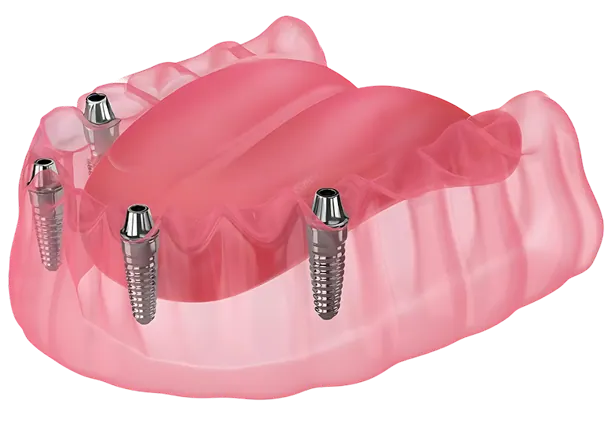
Most PPO plans cap what they will pay in a benefit year. According to the National Association of Dental Plans, the share of PPO plans with maximums of $2,500 or more has grown to about 15%, while roughly a third still cap benefits at $1,000 or less (Becker's Dental, citing NADP). A single implant with its abutment and crown can use most or all of a typical annual maximum on its own, and full-arch treatment such as All-on-4 almost always costs more than any one year of benefits.
This is why the order and timing of treatment matter. When it is clinically reasonable, phasing work across two benefit years can let you use two annual maximums. Your dentist should never delay necessary care just to fit an insurance calendar, but when timing is flexible, it is worth discussing.
A simple way to estimate your share
To see how the rules combine, here is an illustration using made-up round numbers. It is not a quote and not a Magnolia Dentistry fee.
| Step | Example |
|---|---|
| Implant, abutment and crown — total fee | $5,000 |
| Plan applies an alternate benefit for a bridge | Allowed amount used for calculation: $3,000 |
| Plan pays 50% for major services | $1,500 |
| Annual maximum remaining this year | $1,500 (so the full $1,500 can be paid) |
| Your estimated share | $3,500, before any financing |
If the annual maximum remaining were only $1,000, the plan would pay $1,000 and your share would rise to $4,000. If a missing tooth clause applied, the plan might pay nothing for the replacement. Every one of these figures depends on your plan, which is why a written estimate matters.
Get a predetermination before treatment starts
For larger treatment, ask the dental office to submit a predetermination (also called a pre-treatment estimate) to your insurer. The insurer reviews the proposed treatment and responds with what it expects to pay and what you are likely to owe (Delta Dental of Arkansas). It is an estimate, not a guarantee, and it will not account for benefits you use elsewhere before treatment, but it removes most of the guesswork.
Planning an implant? Our Burbank team can review your plan details with you and explain how your benefits may apply before you decide. Request a dental implant consultation or call (818) 846-9041.
When insurance covers less than you hoped
Insurance is designed to help with routine and basic care, so most implant patients have some out-of-pocket cost. A few options can help you plan for it:
- Compare the alternatives honestly. A bridge or partial denture may be covered at a higher level. An implant is often the better long-term option for the neighboring teeth and the jawbone, but you should understand both before deciding. Our comparison of dental bridges and dental implants lays out the differences.
- Check your medical plan in specific cases. When a tooth is lost to an accident or certain medical conditions, part of the treatment may be billable to medical insurance. This is plan-specific and uncommon, but worth asking about.
- Use a health savings account or flexible spending account. Implant treatment is generally an eligible expense.
- Spread the cost. Magnolia Dentistry offers financing through CareCredit and Cherry, subject to credit approval, which can cover the portion your plan does not.
How we help Burbank patients with implant planning
Dr. Liyan Massaband plans dental implant treatment around your bone, bite and goals first, and your benefits second. Clinical need decides the treatment; insurance decides only who pays for which part. Before treatment, we explain the plan, the fees and how your coverage is likely to apply, so there are no surprises later. Patients come to our office on West Magnolia Boulevard from across Burbank and nearby communities such as Glendale, Toluca Lake and North Hollywood.
If you have already used much of this year's benefits, our guide on what to do when your dental insurance is maxed out covers your options, and our implant cost guide explains what drives the total fee.
Questions patients often ask
Will my PPO pay 50% of my dental implant?
Not necessarily. Many plans place implants in the major tier, which is often paid at 50% of the allowed fee, but alternate benefit provisions, missing tooth clauses, waiting periods and your annual maximum can each reduce the payment. A predetermination from your insurer gives the most reliable estimate.
Does dental insurance cover All-on-4 or full-mouth implants?
Some plans contribute toward full-arch treatment, usually limited by the annual maximum, which is far smaller than the cost of full-arch treatment. Expect most of the cost to be out of pocket, and ask for a written estimate and phasing options.
Is it better to see an in-network dentist for implants?
In-network dentists have agreed to the plan's fee schedule, which can lower your share. Out-of-network PPO benefits still apply on many plans, but you may be billed the difference between the dentist's fee and the plan's allowance. Your plan documents and the dental office can explain how your coverage applies.
Can I get an implant if my insurance denies it?
Yes. Insurance decisions are about payment, not about whether treatment is right for you. If an implant is the best option clinically, you can still proceed and use savings, an HSA or FSA, or financing to cover the cost.
Your next step
Talk with Dr. Massaband about your situation
Articles explain general options; an examination tells you what applies to you. Call the Burbank office or book online.
This article is general patient education and is not a diagnosis or a substitute for an in-person dental examination.